Concrete dust rarely stays at floor level. Forklift traffic lifts it into the air, tires track it through adjacent areas, and air movement carries it onto inventory, equipment, controls, and finished goods. Can floor coatings stop dust? In many industrial facilities, yes - provided the coating system is selected for the slab condition, traffic, environment, and operating demands.
A floor coating is not a cosmetic fix for a dusty building. It is a functional barrier that protects the concrete surface from wear and limits the release of fine particles. When specified and installed correctly, it can materially improve housekeeping, safety, product protection, and long-term floor performance.
Why Uncoated Concrete Produces Dust
Concrete is durable, but its surface is not automatically suited to every industrial environment. The top layer of a slab can break down from abrasion, impact, chemical exposure, moisture movement, poor curing, or years of wheel traffic. As the cement paste at the surface wears away, fine sand and cement particles become loose. That is the dust operators see accumulating along travel lanes, rack rows, walls, and equipment bases.
The problem is often most visible in warehouses with constant forklift movement, manufacturing plants with rolling loads, distribution centers, and maintenance areas. Hard wheels, pallet jacks, and heavy equipment steadily abrade the floor. In facilities that use compressed air or frequent washdowns, dust can migrate faster and settle in places where it affects quality control or routine maintenance.
Surface dusting can also point to a deeper issue. A weak or contaminated concrete surface may have poor tensile strength, hidden moisture pressure, old curing compounds, failed coatings, or areas of delamination. Coating directly over those conditions creates a predictable failure point. The dust may disappear briefly, but the coating can peel, blister, or wear through under traffic.
Can Floor Coatings Stop Dust Permanently?
A properly installed floor coating can stop dust generation from the concrete surface for the service life of the system. It does this by creating a continuous, cleanable layer over the slab, preventing wheel traffic and abrasion from directly wearing away exposed concrete.
“Permanently” depends on how the floor is used and maintained. A thin coating in a heavy forklift aisle will not perform like a purpose-built industrial system. Likewise, a coating cannot compensate for active slab movement, major joint failure, excessive moisture vapor transmission, or a weak concrete substrate that has not been properly prepared.
The practical answer is that coatings control dust effectively when they are treated as an engineered floor system, not a gallon-per-square-foot purchase. Surface preparation, material selection, thickness, detail work at joints and edges, and cure time all affect the result.
The coating must bond to sound concrete
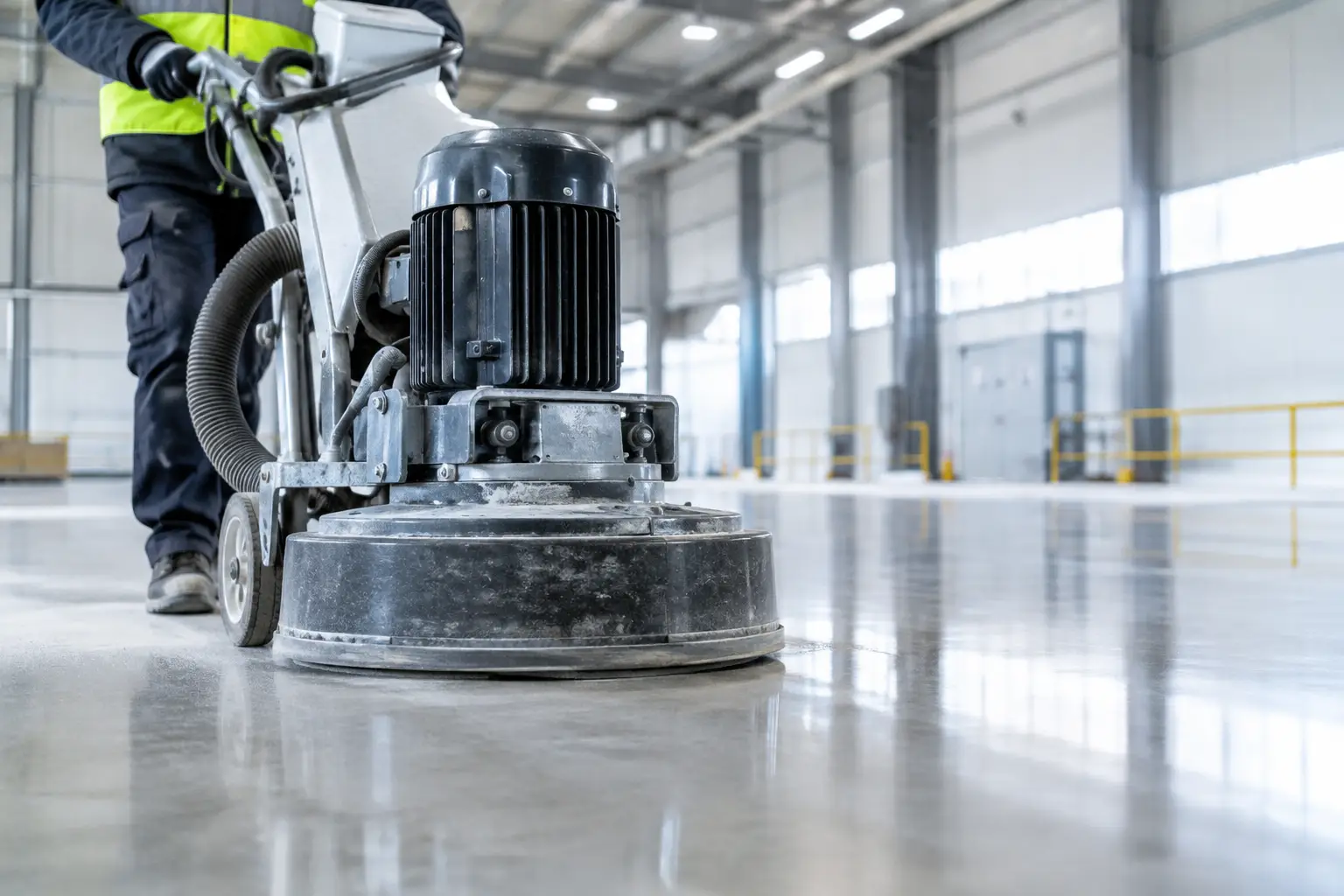
The coating itself is only as dependable as the substrate beneath it. Industrial-grade mechanical preparation removes weak surface material, contamination, laitance, and failed coatings. Diamond grinding, shot blasting, or other specified preparation methods create the surface profile required for adhesion.
This step is where many dust-control projects succeed or fail. If loose concrete remains beneath a new coating, traffic will eventually expose the weakness. Proper preparation identifies soft areas, spalls, cracks, and delaminated sections before they become coating failures.
The system must match the exposure
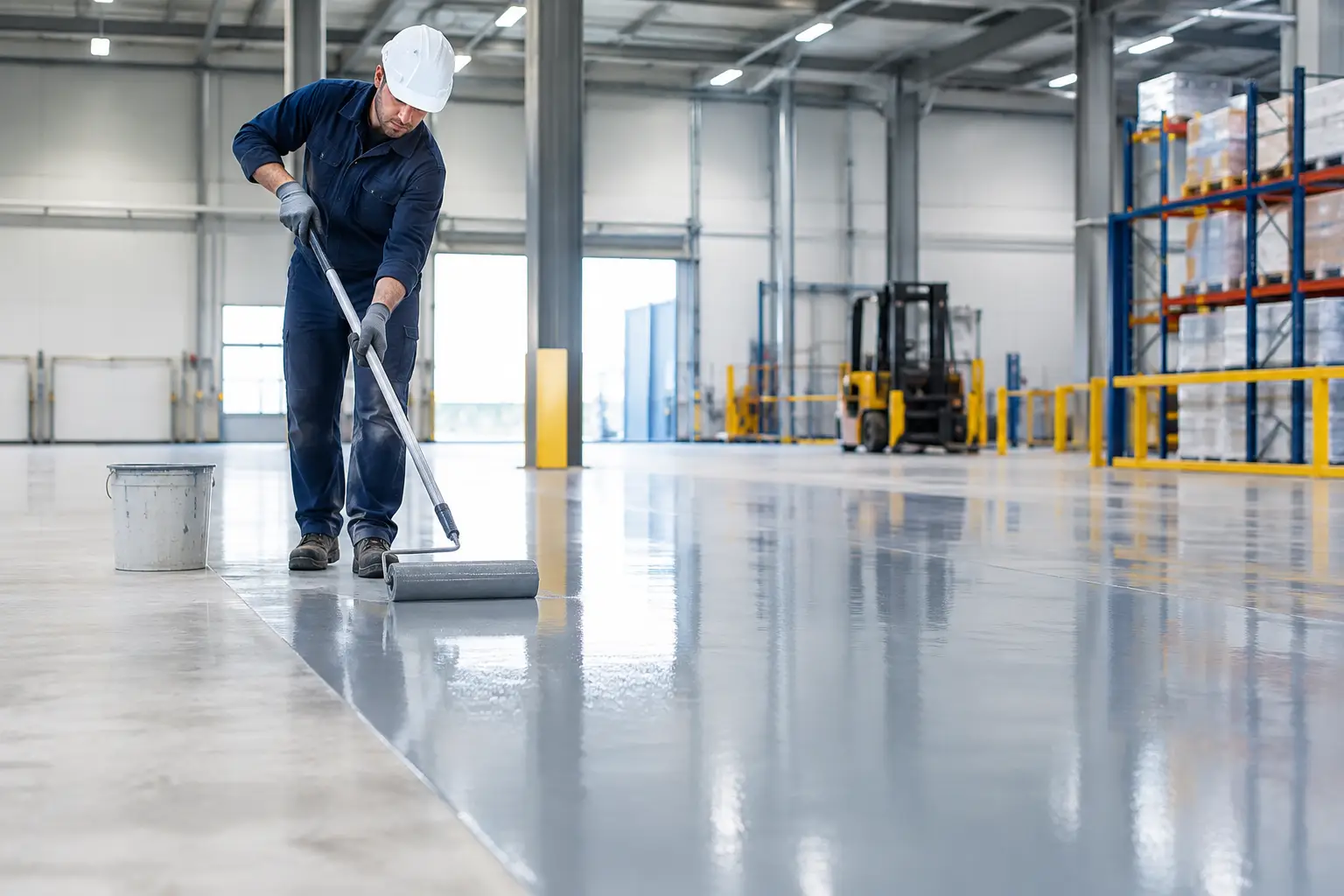
Epoxy systems are widely used for their build, adhesion, and chemical resistance. They can provide a dense, dust-free surface for warehouses, production areas, and maintenance spaces. Urethane topcoats can add abrasion resistance, color stability, and improved resistance to certain chemical or thermal conditions.
For wet-process areas, washdown environments, or spaces subject to thermal shock, a urethane cement system may be the more reliable choice. In facilities with compressed schedules, rapid-cure polyaspartic or methyl methacrylate systems can be considered, but the right selection still depends on substrate conditions and operating exposure.
There is no universal best coating. The correct system is the one that holds up to the actual traffic, chemicals, temperatures, cleaning methods, and downtime window of the facility.
Dust Control Is Also a Safety and Operations Issue
Dust on a concrete floor is more than a housekeeping concern. Fine particles can reduce traction when mixed with water, oils, or process residues. They can settle on sensitive equipment and contribute to premature wear. In food, pharmaceutical, electronics, packaging, and clean manufacturing environments, dust can create product and compliance concerns.
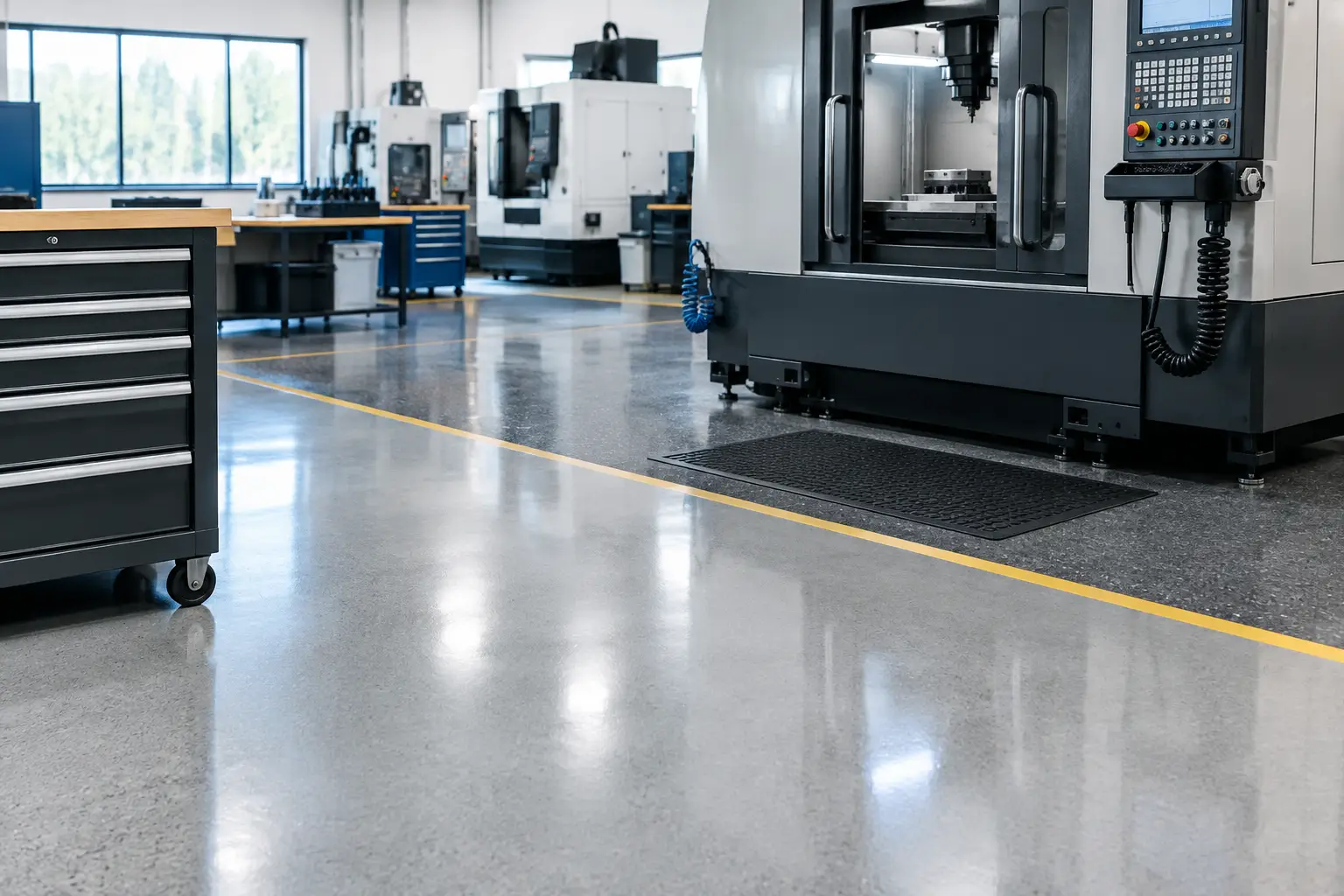
A sealed floor also reduces the labor required to keep a facility presentable. Instead of continually sweeping up particles created by the floor itself, housekeeping teams can focus on normal operational debris. The difference is especially noticeable in high-traffic aisles where concrete dust is repeatedly tracked into office, shipping, staging, or production areas.
A cleanable coating system supports more consistent visual inspections as well. Leaks, spills, damaged pallets, and debris are easier to see on a uniform floor surface. That improves response time and helps facility teams maintain a more controlled operating environment.
Joints, Cracks, and Repairs Need Equal Attention
A jointless coated field can still generate dust if joints and damaged areas are ignored. Open control joints, deteriorated joint edges, and spalled concrete release material under wheel traffic. They also create impact points that accelerate damage to forklifts, pallet jacks, and rack-serving equipment.
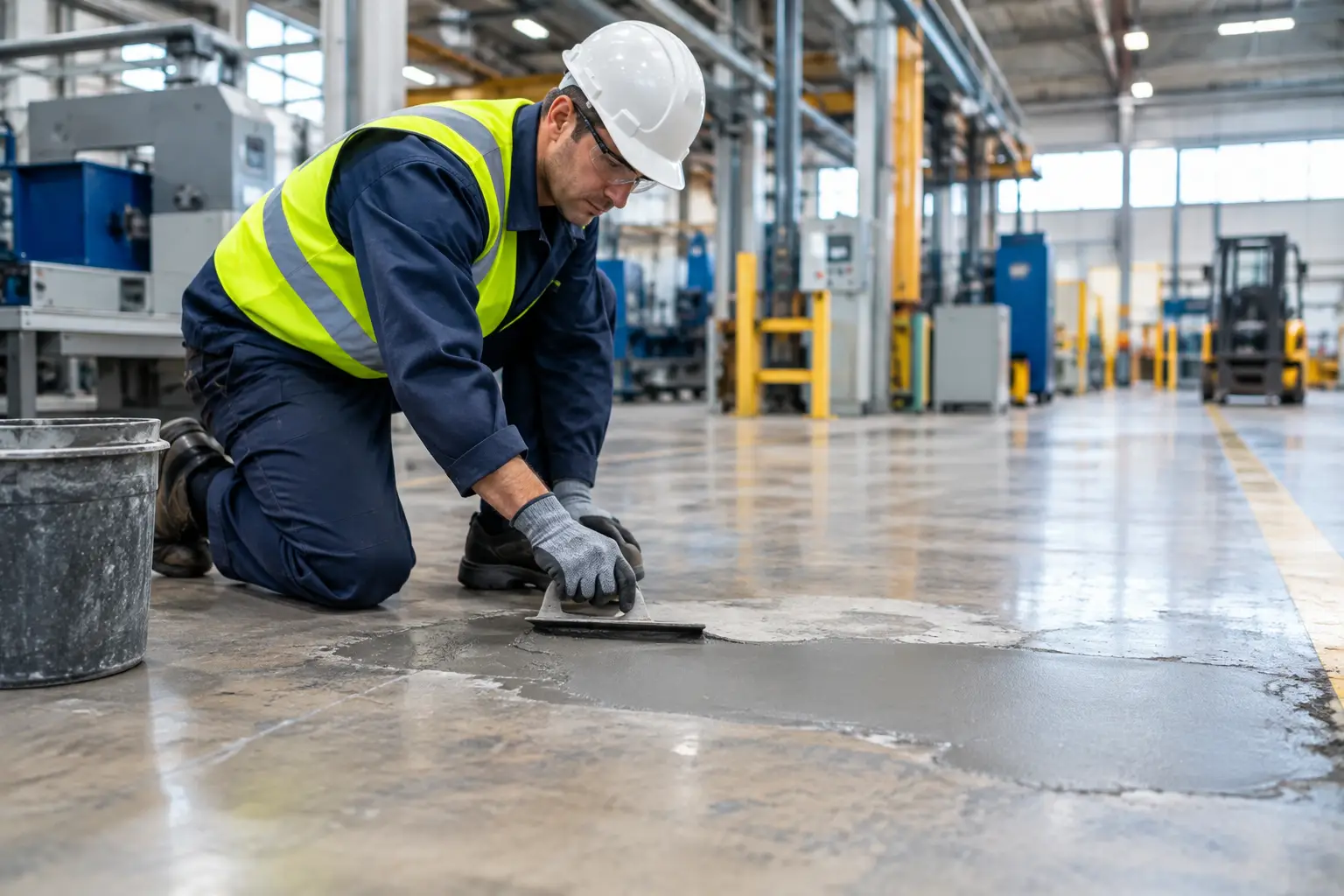
Before applying a coating, damaged areas should be repaired with materials compatible with the floor system and the expected service conditions. Cracks require evaluation as well. Some are static and can be treated as part of the preparation process. Others are active movement cracks that need a detail designed to accommodate movement rather than a rigid coating placed over the top.
In high-traffic facilities, joint repair is often central to dust control and floor longevity. The same applies to transitions at dock doors, drains, equipment pads, and wall interfaces. These details receive concentrated traffic and are common locations for coating breakdown when they are not properly addressed.
When a Coating Is Not the First Step
Not every dusty floor should be coated immediately. If the slab has widespread structural deterioration, active moisture issues, significant surface contamination, or major flatness problems, those conditions need to be addressed first.
A warehouse operating very narrow aisle equipment may need a floor assessment that considers both dust control and ride quality. Superflat floor requirements, wheel paths, rack layout, and material-handling equipment all affect the appropriate repair and upgrade strategy. Applying a coating without correcting operational floor defects can leave the facility with a cleaner-looking surface but the same productivity constraints.
Some lower-duty areas may benefit from a concrete densifier rather than a film-forming coating. Densifiers react within the concrete to harden and reduce surface dusting, while leaving the slab appearance largely unchanged. They can be useful where a coating is not required, but they do not provide the same barrier, cleanability, color control, or chemical resistance as a resinous flooring system.
What to Expect From a Professional Dust-Control Project
A reliable project begins with evaluating the slab rather than choosing a product from a catalog. The contractor should review the floor’s current condition, intended use, traffic type, exposure to chemicals or moisture, cleaning practices, and available shutdown time.
The installation sequence typically includes surface preparation, concrete repair, joint treatment where required, application of the specified primer and body coats, and a topcoat suited to the service environment. Each stage must be coordinated around cure times, access restrictions, ventilation, and the facility’s operating schedule.
For active plants and distribution centers, project planning matters as much as material selection. Work may need to proceed in phases to keep shipping lanes, production cells, or storage areas operational. A contractor experienced in industrial execution will define traffic handoff points, protection requirements, and reopening timelines before work begins.
Osis Group approaches these projects as floor performance work, with attention to preparation, repair, coating selection, and the operational realities around the installation. The objective is not simply to cover concrete. It is to deliver a floor that supports a cleaner, safer, and more dependable facility.
The Right Question to Ask Before Coating
Rather than asking only whether a coating will stop dust, ask what is causing the dust and what the floor must withstand after the work is complete. A coating can be an effective answer, but only when the substrate is sound, the details are addressed, and the system is built for the environment.
A floor that no longer sheds particles gives operations teams a cleaner baseline to manage. That is where the value starts: fewer dust-related disruptions, easier maintenance, and a surface designed to carry the work of the facility day after day.