A forklift that bounces at the same aisle intersection every shift is not a minor nuisance. A rack line that will not meet tolerance, recurring joint-edge spalls, or a coating that fails at high spots can all point to the same underlying issue. Knowing when do floors need grinding allows facility teams to correct slab conditions before they become safety incidents, equipment damage, production delays, or larger repair scopes.
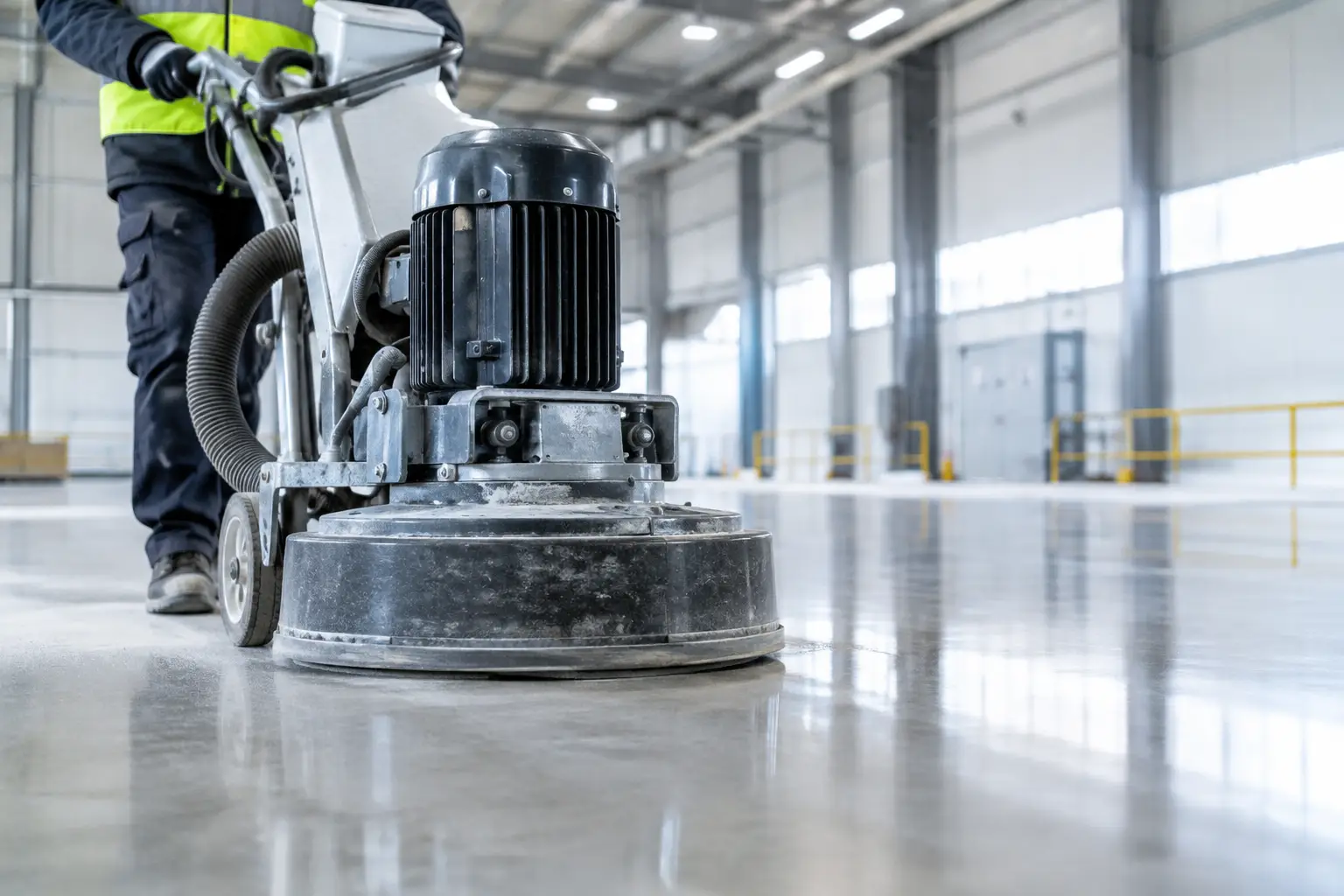
Industrial floor grinding is a controlled process for removing concrete, coatings, adhesive residue, surface contamination, or localized high areas. It is not a cosmetic shortcut. Done correctly, grinding establishes a sound, properly profiled substrate for repair, coating, polishing, or high-tolerance warehouse traffic. The required depth, equipment, and finish depend on the defect and the operational demand.
When Do Floors Need Grinding?
Floors need grinding when their existing condition interferes with safe, reliable operations or prevents a new flooring system from performing as specified. The visible problem may be roughness, peeling, unevenness, cracking, staining, or damaged joints. The decision should be based on the cause of that condition, not appearance alone.
A qualified assessment distinguishes between a surface issue and a structural or moisture-related issue. Grinding can remove unsound concrete and restore profile, but it cannot correct ongoing slab movement, active moisture vapor transmission, inadequate slab design, or poor drainage by itself. Those conditions require repair or mitigation before the final floor system is installed.
High Spots and Uneven Travel Paths
Localized high areas are common around construction joints, slab placements, previous patches, and traffic lanes. In standard industrial spaces, a small elevation difference may be manageable. In very narrow aisle warehouses, automated facilities, and operations using wire-guided lift trucks, it may not be.
Grinding is appropriate when high spots create forklift vibration, wheel impact, unstable loads, poor truck tracking, or trip hazards. It is also used to bring defined areas into tolerance before installing racking, wire guidance, or high-performance coatings. For Superflat and VNA floor environments, flatness and levelness must be evaluated against the vehicle, rack, and aisle requirements. Broad grinding without measurement can make a tolerance problem worse, so the work should follow a verified correction plan.
Failed Coatings, Adhesives, and Surface Contamination
A new resinous floor is only as reliable as the concrete beneath it. If existing epoxy, urethane cement, paint, mastic, or adhesive is weakly bonded, contaminated, or incompatible with the new system, it must be removed. Grinding is often the most precise method for stripping those materials while creating the required concrete surface profile.
Oil, grease, chemical residues, tire marks, curing compounds, and hardeners can also interfere with bond. Some contaminants require cleaning or deeper concrete removal before mechanical preparation. If contamination has penetrated the slab, surface grinding alone may not be sufficient. The specification should address the exposure history, cleaning method, preparation standard, and any required testing.
Joint Edge Damage and Surface Spalling
Joint deterioration is one of the clearest signs that a floor needs attention. Repeated hard-wheel traffic can break down joint shoulders, leaving rough edges and shallow spalls. Forklifts strike the damaged edge, damage accelerates, and the problem spreads along the traffic route.
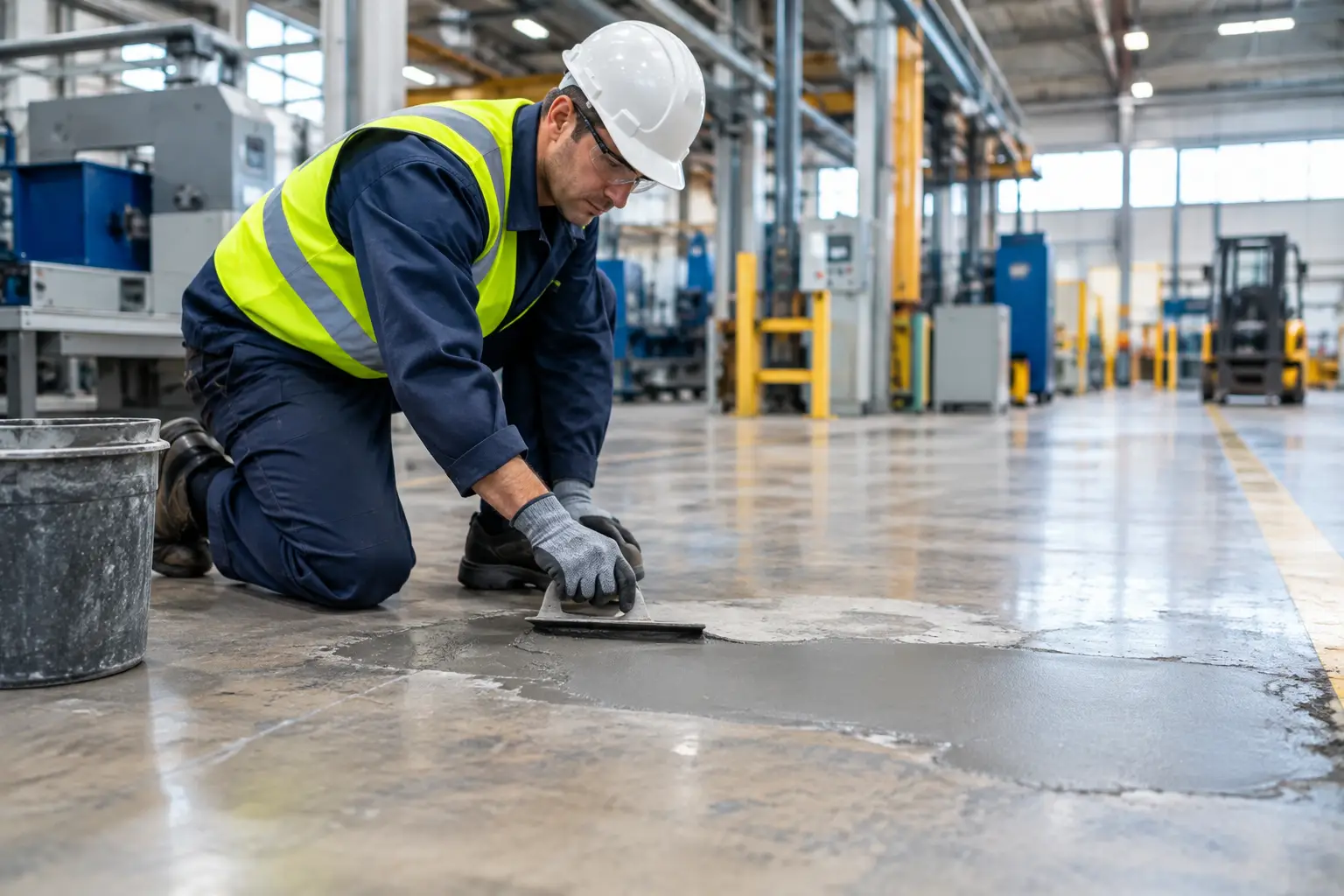
Grinding is frequently part of the repair process. Damaged concrete is cut or removed back to sound material, repair mortar is installed, and the repaired area is ground flush to reduce impact. Where joints are no longer needed for movement, a jointless floor repair strategy may provide a more durable traffic surface. The right choice depends on slab movement, joint condition, load type, and the repair material selected.
Grinding may also address surface spalls caused by poor finishing, freeze-thaw exposure, abrasion, or localized impact. The key question is depth. Shallow, isolated defects may be ground and patched effectively. Widespread weak concrete or delamination requires more extensive removal and a broader restoration plan.
Coating Failure at High Points or Transitions
Coatings often reveal slab problems that were already present. High areas receive more traffic wear. Abrupt transitions concentrate impact. Thin coating at a peak may wear through quickly, while a low spot may collect water, chemicals, or washdown residue.
Before recoating, the substrate should be mapped for high spots, failed patches, cracks, and transitions. Grinding can feather edges, remove loose coating, and create a uniform profile for the replacement system. It should not be used to hide failures caused by moisture, an incorrect coating selection, or excessive substrate movement. Those root causes need correction first.
Grinding for Floor Upgrades and Operational Change
A floor that performed adequately for its original use may need grinding when the operation changes. New lift trucks, higher wheel loads, denser storage, automated guided vehicles, or a conversion to food processing can raise performance requirements without changing the slab below.
For example, an older distribution floor may support conventional forklifts but fail to provide the smoothness required for narrow-aisle operation. A manufacturing area may need a chemically resistant floor system after a process change. A warehouse converting to wire guidance may require precise grinding, saw cutting, and repair so the guidance system and finished traffic surface perform as intended.
Grinding is therefore not always a response to visible failure. It can be a planned upgrade step that protects uptime when a facility changes how it moves, stores, or processes materials.
What Grinding Can and Cannot Correct
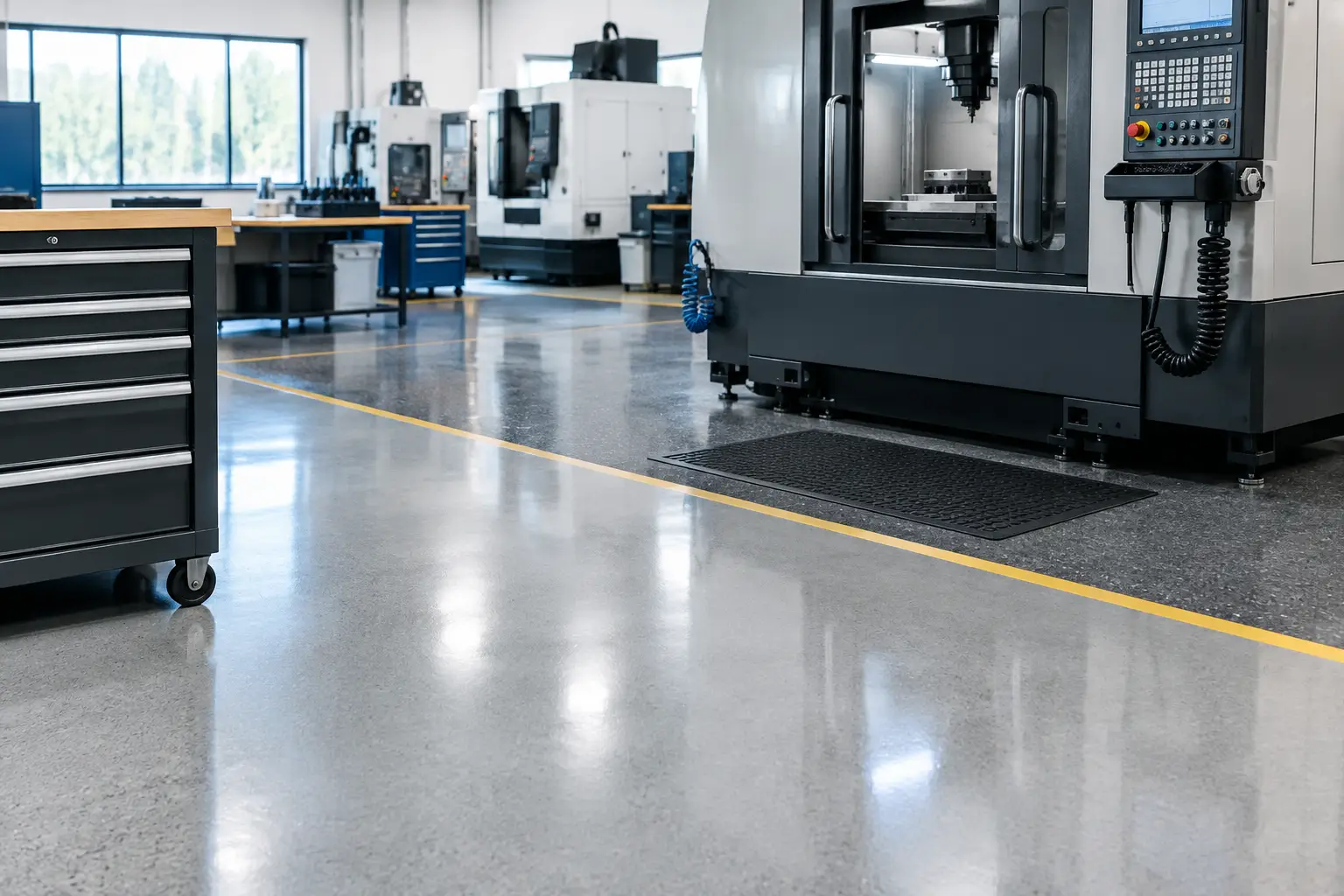
Grinding is effective when the defect is near the surface and the underlying concrete is sound. It can remove coatings, flatten high spots, open the concrete surface, blend repairs, improve traction profiles, and prepare floors for industrial resin systems.
Its limits matter just as much. Grinding does not stop cracks from moving. It does not repair a failing subbase, correct severe slab settlement, eliminate active moisture vapor issues, or restore concrete that has lost strength deep below the surface. It can also expose aggregate, reduce cover over embedded reinforcement if performed excessively, and create dust if not properly controlled.
The trade-off is straightforward: removing enough material to achieve the required result without compromising the slab or expanding the repair scope. That is why depth control, dust collection, equipment selection, and experienced operators are essential. A floor grinder is a powerful preparation tool, not a substitute for diagnosis.
How to Evaluate Whether Grinding Is Needed
Start with the operational consequence. Identify where equipment slows, loads bounce, water pools, coatings fail, or maintenance repeats. Document the locations by aisle, bay, production line, or traffic route rather than relying on a general visual impression.
Next, assess the floor condition. A site review may include straightedge checks, floor flatness and levelness measurement, sounding for delamination, moisture testing, bond testing, crack and joint inspection, and review of traffic patterns. In active facilities, the assessment should also consider access windows, dust containment, material cure time, and phased work requirements.
The repair recommendation should state what will be removed, how sound concrete will be verified, what profile is required afterward, and how the finished area will be protected from traffic. If a coating or topping will follow, the preparation method must match that system's requirements. If the goal is Superflat performance, the acceptance criteria must be defined before work begins.
Planning Grinding Without Unnecessary Downtime
Industrial grinding can often be sequenced around production, but it should not be treated as an after-hours detail. Grinding generates noise, vibration, dust, and temporary access restrictions. Even with high-efficiency vacuum systems, adjacent equipment, open product, and sensitive processes may require containment and coordination.
A practical plan divides the floor into manageable work zones, keeps emergency and material routes open where possible, and protects completed repairs until they reach service strength. The fastest schedule is not always the lowest-risk schedule. In high-traffic areas, a repair that is rushed back into service can fail before the project is complete.
For facilities where floor condition directly affects safety, equipment reliability, and throughput, surface preparation deserves the same discipline as the final flooring installation. Osis Group approaches grinding as part of a complete floor performance plan, with the condition of the slab and the demands of the operation setting the scope.
If a floor is producing repeated impacts, coating failures, joint damage, or tolerance concerns, address it before those signs become an operating constraint. The right grinding scope can extend service life, support safer traffic, and create a dependable base for the next phase of the facility.