
A forklift crossing the same aisle thousands of times does not care whether a floor looked good on handover day. It exposes weak slab edges, poor curing, inadequate support, and surface wear quickly. So, can jointless floors handle heavy traffic? Yes, but only when the floor is engineered and installed as a complete system for the facility’s actual loads, traffic patterns, and operating conditions.
For industrial operations, a jointless floor is not a shortcut around proper design. It is a performance-driven solution intended to reduce the joints that commonly become failure points under repeated wheeled traffic. When specified correctly, it can provide a durable, low-maintenance surface for warehouses, manufacturing plants, distribution centers, and other demanding environments.
Can Jointless Floors Handle Heavy Traffic? It Depends on Design
Heavy traffic is not one condition. A counterbalance forklift on pneumatic tires creates a different demand than a reach truck with hard polyurethane wheels. Very narrow aisle equipment, automated guided vehicles, loaded trailers, and high-frequency pallet movement each place stress on a slab differently.
The most significant advantage of a jointless floor is the reduction of joint-related damage. Conventional control joints can become vulnerable where wheels repeatedly cross them. Joint edges can spall, fillers can fail, and small levels changes can create impact that transfers force into equipment, loads, and the concrete itself. Removing unnecessary joints reduces these recurring maintenance points.
That does not mean a jointless slab is free from every joint. Construction joints, isolation joints, and carefully planned movement accommodations may still be required. The objective is to minimize uncontrolled cracking and avoid joint layouts that conflict with traffic routes. A floor described as jointless should never be assumed to mean that structural movement, building interfaces, or placement logistics have been ignored.
The answer depends on whether the slab, subbase, reinforcement strategy, concrete mix, placement sequence, curing process, and finish have been designed to work together. A good surface cannot compensate for inadequate slab thickness or unstable support beneath it.
What Heavy Traffic Does to an Industrial Floor
Repeated wheel loads create cumulative stress. This is especially true in fixed travel lanes, staging areas, loading zones, battery charging rooms, and pick faces where the same traffic pattern continues every shift. The floor may tolerate individual loads while still deteriorating prematurely under high repetition.
Hard wheels are particularly demanding. They concentrate load over a smaller contact area than pneumatic tires and can accelerate wear at weak points. When a wheel encounters a damaged joint, a crack, or a rough transition, impact loading increases. What starts as a minor defect can become a costly repair cycle.
Abrasion is a separate concern. Forklift tires, steel pallet feet, dragged loads, and debris can wear the surface even when the slab remains structurally sound. A jointless floor serving heavy traffic needs both structural capacity and a finish selected for abrasion resistance, cleanability, and the specific exposure conditions inside the facility.
For operations with washdowns, chemicals, oils, or temperature swings, the flooring specification must also address those exposures. A floor designed only for traffic loads may not deliver the required lifecycle performance in a food processing, chemical handling, or maintenance environment.
The Design Factors That Matter Most
A jointless floor performs well when decisions are based on measured operating demands rather than generic traffic assumptions. The project team should establish the heaviest equipment, maximum loaded axle weights, wheel configurations, traffic frequency, racking loads, and likely future changes before the floor system is finalized.
Slab thickness and subbase support are fundamental. Heavy equipment loads transfer through the concrete into the supporting layers below. If the subgrade is inconsistent or the base is poorly prepared, differential movement can create cracking and loss of levelness. Surface repairs may address the visible symptom, but they do not correct inadequate support.
Shrinkage management is equally important. Concrete shrinks as it cures, and jointless construction requires a deliberate approach to controlling that movement. Depending on the design, this may involve steel fiber reinforcement, conventional reinforcement, shrinkage-compensating concrete, optimized panel geometry, or a combination of methods. The appropriate strategy is project-specific.
Placement and curing are not secondary tasks. Large, continuous placements require disciplined sequencing, experienced finishing crews, and protection from rapid moisture loss. Poor curing can reduce surface strength and increase the risk of cracking and dusting. In a high-traffic building, those defects become operational issues, not merely cosmetic concerns.
Jointless Floors and VNA Operations
Very narrow aisle facilities raise the standard further. VNA trucks operate in defined paths with limited tolerance for floor variation. In these environments, a jointless surface can reduce disruptive joints in wheel paths, but jointlessness alone does not make a floor suitable for VNA use.
The floor must meet the required flatness and levelness criteria for the truck type, lift height, aisle layout, and guidance system. A slab can be durable enough for conventional forklift traffic and still be unsuitable for high-bay VNA operation. Excessive variation can affect truck stability, mast movement, rack clearance, and productivity.
This is why floor design must begin with the material-handling plan. Equipment selection, aisle geometry, rack layout, and floor tolerances should be coordinated before installation. Correcting a floor after racks are installed is more disruptive and more expensive than getting the specification right at the start.
Surface Systems Can Add Protection, Not Structural Capacity
Industrial coatings, toppings, and densifiers can improve a floor’s resistance to abrasion, chemicals, moisture exposure, or contamination. They can also support cleaning requirements and improve the appearance of active work areas. However, they should not be treated as a substitute for a properly designed concrete slab.
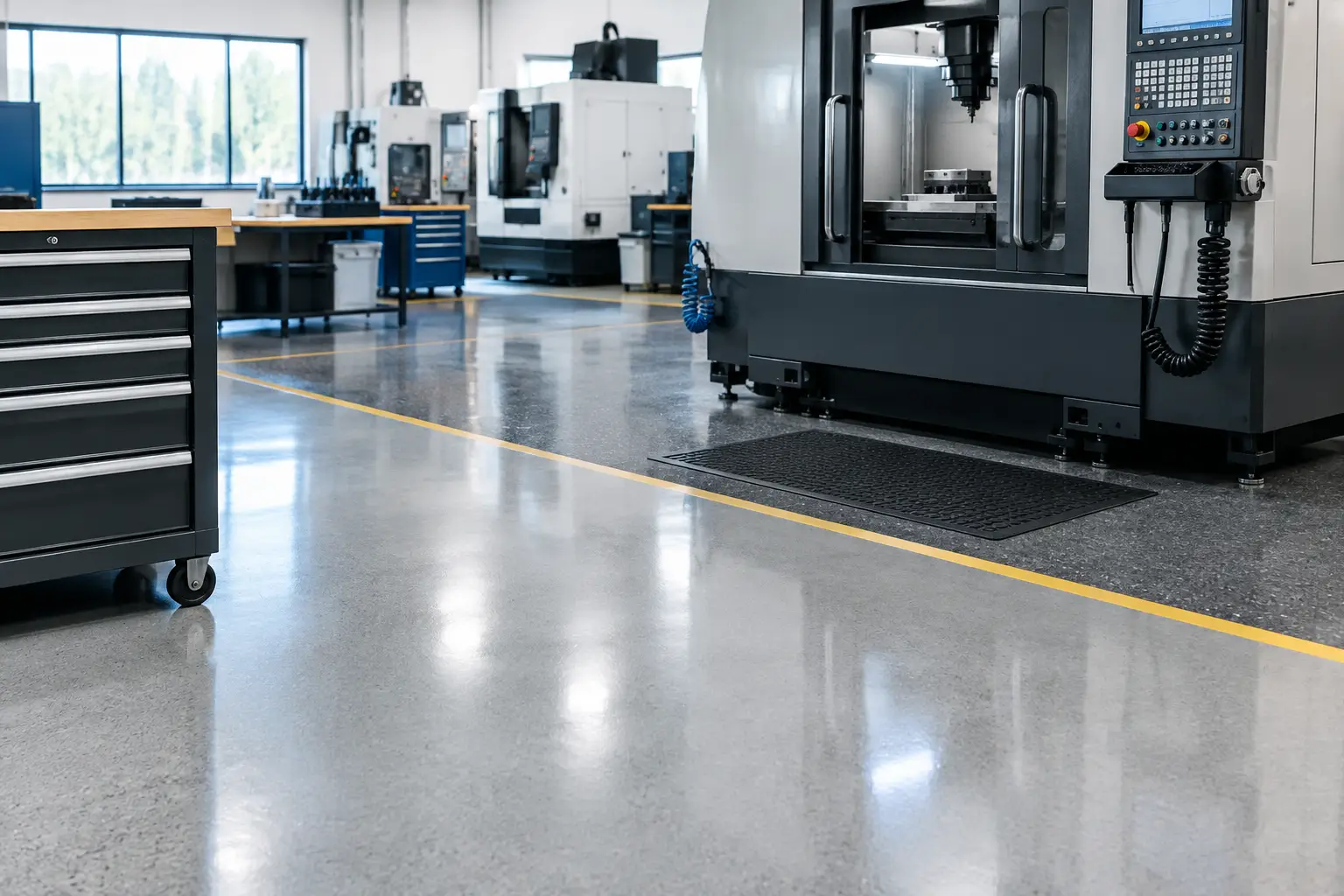
A resin flooring system may be the right finish for a process area with chemical exposure or strict hygiene requirements. A polished and densified concrete surface may suit a dry distribution environment. In either case, the substrate must be sound, properly prepared, and compatible with the selected system.
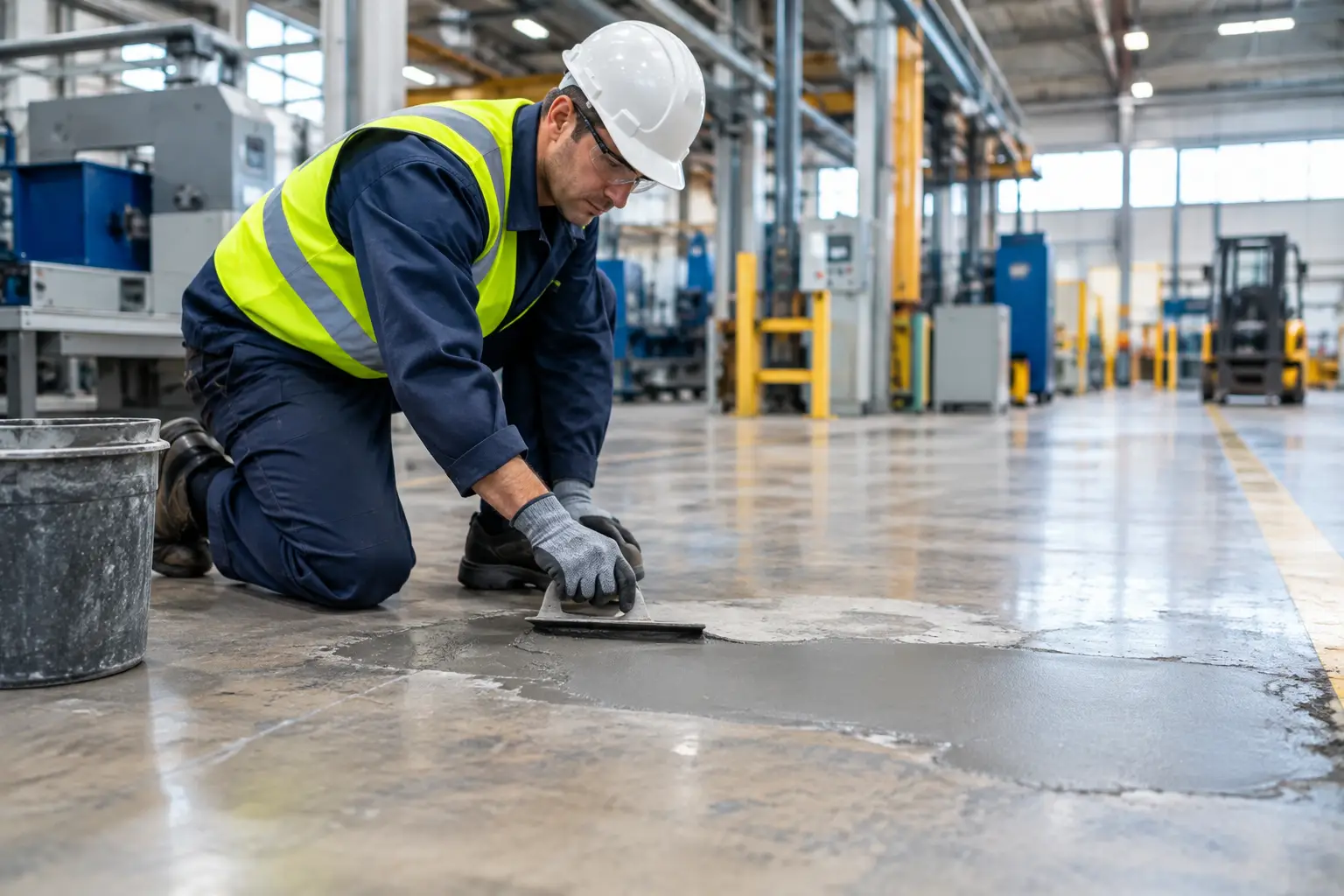
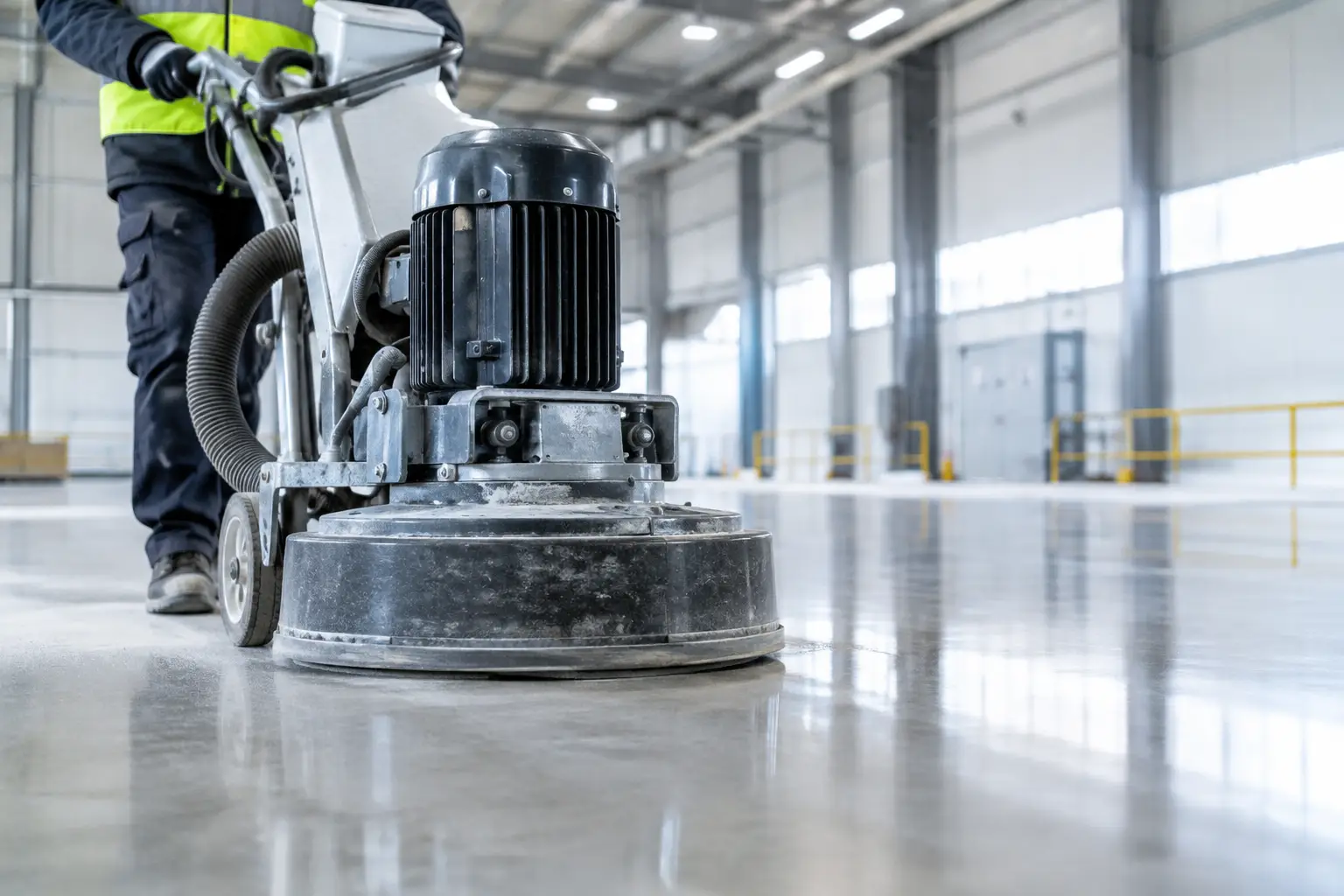
When an existing floor is already experiencing spalling, joint failure, or surface wear, the repair scope needs to address the cause of damage. Grinding may restore transitions and improve ride quality. Joint repair may protect damaged edges. Localized slab repair may be required where deterioration has progressed. These measures are valuable, but they should be planned around operational traffic and downtime requirements.
Installation Quality Determines Lifecycle Value
The difference between a high-performing jointless floor and a recurring maintenance problem often comes down to execution. Industrial flooring is sensitive to details that are easy to underestimate: substrate preparation, concrete delivery consistency, placement timing, laser-controlled finishing, reinforcement placement, curing discipline, and protection during early service.
Facilities should also consider how the project will be delivered around active operations. A flooring contractor must understand access restrictions, safety controls, shutdown windows, equipment movement, and turnover milestones. The best specification loses value if installation disrupts production or opens the floor before it has reached suitable performance.
Osis Group approaches these conditions as operational requirements, not installation preferences. The goal is a floor that supports equipment movement, safety, and productivity over its service life.
When a Jointless Floor Is the Right Choice
Jointless construction is often a strong option for large warehouse slabs, logistics facilities, manufacturing areas, and traffic-intensive spaces where joint maintenance has become a persistent cost. It is especially valuable where fixed truck paths make conventional joints vulnerable to repeated impact.
It may not be the best answer in every area. Buildings with complex geometry, major structural movement, severe thermal conditions, or highly segmented construction may need a different joint strategy. Existing slabs may also be better served by targeted repair, grinding, or an engineered overlay than by full replacement.
The practical question is not whether jointless floors can carry traffic in general. It is whether the proposed floor has been designed for the equipment, wheel loads, environment, and service expectations inside your facility. Establish those conditions early, and the floor can become a reliable operating asset rather than the next source of downtime.