A floor can look serviceable and still create operational risk. Forklift vibration, unstable rack loading, premature coating failure, pooling water, and trip hazards often begin with defects at the concrete surface. Concrete grinding is the controlled removal of that surface to correct profile, flatness, contaminants, and localized damage before those issues affect production.
For industrial facilities, grinding is not a cosmetic process. It is a surface preparation and floor-upgrade decision that must be matched to traffic, equipment, moisture exposure, safety requirements, and the next stage of the floor system. The right scope can extend floor life and reduce disruption. The wrong scope can leave hidden defects in place or remove material without solving the operational problem.
What Concrete Grinding Accomplishes
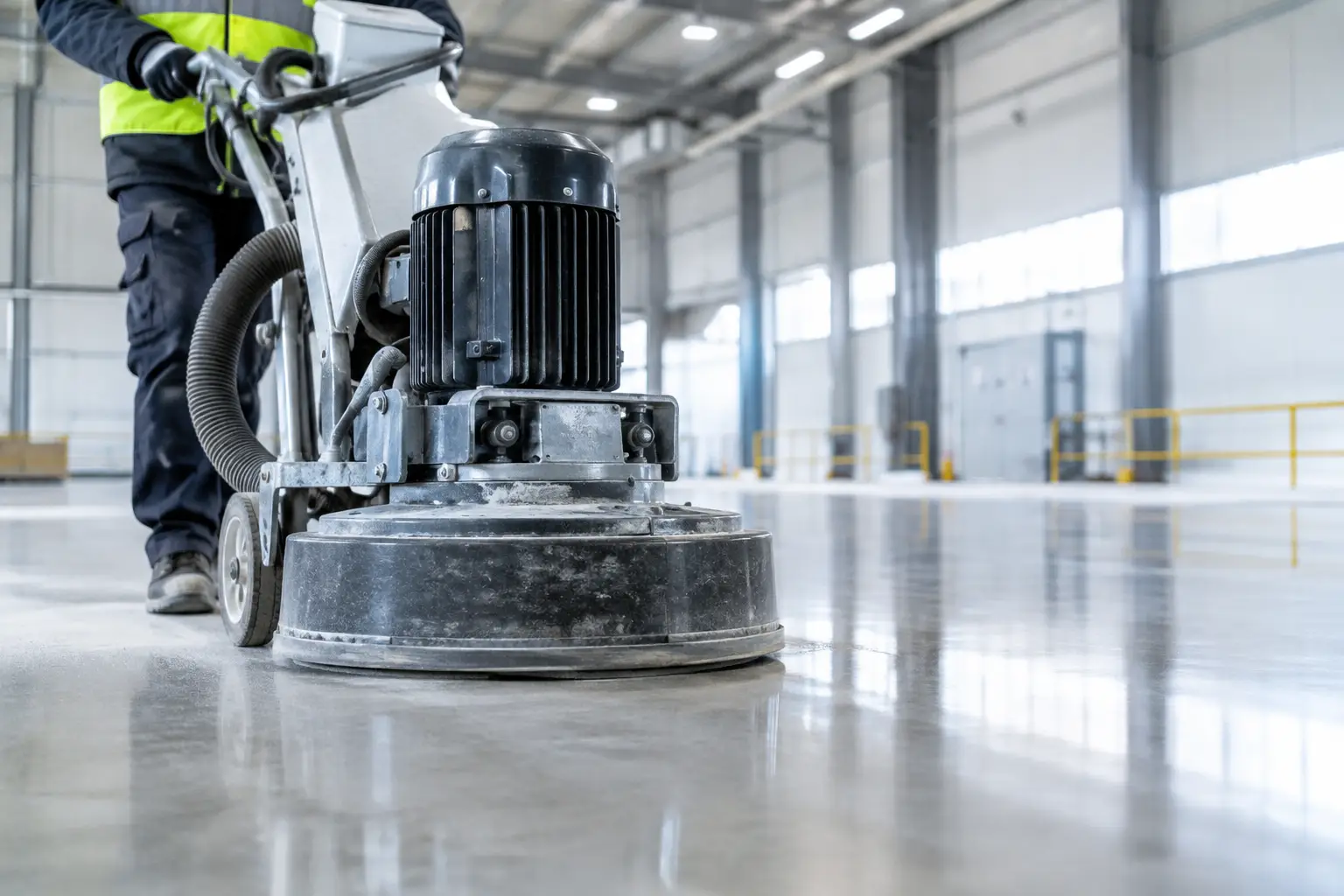
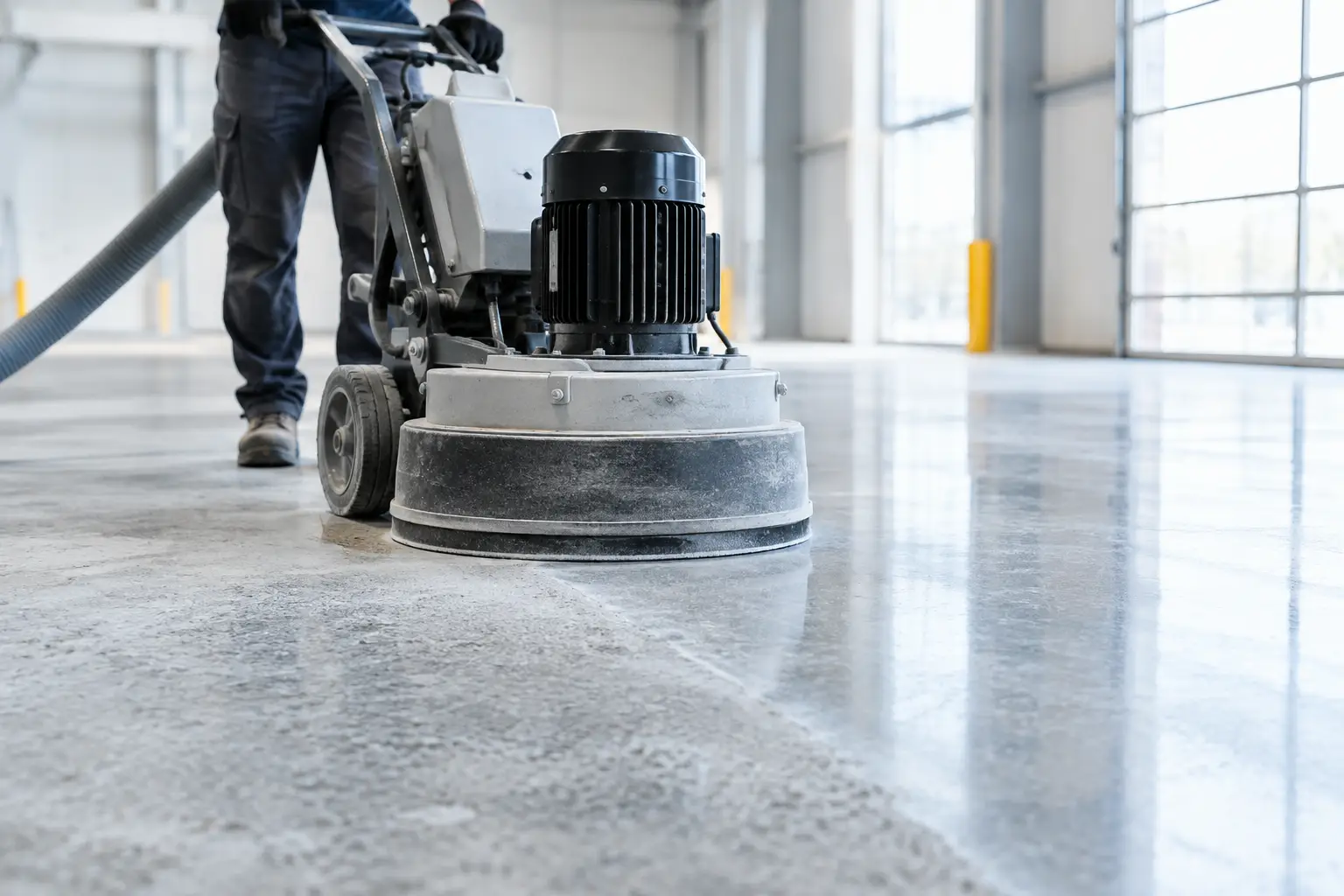
Concrete grinding uses diamond tooling and purpose-built equipment to remove a measured amount of concrete. The result may be a cleaner, flatter, more consistent slab, but the objective depends on the facility.
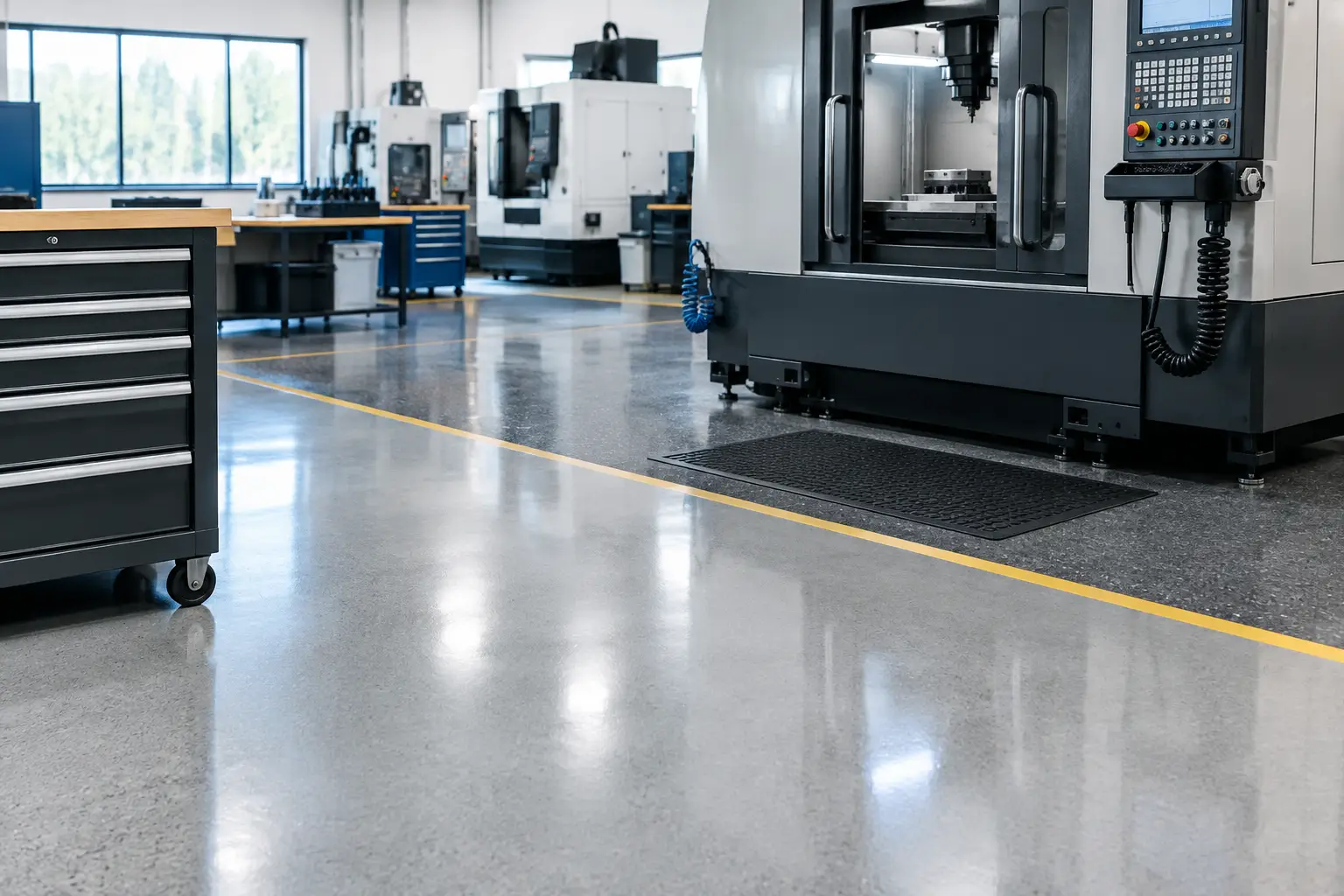
In a warehouse, the priority may be correcting slab transitions and high spots that create repeated forklift impact. In a manufacturing plant, grinding may be required to remove failed coatings and establish the surface profile needed for a new resinous floor. In a food or beverage environment, it may support drainage corrections, cleanability, and a floor system built to withstand washdowns.
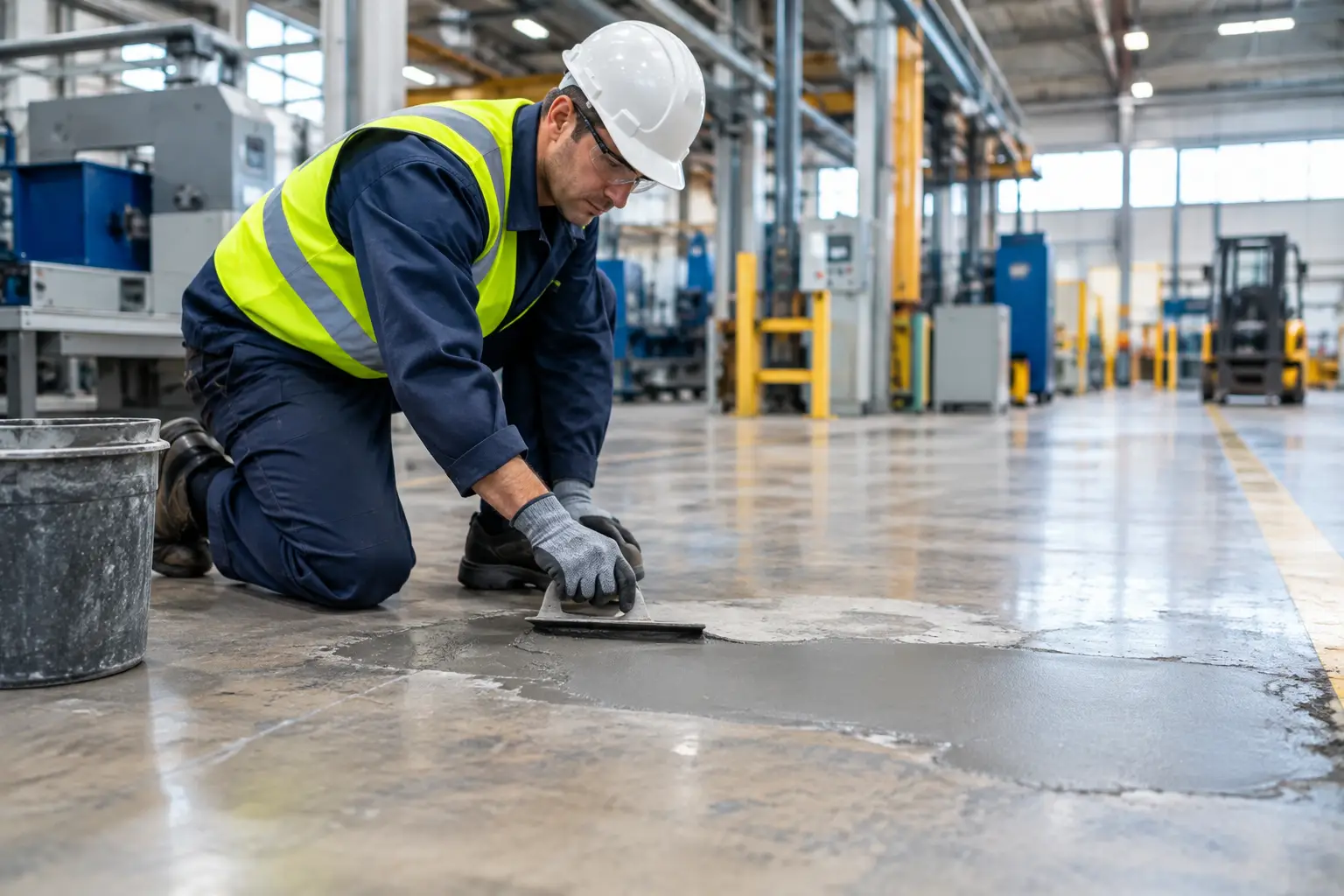
The process can address localized surface irregularities, adhesive and coating residue, weak concrete at the surface, spalls, tire wear, and minor elevation differences. It can also prepare defined areas for joint repair, floor patching, or a full flooring upgrade.
Grinding has limits. It cannot correct a slab with major structural movement, widespread delamination, severe moisture-related deterioration, or deep settlement simply by removing the top layer. Those conditions require a broader repair strategy. A proper assessment determines whether grinding is the solution or only one part of it.
When Industrial Floors Need Grinding
The clearest sign is repeated operational impact. If equipment operators report rough travel paths, if pallet loads shake across slab joints, or if coating repairs continue to fail in the same locations, the floor should be evaluated before the problem spreads.
Common triggers include:
- High spots, lips, or uneven transitions that affect forklifts, reach trucks, and cart traffic
- Existing coatings, mastics, or contaminants that prevent a new floor system from bonding
- Surface wear, exposed aggregate, scaling, or localized weak concrete
- Joint and crack repairs that need to be blended into the surrounding slab
- Flatness deficiencies in defined travel lanes, staging areas, or very narrow aisle operations
The intended use of the floor matters. A distribution center with VNA equipment has a different tolerance for floor variation than a general storage area. A plant that runs heavy wheeled traffic across the same routes has different requirements than a facility with mostly pedestrian movement. Grinding should be specified against how the floor performs under load, not against appearance alone.
Flatness Is an Equipment Issue
Floor flatness affects more than ride quality. In high-bay and VNA warehouses, small surface variations can influence mast movement, equipment stability, load handling, tire wear, and operator confidence. Superflat floors require controlled placement and finishing from the start, but existing slabs can often benefit from targeted grinding where defined defects interfere with operations.
That does not mean every older warehouse floor should be ground across its full area. Targeted correction may be the practical choice when problems are limited to high-traffic lanes, rack aisles, slab transitions, or equipment interfaces. Full-area grinding may be appropriate when the slab needs uniform preparation for a new flooring system or when widespread surface inconsistencies are affecting the facility.
Concrete Grinding Before Coatings and Overlays
A high-performance coating is only as reliable as the concrete beneath it. If the slab contains curing compounds, old epoxy, oil contamination, weak laitance, or incompatible patch materials, a new installation can fail at the bond line. The visible coating may peel, blister, chip, or wear prematurely even when the product itself was specified correctly.
Grinding creates a controlled concrete surface profile. The required profile depends on the flooring system. A thin-film coating generally needs a different profile than a high-build epoxy, urethane cement system, mortar system, or polymer overlay. Aggressive grinding can leave the wrong texture for a thin system. Light grinding can leave insufficient mechanical bond for a thicker system.
The specification should define the existing floor condition, required preparation standard, repairs, moisture evaluation, and final system. Treating surface preparation as an isolated low-cost item is a frequent mistake. It is the work that determines whether the finished floor achieves its intended service life.
Grinding Is Not a Substitute for Repair
Grinding can feather a repaired area, remove unsound material, and create a sound surface for patching. It does not replace crack treatment, joint reconstruction, or slab stabilization where those are required.
Active cracks and damaged joints deserve particular attention. Industrial joints take repeated wheel impact and are often the first point of failure in high-traffic areas. If the joint arris is broken, filling or coating over it without proper repair may produce a short-term improvement but not a durable result. Repair must restore support at the joint before grinding is used to blend the transition and prepare the surrounding surface.
Planning the Work Around Uptime
Industrial flooring work must fit the operating plan. The most technically correct approach is not useful if it blocks a shipping lane, interferes with a production shift, or exposes adjacent equipment to dust and debris.
A disciplined grinding plan starts with a site review. The contractor should identify traffic routes, equipment clearances, slab condition, utility constraints, active work zones, staging locations, and the areas where downtime is acceptable. The work can then be sequenced by aisle, bay, room, or operating phase rather than treating the facility as one open project.
Dust control is central to that plan. Professional concrete grinding uses industrial vacuum systems designed to capture dust at the source. Even so, containment and housekeeping requirements vary by facility. Food production, electronics, healthcare-adjacent spaces, and occupied distribution operations may require tighter isolation, scheduled work windows, and additional cleaning controls.
Noise, vibration, access, and slurry management also need attention. Dry grinding is common for interior preparation because it supports dust collection and avoids the cleanup burden of wet slurry. Wet methods can be appropriate for certain applications, but they must be planned around drainage, contamination control, and site conditions.
Choosing the Right Grinding Scope
The correct scope begins with measurable conditions, not assumptions. A facility team should expect the contractor to distinguish between isolated defects, broad surface wear, coating removal, and floor-flatness correction. Each condition calls for a different production rate, tooling approach, repair sequence, and quality-control method.
Before work begins, establish what acceptable performance looks like. That may include smoother forklift travel, a specified surface profile for coating installation, reduced trip points, repaired joints, or defined flatness targets in critical areas. Documenting those outcomes keeps the project aligned when field conditions change.
Material removal must be controlled. Removing more concrete than necessary adds cost and can expose aggregate, alter drainage, or create transitions at doorways and equipment bases. Removing too little can leave contamination or weak material behind. Experienced crews adjust tooling, passes, and repair methods based on the slab, rather than relying on a single production method across every area.
At Osis Group, floor upgrade and grinding work is planned as part of the facility's operating environment, with surface preparation, repair needs, and project sequencing evaluated together. The goal is a floor that supports the next phase of operations, not a temporary visual improvement.
Quality Control That Protects the Result
The finished surface should be inspected before the next trade or flooring system proceeds. For coating preparation, that includes confirming that residues are removed, repairs are sound, the required profile is achieved, and the floor is clean. For travel-path corrections, inspection should focus on transitions, equipment movement, and the specific defects identified during the assessment.
Conditions can change once grinding exposes the concrete. Hidden cracks, delaminated areas, weak patches, and moisture concerns may become visible only after old materials are removed. A capable project team identifies those findings quickly, explains the impact, and recommends a repair path that protects the schedule without compromising the floor system.
This is where workmanship standards matter. Industrial floors are expected to carry loads, resist wear, support safety, and remain available for work. Grinding is often the step that makes those outcomes possible, but only when it is evaluated as part of the full floor assembly.
A well-planned grinding project gives a facility a reliable starting point: sound concrete, controlled transitions, and a surface ready for the traffic or floor system ahead. That foundation is where durable industrial floor performance begins.