
A forklift crossing a failed joint does more than create a rough ride. Each impact transfers force into the wheel, load, slab edge, and rack-supported operation around it. Over thousands of crossings, small defects become spalls, broken arrises, loose joint filler, equipment vibration, and recurring repair calls. To prevent joint damage from wheels, facilities need to manage the combined effects of traffic, loading, concrete condition, joint design, and floor flatness.
Joint failure is rarely an isolated maintenance issue. It is a floor performance issue with direct consequences for operator safety, product protection, equipment wear, and operational uptime. The right response begins with identifying why the joint is failing, then selecting a repair or upgrade that matches the traffic and service conditions.
Why Wheels Damage Concrete Joints
Concrete contracts as it cures. Construction joints and saw-cut control joints accommodate that movement, but they also create an interruption in the floor surface. When a hard wheel crosses an unsupported joint edge, especially under load, the edge is exposed to concentrated impact.
The problem accelerates when slab panels curl upward at corners or when the joint opens and loses aggregate interlock. The two sides of the joint no longer share load effectively. A wheel then strikes a high edge, causing concrete to chip away. Once the edge begins to break down, the impact becomes more severe with every pass.
Forklifts with polyurethane, nylon, or other hard tires commonly create the highest joint stress because they offer limited cushioning. Narrow wheels concentrate the load further. Reach trucks, order pickers, pallet jacks, automated guided vehicles, and heavily loaded carts can create similar conditions, particularly where travel paths repeatedly cross the same joints.
Wheel loading is only part of the equation. A floor that is out of tolerance, poorly maintained, or already affected by surface deterioration can force equipment to strike joints at greater speed or uneven angles. In very narrow aisle operations, small variations in floor profile can also affect wire-guided and turret truck performance.
The Conditions That Signal a Joint Failure Risk
Facilities should not wait for a joint to become a trench before taking action. Early indicators are visible and operational: fine cracking along joint edges, small chips at the arris, joint filler pulling away, exposed aggregate, wheel marks concentrated at crossings, or a noticeable impact felt by operators.
A change in equipment behavior can be just as revealing. Operators may slow down at certain crossings, loads may rattle, or wheels may show unusual wear. In a high-throughput warehouse, those signs often point to a repeatable traffic problem rather than operator error.
Joint condition should be assessed in the context of the entire floor. A repair that addresses only the visible spall may fail quickly if the underlying slab movement, curling, poor load transfer, or floor profile remains unresolved. The repair material matters, but preparation and diagnosis determine whether the repair performs.
Prevent Joint Damage From Wheels With the Right Floor Strategy
The most effective strategy depends on the facility’s traffic pattern, floor age, slab condition, and uptime requirements. New construction and active-facility remediation require different solutions, but both should be based on the operational demands placed on the floor.
Design for the actual wheel loads
Floor specifications should account for the equipment that will operate in the building, not only the building’s general use classification. Wheel type, wheel diameter, axle loads, travel frequency, turning locations, rack layout, and expected future automation all affect joint performance.
A distribution center running narrow-aisle trucks on hard wheels needs a different floor approach than a light commercial storage area. Likewise, a facility with frequent pallet jack traffic across doorways, staging lanes, and dock approaches may require targeted reinforcement or joint protection in those high-impact zones.
For new floors, joint layout, load transfer, slab thickness, concrete mix design, curing, and finishing quality should work together. Jointless or reduced-joint floor systems may be appropriate where constant wheeled traffic makes conventional joint maintenance a long-term burden. These systems are not automatically the right choice for every building, but they can reduce the number of vulnerable crossings in demanding operations.
Maintain flatness where traffic depends on it
Flatness is not cosmetic. It controls how consistently wheels meet the floor. Local highs, dips, curled slabs, and uneven joint transitions increase dynamic loading at crossings. That is particularly consequential in VNA environments, where equipment operates on defined paths and relies on predictable floor geometry.
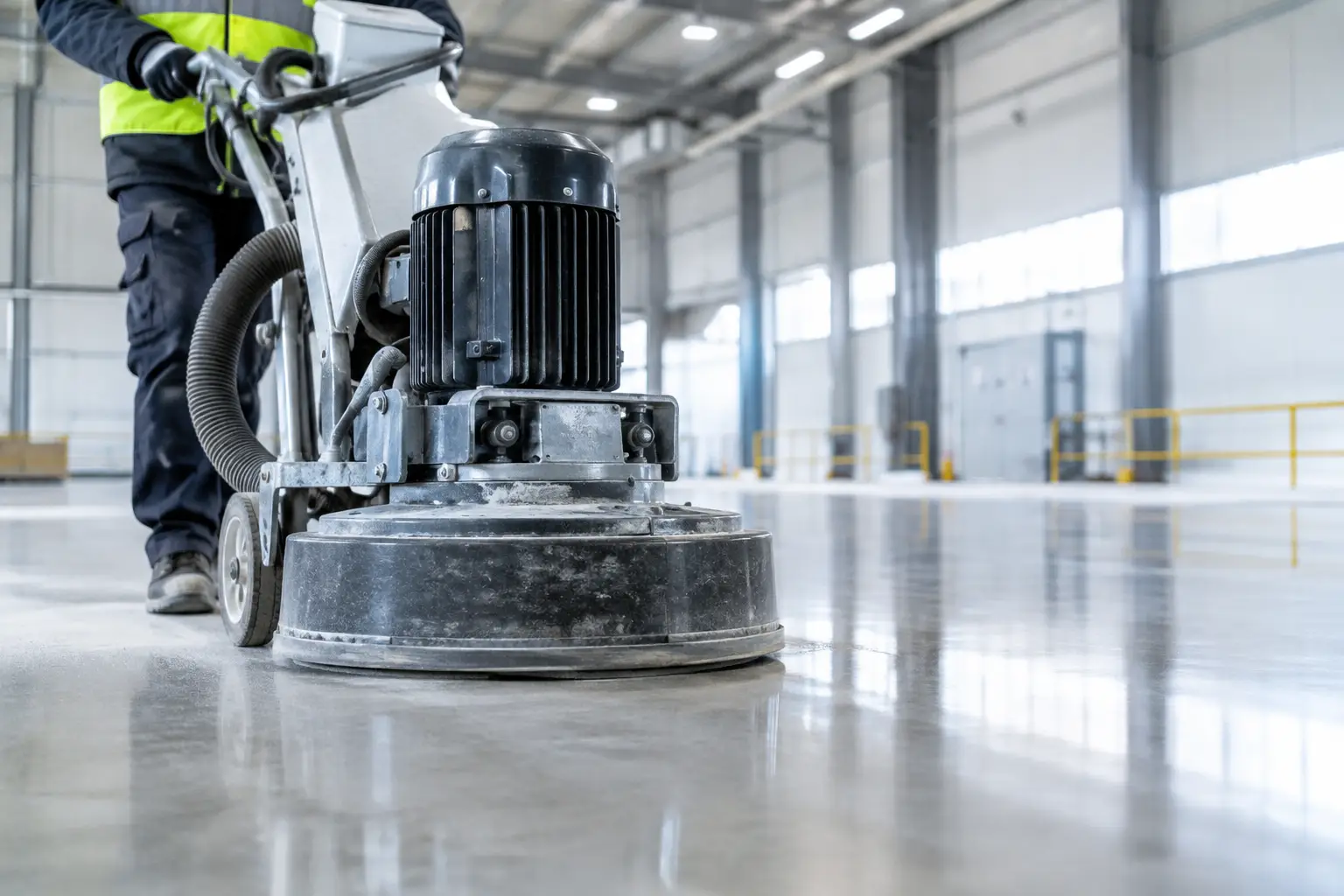
Floor grinding and targeted upgrades can correct surface profile issues that contribute to repeated joint impact. The goal is not simply to make the floor look smoother. It is to create a controlled travel surface that supports safe, efficient equipment movement and reduces the forces that damage slab edges.
In superflat floor applications, measurement, analysis, and corrective work must be managed to the operating standard of the material-handling system. A general flatness assessment may not be enough for a wire-guided or turret-truck aisle. The floor must be evaluated where and how the equipment will travel.
Repair joints before the damage expands
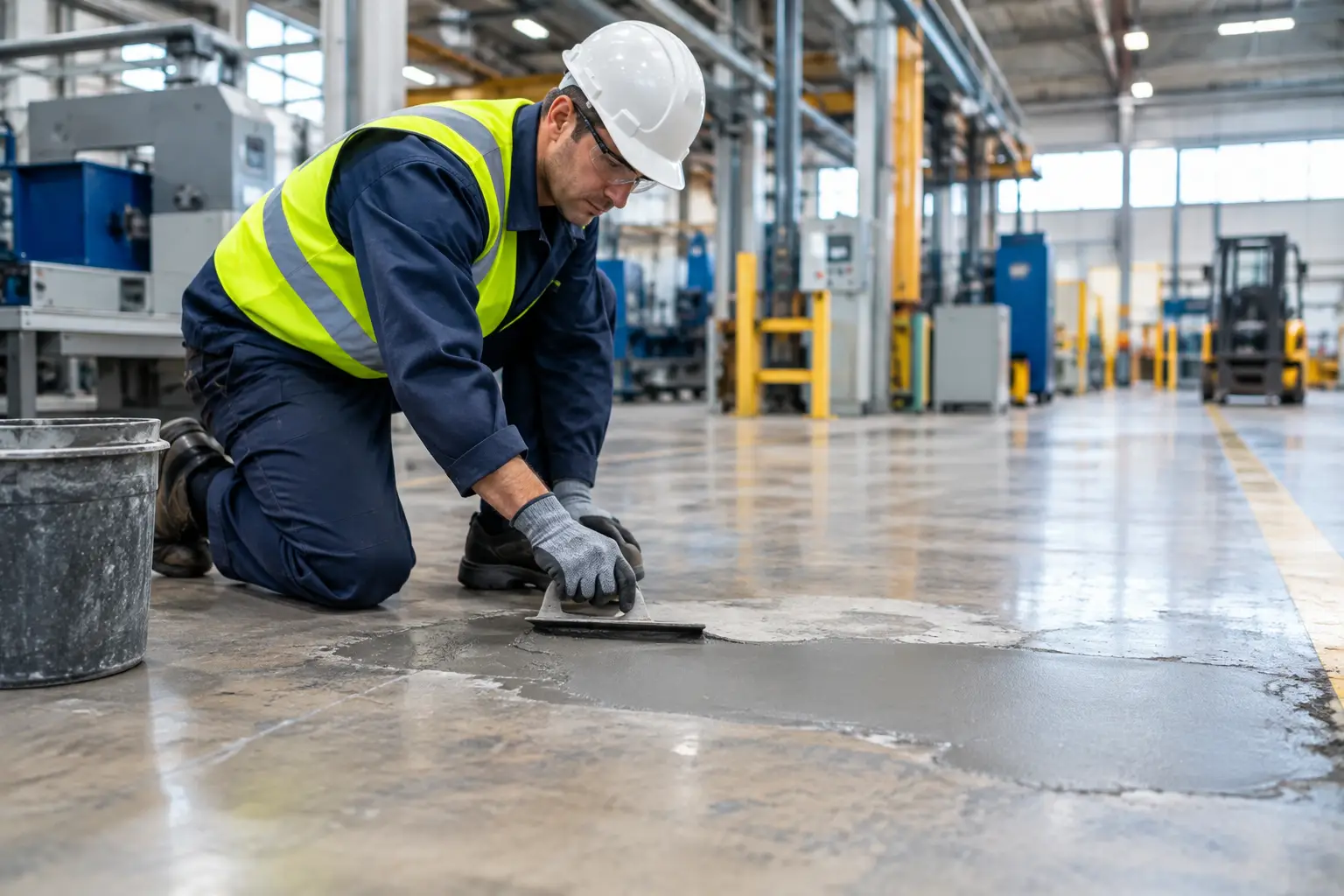
Once edge spalling begins, repair should be treated as a performance restoration project. Loose and damaged concrete must be removed back to sound material. The joint profile must be prepared to receive a repair system that can withstand the expected wheel traffic, movement, and impact.
A rigid repair can provide strong edge support in stable conditions, while semi-rigid joint fillers are commonly used to support joint edges exposed to hard-wheeled traffic. The correct choice depends on joint movement and service conditions. Using a material that is too rigid for an actively moving joint can lead to cracking or debonding. Using a material that is too soft may not support the edges sufficiently under repeated loads.
Timing also matters. Fresh repairs need appropriate cure time before traffic returns. Accelerated repair systems can help reduce downtime, but only when the surface preparation, moisture conditions, and installation process are controlled. Fast reopening should never mean accepting a repair that will fail under the first weeks of service.
Control the Traffic That Creates Repeat Damage
A well-built floor can still be damaged by avoidable traffic conditions. Travel paths should be reviewed for unnecessary sharp turns, abrupt changes in speed, overloaded equipment, and routes that repeatedly force wheels across deteriorated joints.
Where operationally practical, route equipment to cross joints at close to a right angle rather than at a shallow angle. This distributes impact more predictably and reduces side loading on joint edges. High-use crossings should be included in a documented inspection schedule rather than addressed only after operator complaints.
Wheel selection is another practical control. Hard wheels may be necessary for rolling resistance, load capacity, or equipment design, but they are less forgiving at damaged joints. Facilities should evaluate wheel condition, wheel material, and replacement intervals alongside floor maintenance. A worn or damaged wheel can intensify impact and accelerate edge failure.
Speed management also has value, especially at known transition points. It is not a substitute for a sound floor, and it should not be used to mask repair needs. It can, however, limit further deterioration while a permanent repair is scheduled.
Plan Repairs Around Uptime, Not Just Availability
Joint repair often occurs in active warehouses, plants, and distribution facilities where shutting down an entire floor is not an option. The work should be sequenced around traffic patterns, production windows, access requirements, and cure times.
A disciplined project plan isolates work areas, protects completed repairs, manages dust and debris, and returns each section to service only when it is ready. This is particularly important near rack aisles, dock routes, production equipment, and wire guidance systems, where access restrictions can affect the wider operation.
For broad deterioration, a condition survey can help prioritize work by risk. Start with primary travel lanes, high-load crossings, VNA aisles, dock approaches, and locations where operators report repeated impact. Repairing the most critical joints first protects operations while providing a clear basis for phased capital planning.
Treat Joints as Critical Operating Assets
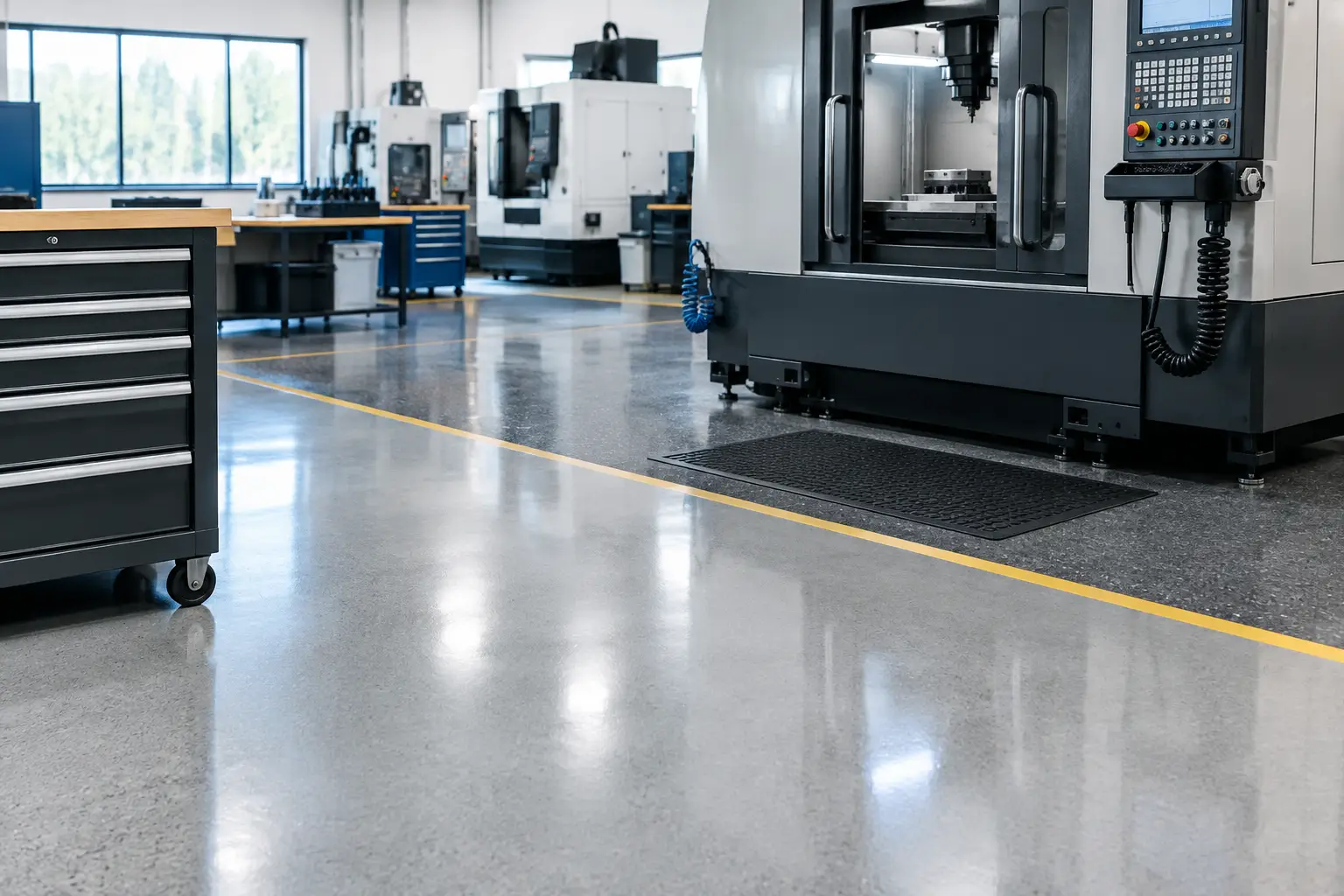
Concrete joints are designed movement locations, but they should not become impact points that disrupt the facility. Reliable performance comes from matching the floor system to equipment demands, maintaining flat travel surfaces, restoring damaged edges correctly, and acting before a localized defect spreads.
For facilities where hard-wheel traffic is constant, the standard should be simple: every joint crossing must support the work moving over it. That is how a floor continues to protect equipment, people, and productivity shift after shift.