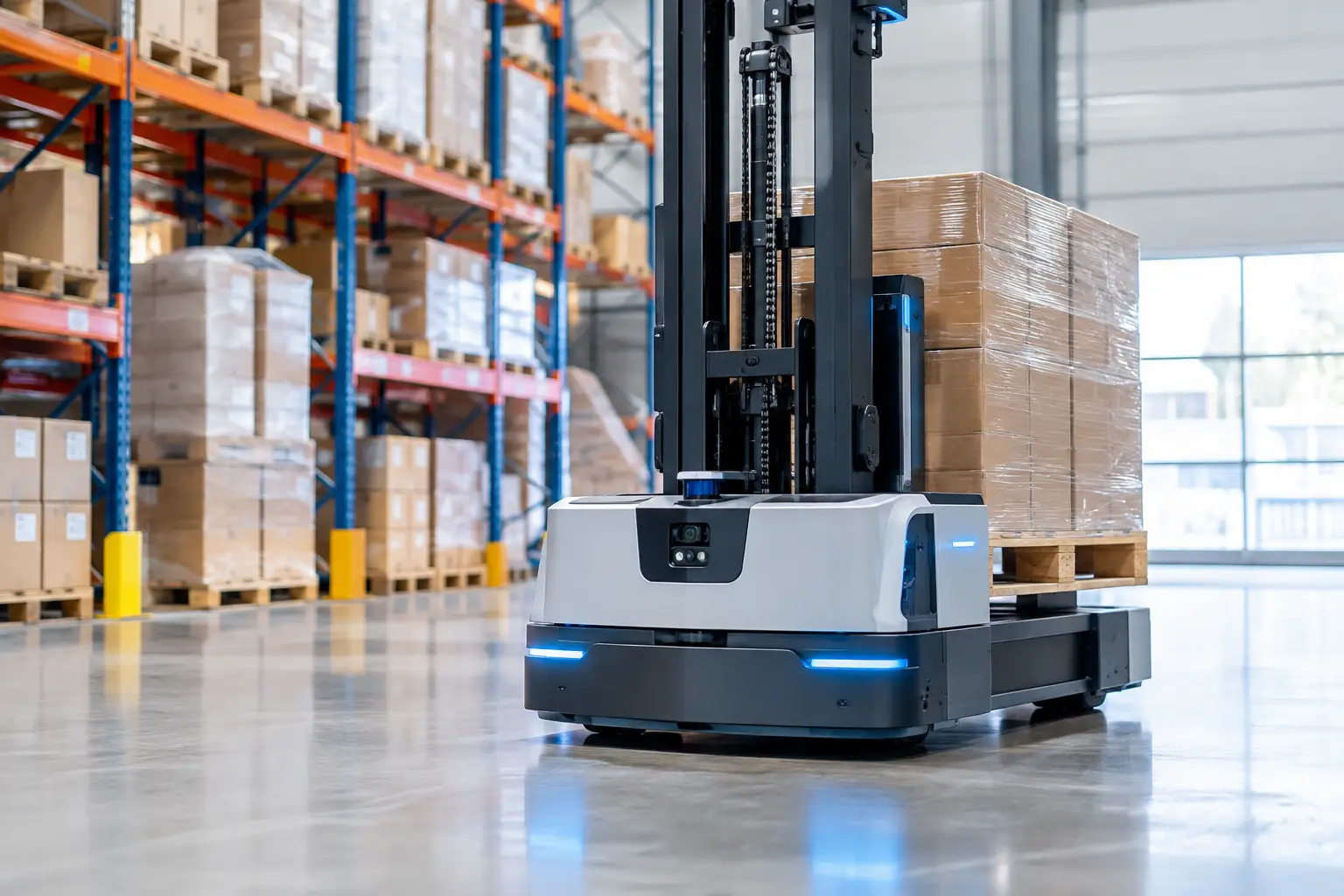
Autonomous forklift flooring trends are changing a basic assumption in warehouse design: the slab is no longer just a surface built to carry loads. It is part of the vehicle guidance environment. An autonomous forklift follows the same travel paths, repeats the same stops, and detects surface variation more consistently than a human operator. Small floor defects that may be tolerated in a conventional operation can create repeated positioning errors, vibration, load instability, and maintenance exposure in an automated one.
For facility owners, general contractors, and operations leaders, the implication is direct. Floor performance must be specified around the operating profile of the autonomous fleet, not treated as a finishing scope after racking and equipment decisions are already made.
Autonomous Forklift Flooring Trends That Matter
The most significant trend is the move from general flatness targets to operating-zone floor requirements. A facility may not need the same degree of precision everywhere. Receiving, staging, battery charging, pedestrian crossings, rack aisles, and automated transfer points impose different demands on the slab.
Autonomous forklifts intensify this distinction because their routes are predictable. If a vehicle crosses the same construction joint hundreds of times per shift, that joint becomes a concentrated maintenance and reliability risk. If it must place loads at height in narrow aisles, floor levelness and wheel-path consistency become central to safe operation.
The best specifications identify the vehicle type, wheel configuration, loaded weight, lift height, travel speed, aisle layout, guidance method, and duty cycle before selecting a floor system. A broad statement such as “high-flatness concrete” is rarely sufficient for an automated material-handling environment.
Superflat floors are becoming operational infrastructure
Superflat concrete floors remain a critical requirement for very narrow aisle operations, especially where autonomous trucks handle high lifts or operate in defined rack aisles. These floors are engineered for controlled wheel paths and tighter tolerances than conventional warehouse slabs.
The reason is practical. At lift height, minor deviations at floor level can be magnified through the mast. Floor undulations, crossfall, and inconsistent aisle transitions can affect load placement, truck stability, and the ability of sensors or control systems to maintain expected position. The higher the storage density and lift height, the less room there is for variation.
A superflat floor is not simply a premium finish applied across an entire building. It requires early coordination among the slab designer, rack provider, lift-truck supplier, automation team, and flooring contractor. Rack aisle geometry, pour sequence, joint layout, testing method, and post-construction verification all affect the final result.
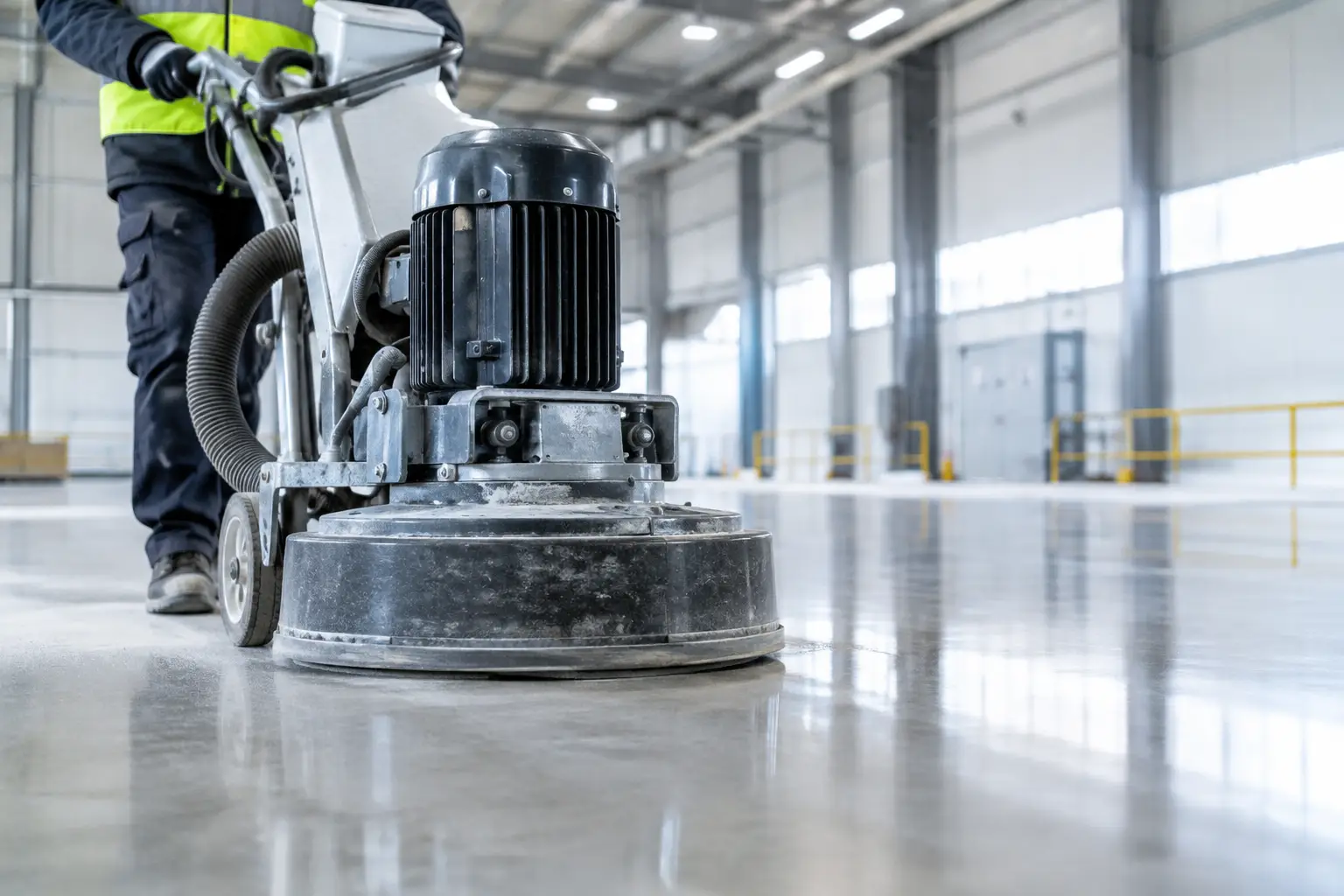
For existing buildings, grinding and targeted floor upgrades can often improve critical travel paths. However, grinding is not a substitute for evaluating the underlying slab condition. Where elevation changes, cracks, curled joints, or structural movement are present, the repair strategy must address the cause as well as the surface profile.
Jointless floors reduce interruption points
Jointless and reduced-joint concrete systems are gaining attention because joints are among the most common weak points in heavy traffic areas. They are exposed to wheel impact, edge breakdown, spalling, moisture intrusion, and repeated repair cycles. Automated equipment does not avoid a damaged joint unless its route is changed. It will continue to apply force at the same location.
Reducing the number of joints can improve ride quality, lower vibration, and limit areas where automated equipment encounters abrupt transitions. This is particularly valuable in high-frequency travel lanes, cross aisles, shuttle interfaces, and transfer zones.
That does not mean every autonomous facility requires a fully jointless slab. Large slabs still require disciplined design for shrinkage, movement, and construction sequencing. The right approach depends on building geometry, subbase condition, loading, environmental exposure, and the operational value of uninterrupted travel paths. In some projects, strategically located and properly armored joints provide the best balance of performance, constructability, and lifecycle cost.
The critical standard is not whether joints exist. It is whether they remain stable, level, protected, and serviceable under the actual wheel loads and traffic frequency of the fleet.
Automation Raises the Cost of Floor Defects
A manual operator may slow down, steer around a rough area, or compensate for a visible defect. Autonomous forklifts operate from programmed rules and sensor inputs. Their consistency is a strength, but it also means they consistently encounter the same defects.
A depressed slab area can change vehicle pitch. A broken joint edge can create shock loading. A polished or contaminated surface can affect traction. A cracked coating can allow moisture or chemicals into the concrete. Each condition can influence availability, error rates, and maintenance demand.
The operational impact extends beyond the vehicle itself. Excess vibration can affect carried loads. Repeated floor shocks can accelerate wear on wheels, bearings, masts, and onboard equipment. A route interruption in a tightly synchronized operation can affect conveyors, picking stations, production lines, or shipping schedules.
This is why preventive floor inspection is becoming more valuable in automated facilities. The goal is not cosmetic perfection. It is to identify measurable defects before they become a safety or uptime issue. High-traffic routes should be inspected for joint deterioration, cracking, surface wear, flatness changes, coating failure, and areas of ponding or contamination.
Coatings Must Support Traction and Maintenance
Automation does not eliminate the need for protective flooring systems. In many facilities, coatings and resinous systems are needed to resist chemicals, oils, washdowns, abrasion, thermal exposure, or contamination. But coating selection must account for the autonomous fleet.
A floor that is easy to clean but excessively slick when wet creates a traction concern. A heavily textured system may improve slip resistance but can increase rolling resistance, wear wheels faster, and complicate cleaning. Thick systems can also create transitions at drains, doorways, equipment pads, or repaired areas if detailing is poor.
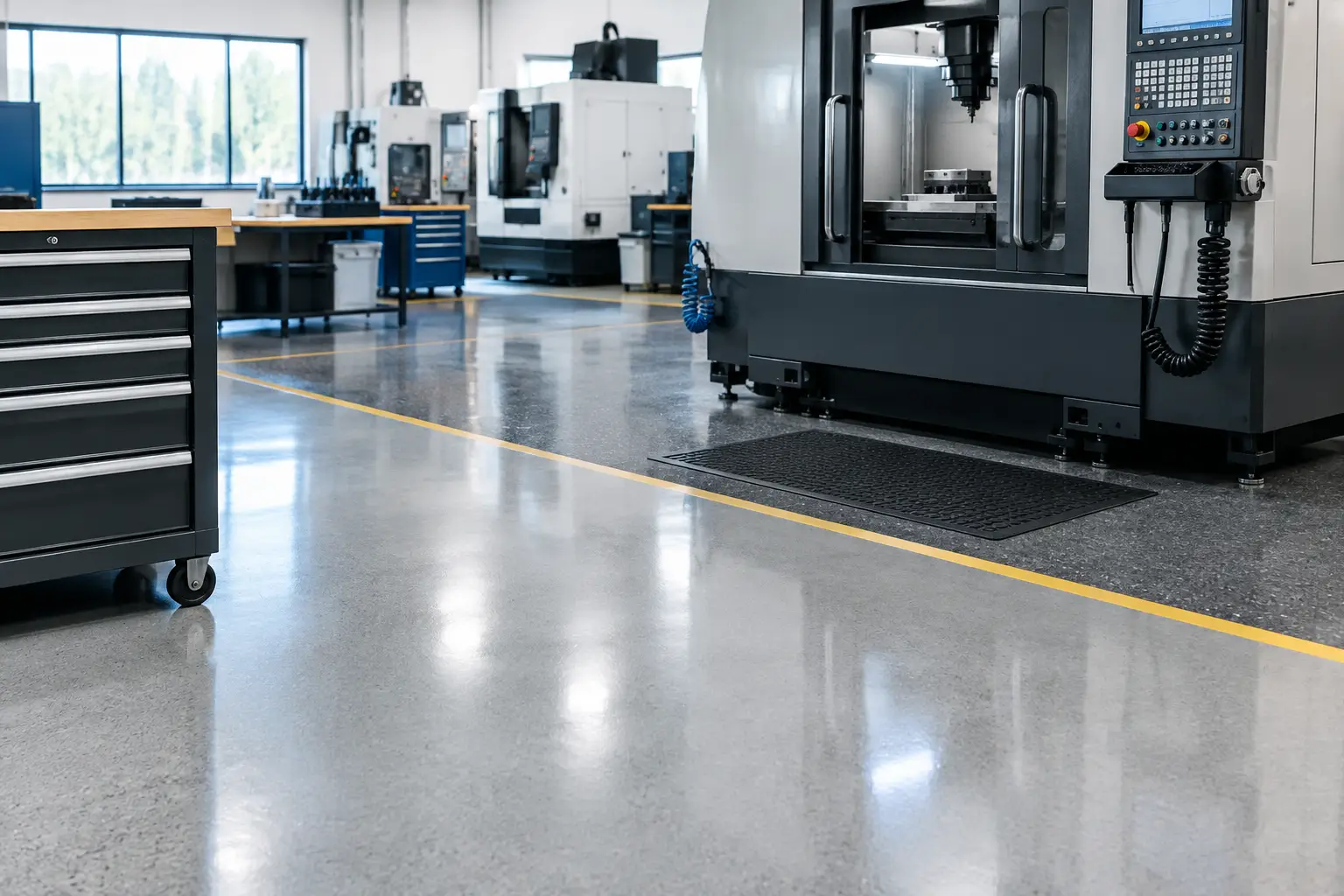
The correct finish depends on the environment. A dry distribution center has different needs than a food or beverage plant with frequent washdowns, or a manufacturing operation exposed to oils and process chemicals. Surface profile, coefficient of friction, cleanability, chemical resistance, and repairability should be evaluated together.
Color can also serve a functional role. Clear visual separation of travel lanes, pedestrian zones, staging areas, and safety boundaries can support facility discipline. For camera-based navigation, however, strong glare, inconsistent reflectivity, and poorly maintained markings may create avoidable problems. Flooring, striping, lighting, and navigation technology should be coordinated rather than specified independently.
Existing Facilities Need a Route-First Assessment
Most automation projects occur in operating facilities, not empty greenfield buildings. That makes floor assessment a scheduling and risk-management exercise as much as a technical one.
A route-first assessment starts with where the autonomous forklifts will actually travel, turn, stop, lift, charge, and transfer loads. Those areas should be surveyed for flatness, levelness, joint condition, cracks, surface hardness, coating condition, drainage, and obstacles. The assessment should also identify changes in floor elevation between old and new slabs, additions, dock areas, and equipment foundations.
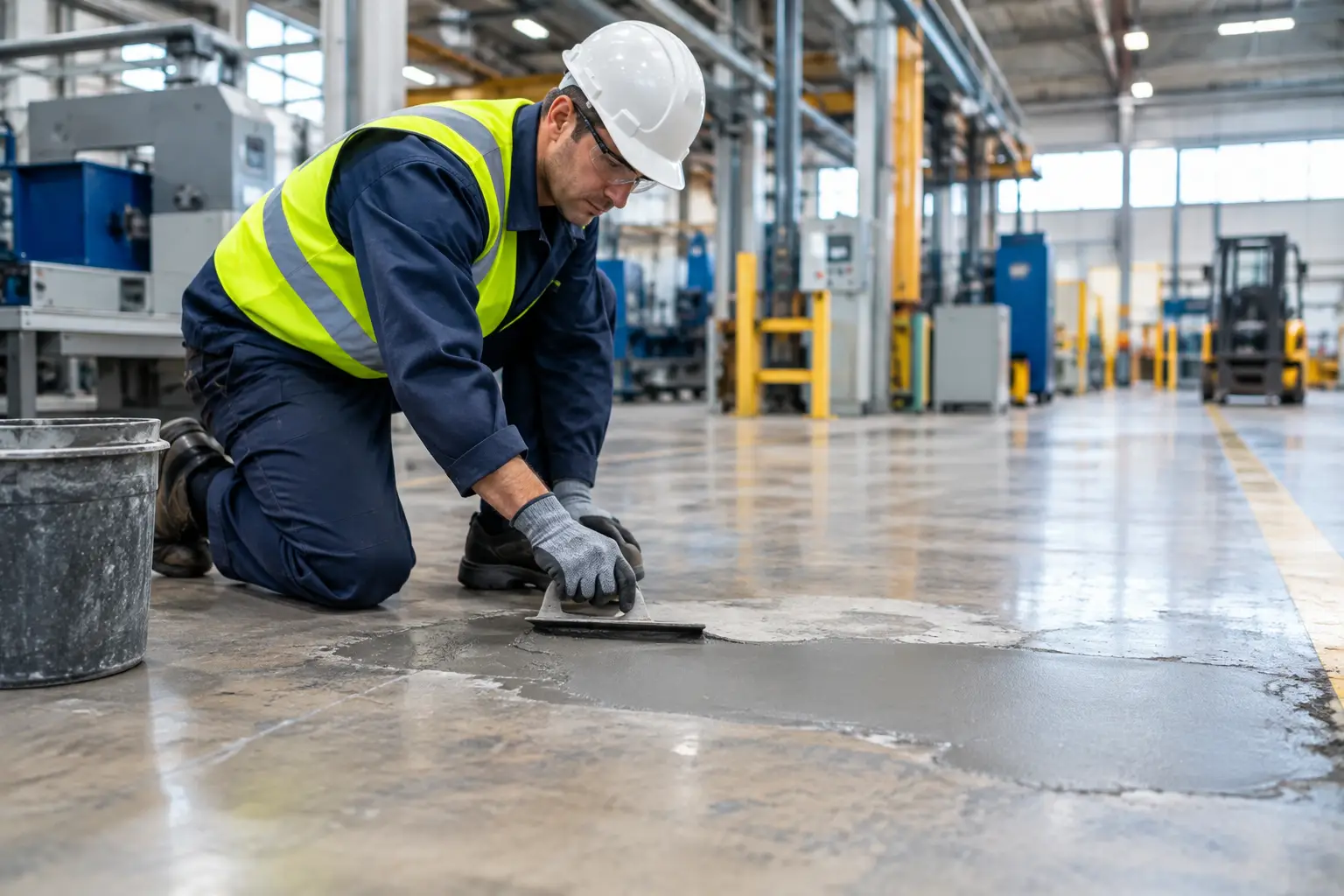
Repairs should then be prioritized by operational consequence. A minor defect outside a travel route may be a lower priority than a small joint failure at a repeatable stopping point. Floor and joint repair in these locations should be completed with materials and details suited to traffic loading and return-to-service requirements.
Downtime remains a real constraint. The right contractor will plan work around active operations, cure times, access limitations, and phased handoffs. Fast return to service has value, but it should not come at the expense of proper surface preparation, bond performance, or long-term durability.
Guidance Systems Still Require Floor Discipline
Some facilities use wire guidance in narrow aisles or defined travel corridors. Others rely on laser navigation, reflectors, vision systems, lidar, natural-feature navigation, or hybrid controls. The navigation technology may differ, but none removes the need for sound floors.
Wire guidance requires precise installation and protection of the guidance path. Floor cuts, repairs, and overlays must be planned so the system remains accurate and protected from traffic damage. Sensor-based systems may not require embedded wire, but they still depend on predictable travel conditions, stable rack geometry, and surfaces that support safe traction and repeatable equipment behavior.
The trend is toward integrating floor requirements into the automation design package earlier. That reduces costly late-stage corrections, particularly when racking, equipment commissioning, and occupancy dates are already fixed.
Specify for Lifecycle Value, Not Initial Appearance
The best floor for autonomous forklifts is not automatically the flattest, most expensive, or most heavily coated option. It is the floor system that meets the operating demand with clear tolerances, durable details, and a maintenance plan that protects uptime.
For a high-bay VNA warehouse, that may mean superflat construction and tightly controlled rack-aisle wheel paths. For a busy manufacturing plant, it may mean joint stabilization, targeted grinding, chemical-resistant protection, and phased repairs in autonomous travel zones. For an existing distribution center, the first investment may be a detailed floor survey that reveals where risk is concentrated.
Autonomous equipment makes floor quality visible in a new way. Treat the slab, joints, and surface system as part of the operating system, and the facility is better positioned to protect safety, equipment reliability, and long-term productivity.