A coating can look excellent at handover and still fail early under forklift traffic. Can forklifts damage floor coatings? Yes, particularly where the floor system was selected for appearance or light-duty protection rather than the actual wheel loads, turning forces, operating temperatures, and maintenance conditions of the facility.
Forklift damage is rarely caused by one factor alone. It is usually the result of traffic demands exceeding the coating system, weak concrete below the coating, inadequate surface preparation, or a detail such as a joint or transition that was left unprotected. For facilities that depend on reliable material movement, the correct question is not whether forklifts can affect a floor. It is whether the floor was engineered and installed to carry the operation.
How Forklifts Damage Floor Coatings
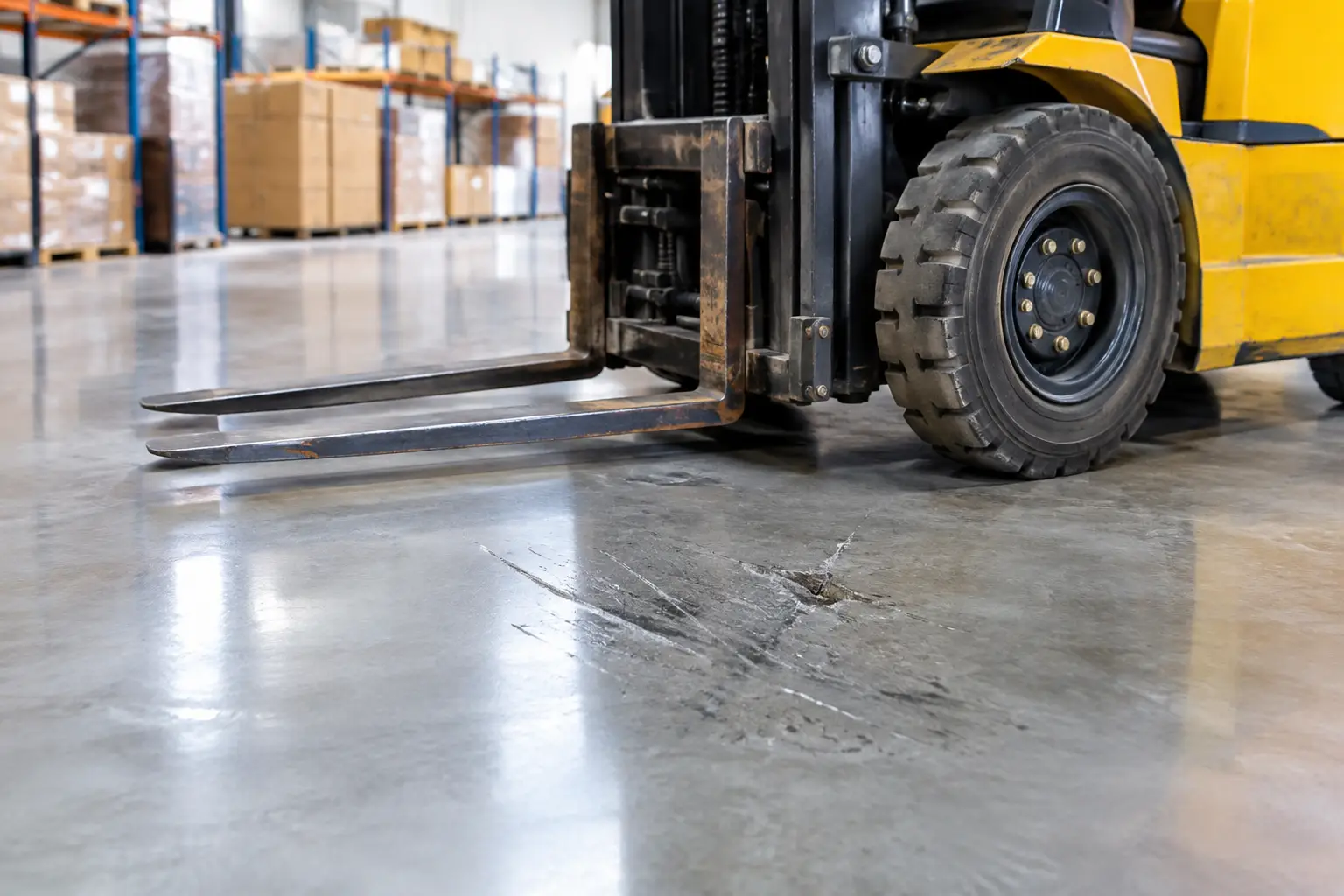
Forklifts place concentrated forces on relatively small tire contact areas. A loaded truck may cross the same travel lanes hundreds of times per shift, creating repeated compression, shear, and abrasion at the coating surface. The damage often begins in predictable locations: loading areas, rack aisles, turning zones, dock approaches, battery charging rooms, and transitions between slabs or floor systems.
Straight-line travel creates wear. Tight turns create a different and often more destructive force. As a forklift turns, tires scrub across the surface rather than simply rolling. That torsional movement can scuff thin coatings, abrade aggregate-free systems, and pull at weakly bonded edges. Hard wheels, especially polyurethane or nylon wheels on certain equipment, can increase localized stress compared with pneumatic tires.
Impact is another concern. Dropped pallets, fork strikes, rack-leg impacts, and debris trapped beneath wheels can chip or fracture a coating. Once the protective surface is breached, moisture, chemicals, and cleaning water can reach the concrete or migrate beneath the system. A small chip then becomes a larger delamination or spall.
Can Forklifts Damage Floor Coatings Even When the Coating Is New?
Yes. A new coating is not automatically a forklift-ready coating. Material selection, concrete condition, preparation standard, installation quality, cure time, and traffic release all matter.
A coating applied over weak, contaminated, or moisture-affected concrete may fail at the substrate rather than within the coating itself. In these cases, the coating can come away with a layer of concrete attached to its underside. The visible issue is peeling, but the underlying cause is insufficient concrete tensile strength, latent contamination, or moisture pressure.
Premature traffic is also a common issue. Many resinous systems reach initial cure quickly, but heavy equipment should not be returned to the area until the system has achieved the manufacturer-specified cure for service conditions. Cold temperatures, high humidity, and slab moisture can extend that timeline. Opening a floor too early can leave tire marks, indentations, or bond failure that no amount of cleaning will correct.
The thickness and build of the system matter as well. A thin film coating may be appropriate for a light-duty maintenance area, but it is not a substitute for a broadcast epoxy, urethane mortar, or other heavy-duty system in a high-traffic warehouse or manufacturing environment. There is no universal "forklift coating." The right specification depends on the equipment, loads, exposure, and expected service life.
The Areas Most Likely to Fail
Traffic mapping should be part of every industrial flooring decision. A facility may have forklift traffic throughout the building, yet only a small percentage of the floor receives the most severe stress. Those areas deserve a different level of design attention.
Turning zones are often the first locations to show wear because tire scrub places lateral stress on the surface. End-of-aisle intersections, staging areas, and dock turns should be evaluated for increased thickness, a more abrasion-resistant finish, or a system designed to resist thermal and mechanical shock.
Joints are equally critical. Forklift wheels repeatedly strike joint edges, causing concrete spalling and coating breakage. Coating across an active joint without properly honoring or treating it can lead to cracking. Where joint movement is expected, the detail must accommodate it. Where joints are damaged or heavily trafficked, repair and protection should be completed before a new coating is installed.
Racking aisles present another risk. In very narrow aisle operations, wheel paths are fixed and concentrated. Superflat floor tolerances, slab condition, joint performance, and wire guidance requirements are all connected to reliable truck operation. A smooth-looking floor is not enough. The floor must support accurate travel, stable loads, and repeated wheel loading without developing defects that affect both the surface and the equipment.
What Determines Whether a Coating Will Hold Up
The coating chemistry is only one part of the answer. Epoxy systems can provide strong adhesion, chemical resistance, and a durable build when properly specified. Urethane topcoats can improve abrasion, UV, and thermal performance in appropriate applications. Urethane mortar systems are commonly selected where thermal cycling, washdown, impact, and aggressive service conditions demand more than a conventional coating can provide.
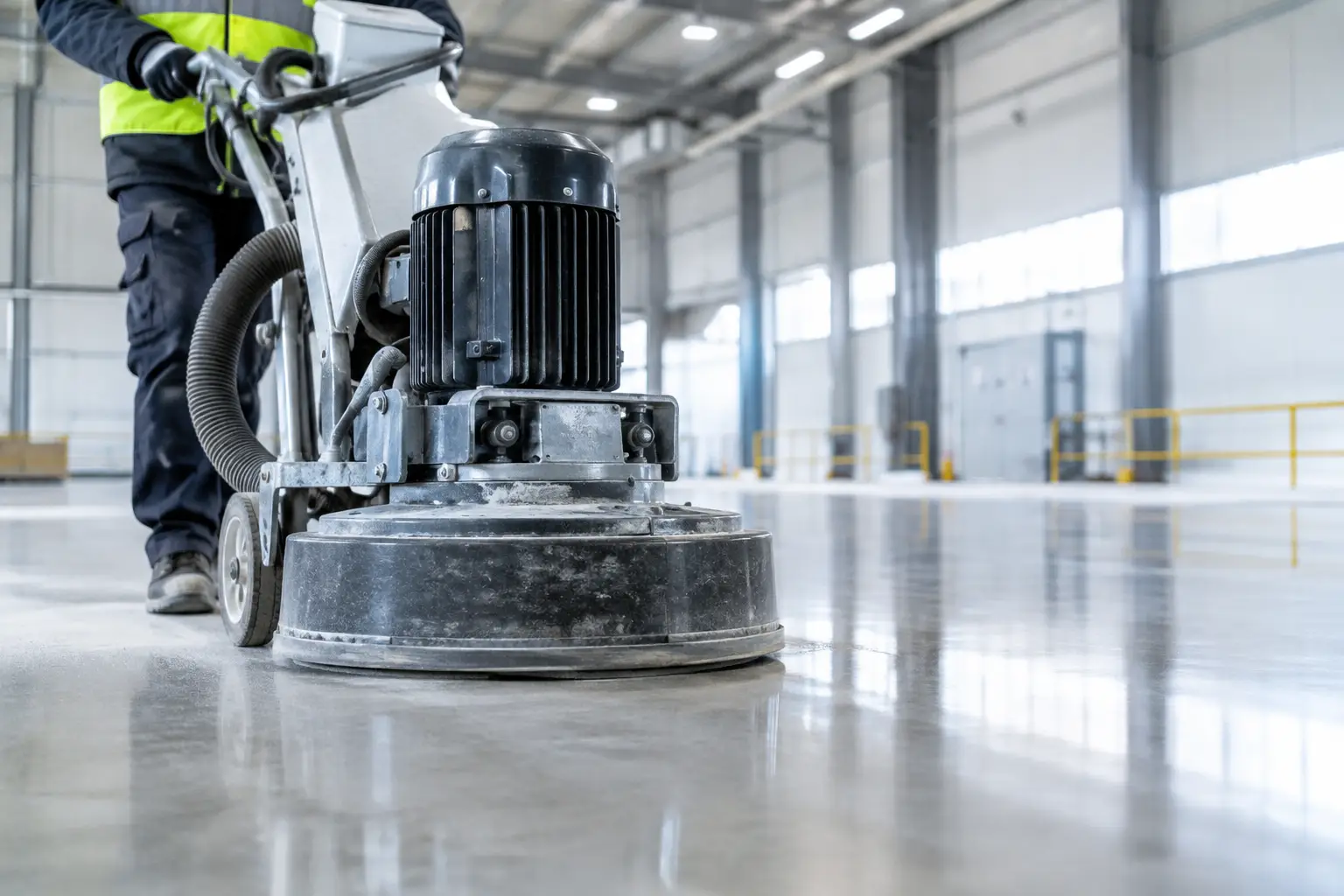
However, even a high-performance material will not compensate for poor preparation. Concrete must be assessed for soundness, contamination, moisture, flatness, and existing coating conditions. Mechanical surface preparation creates the profile needed for bond, but the method and level of preparation must match the system being installed. Grinding, shot blasting, scarification, and concrete repair each serve a specific purpose. Treating them as interchangeable steps can create avoidable failure.
The operational environment also changes the specification. Forklifts carrying heavy loads require a different floor design than light electric pallet jacks. A dry distribution center has different demands than a food processing area with hot washdowns. Battery acid, oils, solvents, and cleaning chemicals can change the required chemical resistance. Temperature swings near exterior doors, freezers, or ovens may require a system with greater thermal tolerance.
The practical standard is simple: specify for the worst credible exposure, not the average day. If the floor occasionally sees loaded forklifts, hard-wheel equipment, wet cleaning, or chemical spills, those conditions belong in the design basis.
Preventing Forklift-Related Coating Failure
A durable outcome starts before the first material is mixed. Facilities should document truck types, wheel materials, maximum loaded weights, travel paths, turning locations, operating hours, cleaning procedures, and chemical exposures. This information allows the flooring contractor to recommend a system based on service conditions rather than assumptions.
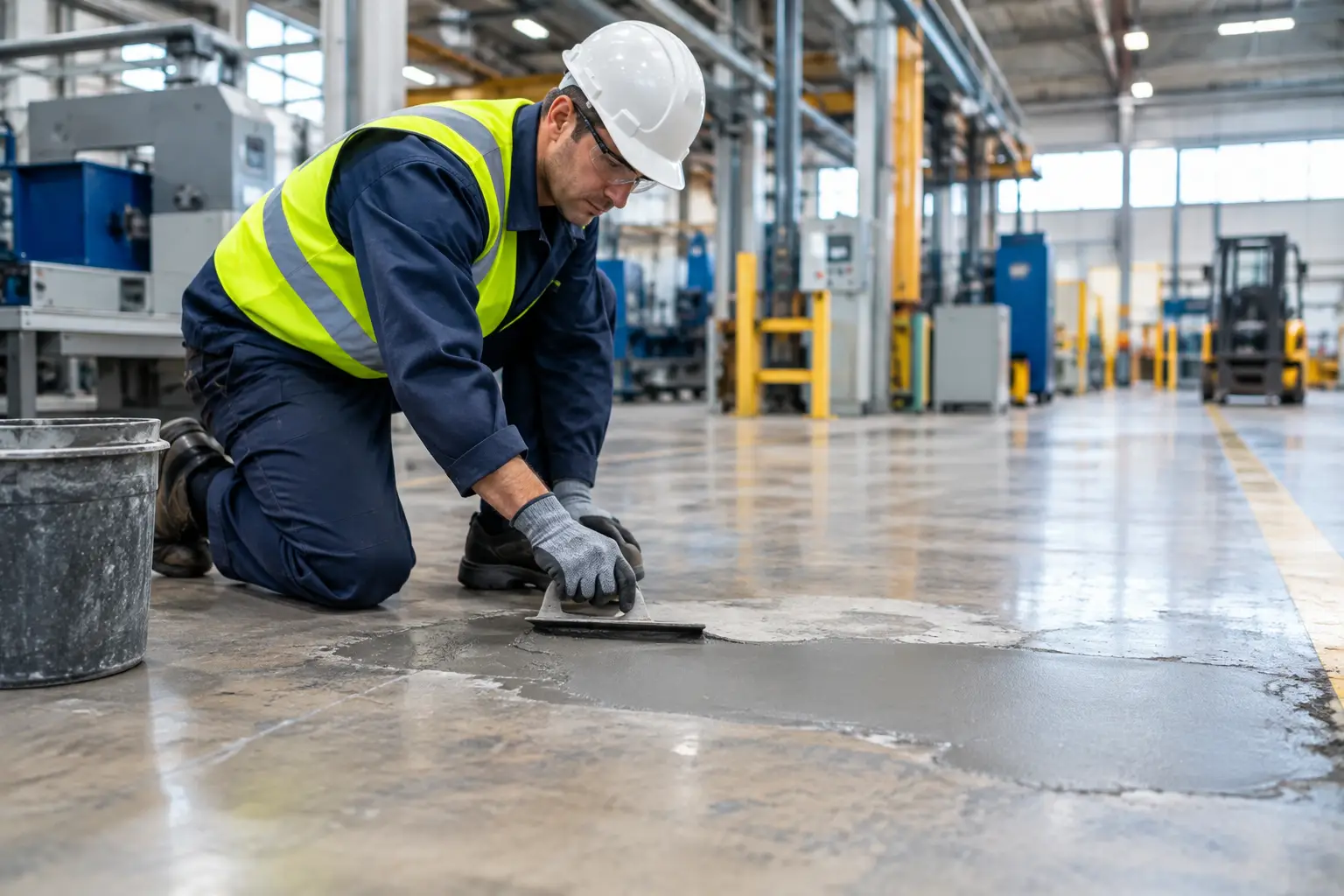
Concrete repair should be completed before coating work begins. Cracks, failed patches, spalled joints, hollow areas, and weak surface paste will not disappear beneath a new resinous system. They will remain points of weakness. In high-traffic areas, joint repair and edge protection can deliver as much long-term value as the coating itself.
Installation planning matters in active facilities. A contractor should sequence work around production, define cure windows, control access, and protect newly completed areas from premature traffic. When uptime is limited, the solution is not simply to rush the installation. It is to select compatible materials and a delivery plan that meet the required return-to-service schedule without compromising preparation or cure.
After installation, routine inspection helps prevent a small defect from becoming a shutdown issue. Operations teams should watch for tire marks that do not clean off, exposed concrete, cracking at joints, flaking in turn lanes, pooling water, and changes in floor texture. These signs do not always require full replacement. Early localized repair can preserve the surrounding system and protect the concrete below.
When a Coating Is Not the Complete Answer
Some forklift-related floor issues are structural or geometric, not cosmetic. If slabs are uneven, joints are failing, or a warehouse requires narrow-aisle truck performance, a surface coating alone will not solve the problem. Floor grinding, slab correction, joint repair, or a superflat floor solution may be necessary to restore safe, productive travel.
Likewise, coating a heavily deteriorated slab without addressing the concrete condition may produce a short-lived improvement. The right solution can involve preparation, repairs, a heavy-duty floor system, and protected traffic details working together. That approach costs more upfront than a thin application, but it reduces unplanned repairs, safety exposure, and repeated disruption.
Osis Group approaches industrial flooring as an operational surface, not a finish layer. The objective is a system that supports traffic, protects the substrate, and performs through the conditions the facility actually faces.
Before approving a coating specification, walk the forklift routes with the people who run them. The highest-value information is often visible on the floor: polished turn lanes, broken joint edges, recurring patches, standing water, and the places operators slow down to avoid a defect. Those conditions should define the work scope and the performance standard.