
A failed floor does not stay a floor problem for long. It becomes a forklift maintenance issue, a rack-impact risk, a trip hazard, a sanitation concern, and a drag on throughput. This distribution center floor rehabilitation guide is built for operators who need to restore performance without losing control of the facility schedule.
Rehabilitation is not simply applying a coating over worn concrete. The right scope depends on what has failed, why it failed, what traffic the floor must carry, and how much downtime the operation can absorb. A sound plan protects the asset and avoids repeating the same repair cycle within a few years.
Start With the Failure, Not the Finish
Surface appearance can be misleading. Dusting, spalling, joint deterioration, tire marks, cracking, and unevenness may look like separate issues, but they often share an underlying cause. Moisture transmission, poor original concrete placement, slab movement, inadequate joint design, chemical exposure, impact loading, or years of hard-wheel traffic can each drive a different repair strategy.
A proper assessment should document the floor by operating zone. Receiving docks, battery rooms, pick modules, staging areas, freezer transitions, washdown zones, and very narrow aisle paths do not experience the same traffic or exposure. A repair specification that works in a low-traffic storage area may fail quickly at a dock approach or a high-frequency forklift intersection.
The assessment should establish whether the slab remains structurally sound, whether damage is localized or widespread, and whether floor flatness affects equipment performance. It should also identify active moisture conditions, failed prior coatings, unsound concrete, joint movement, and elevations that create drainage or travel problems.
Match the Rehabilitation Method to the Operating Demand
There is no universal industrial floor repair system. The correct solution balances performance, installation conditions, cure time, and lifecycle cost. The lowest initial price can become the highest operating cost when a repair fails under normal traffic or forces repeated closures.
Floor Repair and Concrete Restoration
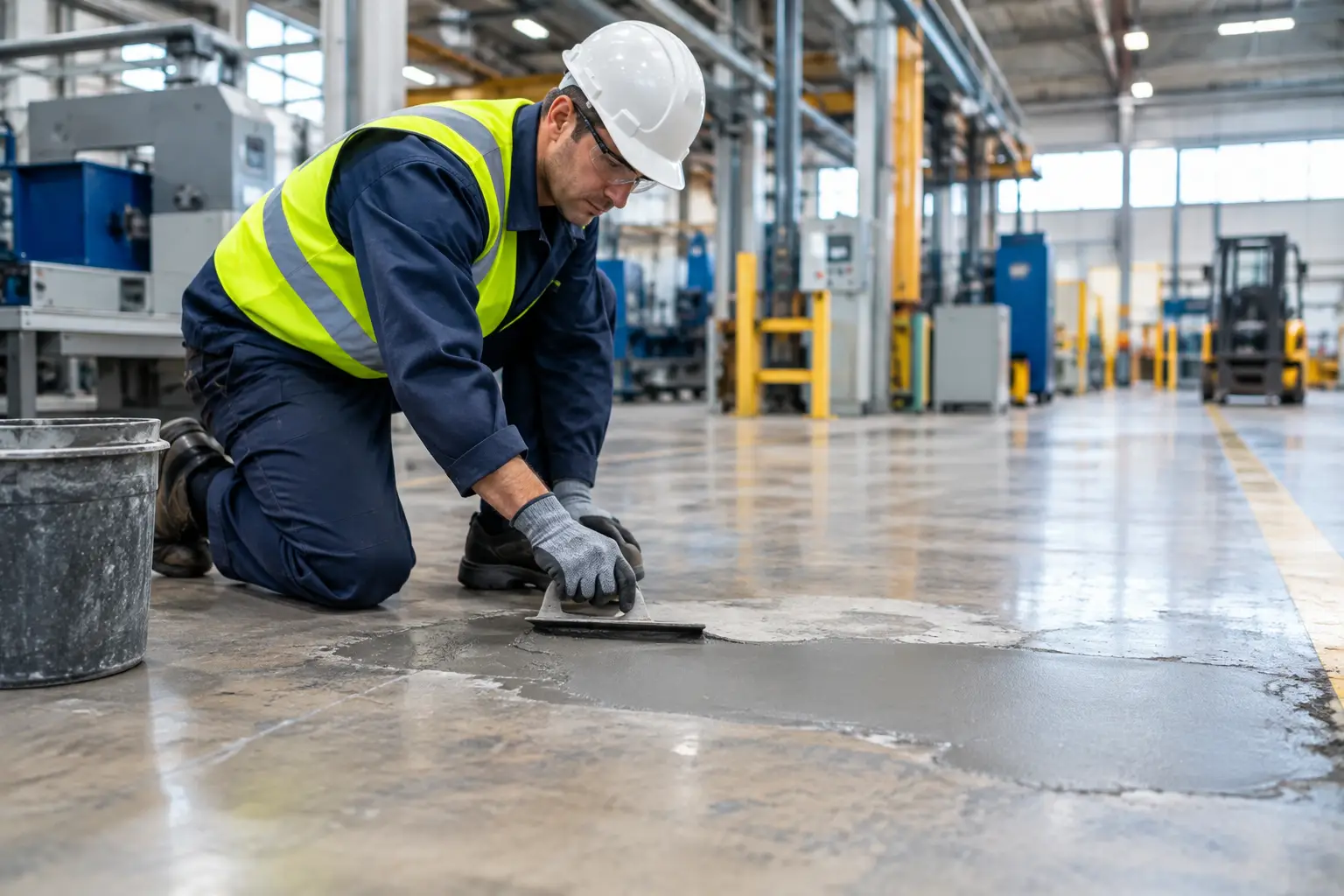
Spalled concrete, broken slab edges, and impact damage require more than cosmetic patching. Unsound material must be removed to competent concrete, followed by controlled surface preparation and installation of a repair material suited to the expected loads. At loading areas and forklift travel paths, repairs must tolerate repeated wheel impact and abrasion.
The edge of a repair matters as much as the material in the repair. Weak transitions create a new point of failure, particularly where hard wheels cross the patch thousands of times per shift. Proper profiling, material selection, placement, and curing determine whether the repair becomes part of the floor or remains a short-term patch.
Joint Repair for Forklift Traffic
Joints are designed to accommodate slab movement, but they are frequently the first floor feature to fail in active distribution environments. Chipped joint shoulders, open gaps, and failed fillers allow forklift wheels to strike unsupported slab edges. The result is progressive damage to both the floor and material-handling equipment.
Semi-rigid joint filler systems can support joint edges and reduce impact from wheeled traffic. The system must be selected for the expected movement and traffic profile. A joint that still experiences significant opening and closing requires a different approach than an interior joint in a stable, temperature-controlled facility.
Joint repair is especially valuable before damage spreads into otherwise sound slabs. Waiting until every aisle has visible edge failure usually expands the scope, the schedule, and the cost.
Grinding and Floor Upgrades
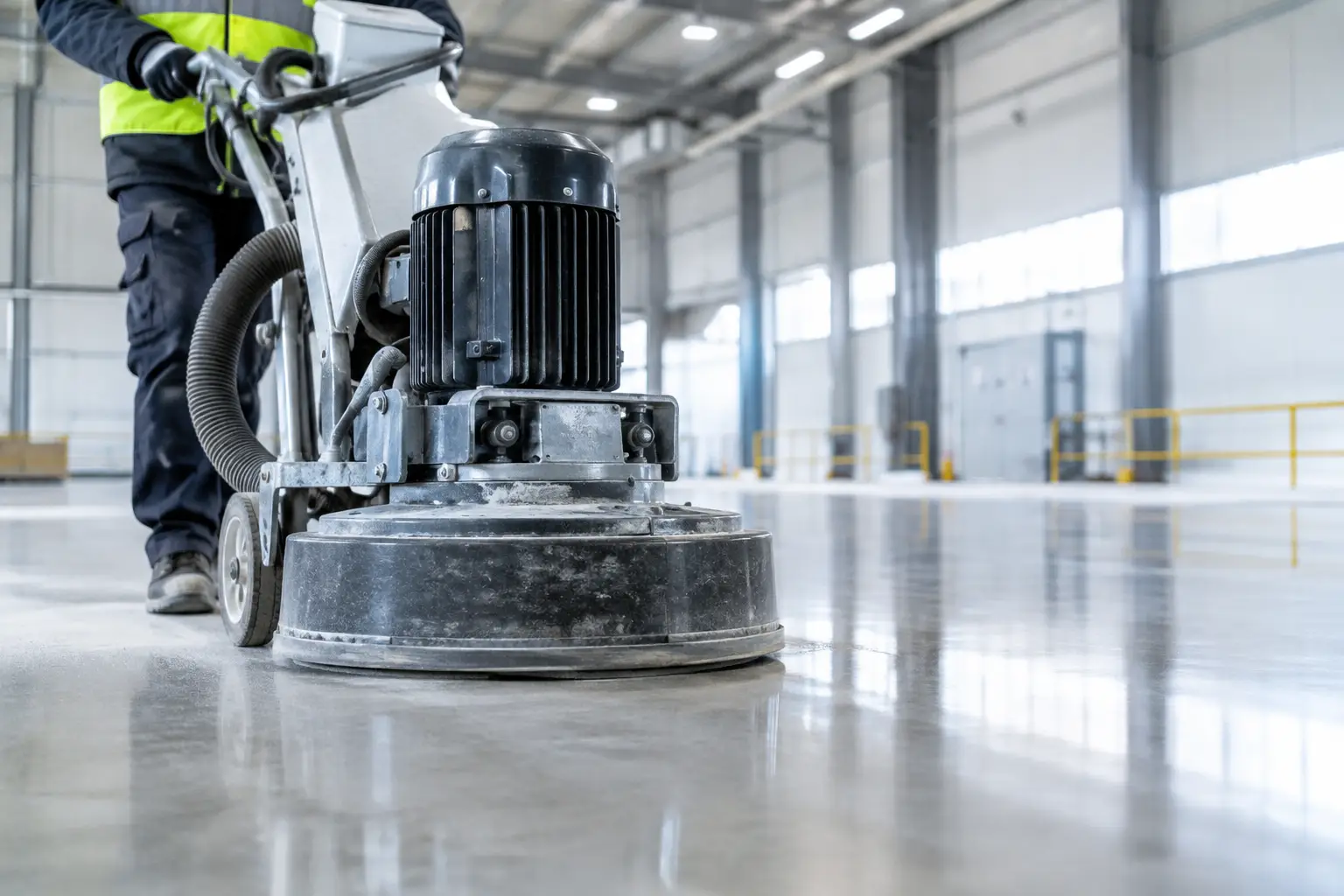
Grinding is a controlled way to remove surface irregularities, reduce high spots, prepare concrete for a new system, or improve travel quality in targeted areas. It is not a cure for every slab condition. If the floor has settlement, active cracking, or major flatness deficiencies, grinding alone may not correct the root problem.
For many facilities, a floor upgrade combines localized concrete repair, joint rehabilitation, and precision grinding. This approach can restore a more consistent travel surface while limiting work to the areas that affect operations most. It is often more practical than a full replacement when the slab has sound structural capacity.
Jointless and Resinous Floor Systems
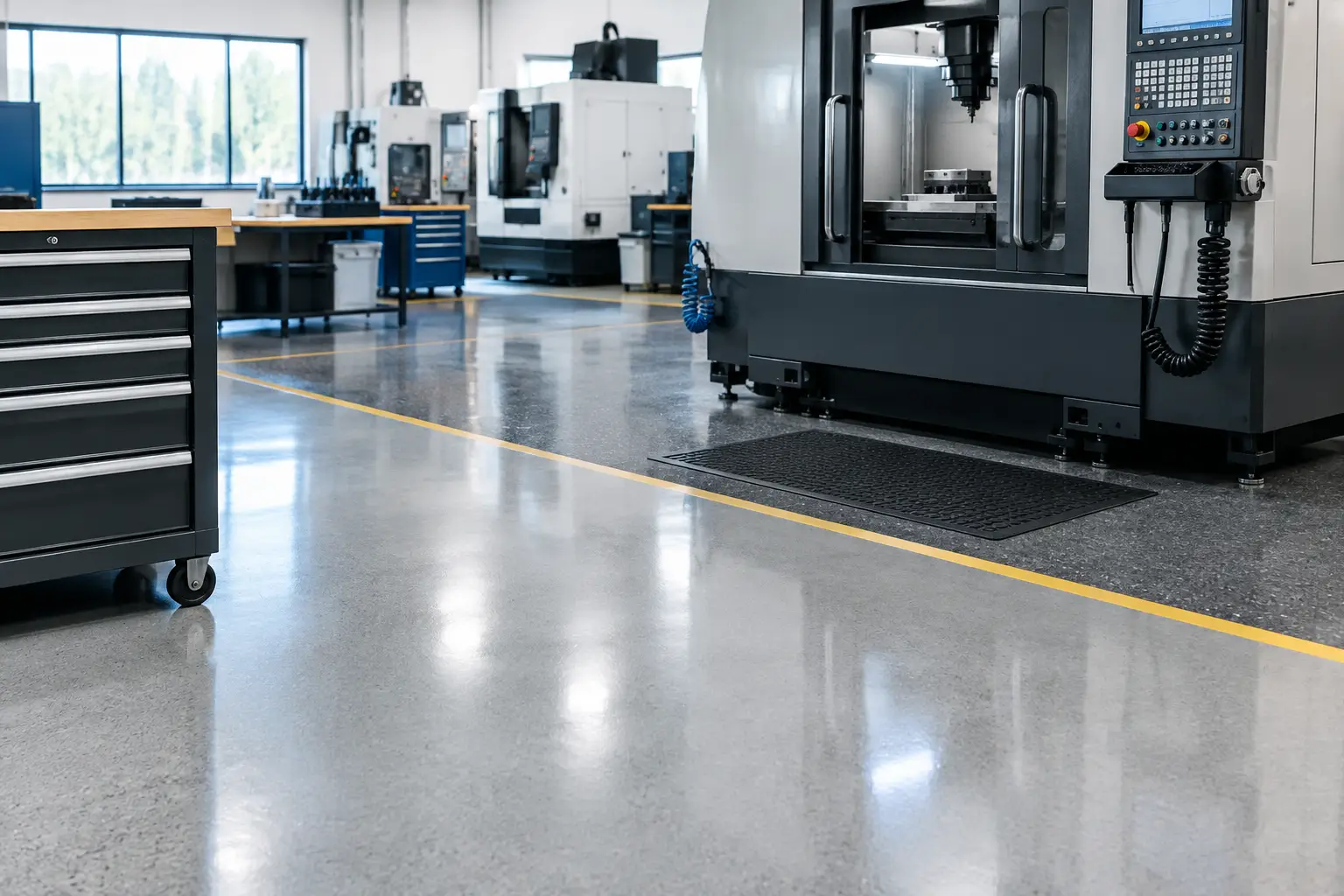
Where cleanability, chemical resistance, washdown performance, or containment is critical, a jointless resinous system may be the appropriate rehabilitation path. These systems can provide a continuous, durable surface that is easier to clean and maintain than damaged bare concrete.
System selection depends on exposure. Battery charging areas may require resistance to electrolyte exposure. Food and beverage operations may need thermal shock resistance and sanitary detailing. Manufacturing environments may need protection from oils, chemicals, abrasion, or heavy impact. The required performance should drive the specification, not a generic coating preference.
Substrate preparation remains decisive. A high-performance resinous floor installed over contaminated, weak, or moisture-affected concrete will not deliver its intended service life. Mechanical preparation, moisture testing, crack treatment, and detail work at drains, walls, and penetrations are part of the system, not optional preliminaries.
Address VNA Floor Requirements Early
Very narrow aisle operations impose tighter tolerances than conventional warehouse traffic. In a VNA environment, floor flatness and levelness directly affect truck guidance, mast behavior, load handling, rack clearance, and productivity. Small deviations that are acceptable in general storage can create operational problems in guided-aisle systems.
A Superflat floor rehabilitation plan begins with measurement, not assumption. Survey data identifies whether the issue is isolated wear, local settlement, joint-related disruption, or a broader profile problem. The repair strategy must align with the truck type, aisle layout, racking configuration, wheel loads, and guidance method.
Grinding can correct specific high points, while localized reconstruction may be necessary where the slab profile is outside operating tolerance. In some cases, a facility should plan phased correction by aisle so that the highest-impact travel paths are restored first. A precise outcome requires precise verification after the work is complete.
Build the Schedule Around Uptime
The best technical solution still fails the business case if it disrupts shipping, receiving, or production without a workable sequence. Distribution center rehabilitation should be planned around traffic patterns, peak periods, available staging space, and the cure requirements of the selected materials.
Phasing is often the answer. Work can move by aisle, dock lane, travel corridor, or operating zone, with clear isolation boundaries and reopening criteria. However, phasing creates trade-offs. More mobilizations and smaller work areas can extend the overall project duration. A larger shutdown may be more efficient when the scope is extensive and the operation can create a temporary workaround.
Before work begins, the project team should agree on access routes, equipment relocation, dust-control requirements, safety controls, inspection hold points, and the exact conditions required before an area returns to service. Reopening too early can damage a repair before it reaches its intended strength.
Specify Quality at the Details
Industrial flooring performance is won at the details. Surface preparation must match the system and the substrate condition. Repair boundaries must be sound. Joints must be cleaned and properly filled. Moisture conditions must be understood. Material cure times must be respected. These are not minor field decisions. They determine whether the floor performs under real operating loads.
A rehabilitation scope should also define acceptance standards. That may include bond strength, repair soundness, joint condition, floor tolerance, coating thickness, surface profile, or finish requirements. For Superflat VNA areas, verification measurements should be part of the deliverable, not an afterthought.
Experienced industrial flooring contractors bring value by identifying where a specification is overly broad, where a repair will not last, and where targeted work can protect the operation at lower lifecycle cost. Osis Group approaches these projects with the execution discipline required for active, high-demand facilities.
Plan Maintenance Before the Project Closes
Rehabilitation should establish a better maintenance baseline, not simply reset the clock. Routine inspections should focus on joints, high-traffic intersections, dock approaches, battery areas, drains, and locations where wheeled traffic changes direction. Early repair of a damaged joint or small spall is far less disruptive than allowing the defect to expand across an aisle.
Cleaning practices also matter. The wrong cleaning chemistry, excessive water exposure, or aggressive equipment can shorten the service life of certain floor systems. Maintenance procedures should match the installed finish and the facility's actual operating conditions.
A distribution center floor should support safe movement, dependable equipment operation, and predictable throughput. When rehabilitation is scoped around those outcomes, the work becomes a controlled investment in uptime rather than an emergency response to failure.