A floor can look acceptable at turnover and still fail under the first season of thermal washdowns, chemical exposure, or forklift traffic. That is why the epoxy mortar versus urethane cement decision should begin with operating conditions, not color charts or installed cost alone. Both are high-performance resinous systems, but they manage moisture, temperature movement, impact, and sanitation demands differently.
For facility leaders, the question is not which material is universally better. The question is which system will protect production, safety, and lifecycle cost in a specific area of the plant.
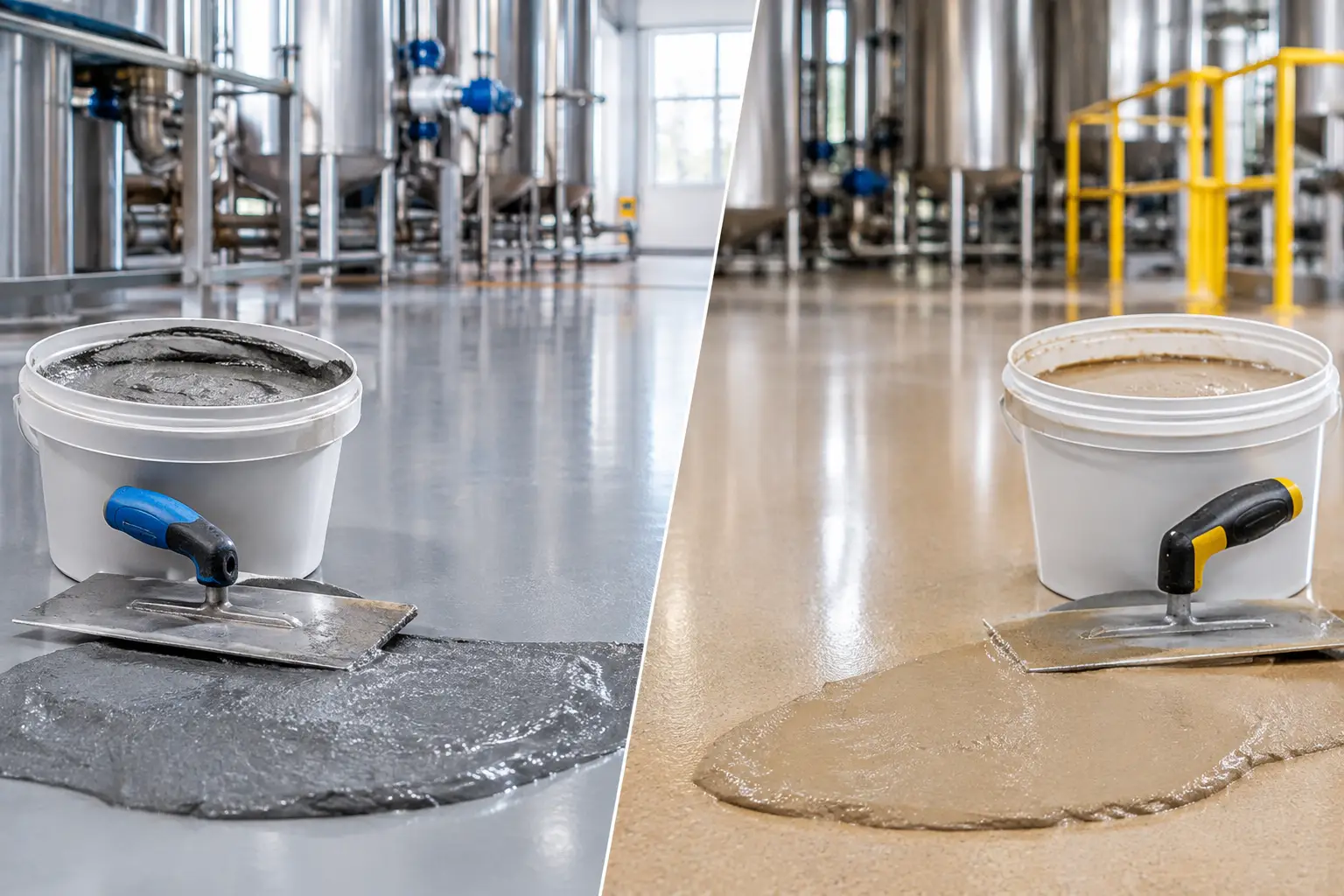
Epoxy Mortar Versus Urethane Cement: The Core Difference
Epoxy mortar is an epoxy resin combined with graded aggregate to create a dense, high-build flooring system. It is valued for exceptional compressive strength, abrasion resistance, and adhesion to properly prepared concrete. In dry or controlled industrial environments, it can provide a hard-wearing surface capable of handling heavy wheeled traffic, point loading, impact, and many chemical exposures.
Urethane cement, also called polyurethane cement, combines urethane resin, cement, aggregate, and water. Its defining advantage is thermal shock resistance. The system is designed to tolerate conditions that cause conventional resin floors to crack, debond, or deteriorate: hot washdowns, steam, frequent temperature cycling, and slabs with elevated moisture vapor conditions.
The distinction matters because industrial flooring failures rarely begin at random. They usually follow a mismatch between the coating system and the facility's actual service environment.
When Epoxy Mortar Is the Better Fit
Epoxy mortar is a strong choice where mechanical abuse is the primary concern and temperatures remain relatively stable. Manufacturing aisles, warehouse work zones, equipment pads, maintenance areas, and dry-process spaces often benefit from its hard, dense surface.
Its high compressive strength helps it resist damage from forklifts, pallet jacks, carts, rolling loads, and dropped tools. When specified at the appropriate thickness and installed over sound, well-prepared concrete, epoxy mortar can also restore worn slabs and correct localized surface deterioration. It is frequently used as a durable base layer beneath chemical-resistant or decorative topcoats.
Chemical performance should be evaluated against the actual exposure. Epoxy systems generally perform well against many oils, fuels, salts, and industrial chemicals. However, no resin is resistant to every chemical at every concentration, temperature, and duration of contact. A floor exposed to intermittent hydraulic oil is a different design problem than one exposed to daily acidic cleaning agents or hot caustic solutions.
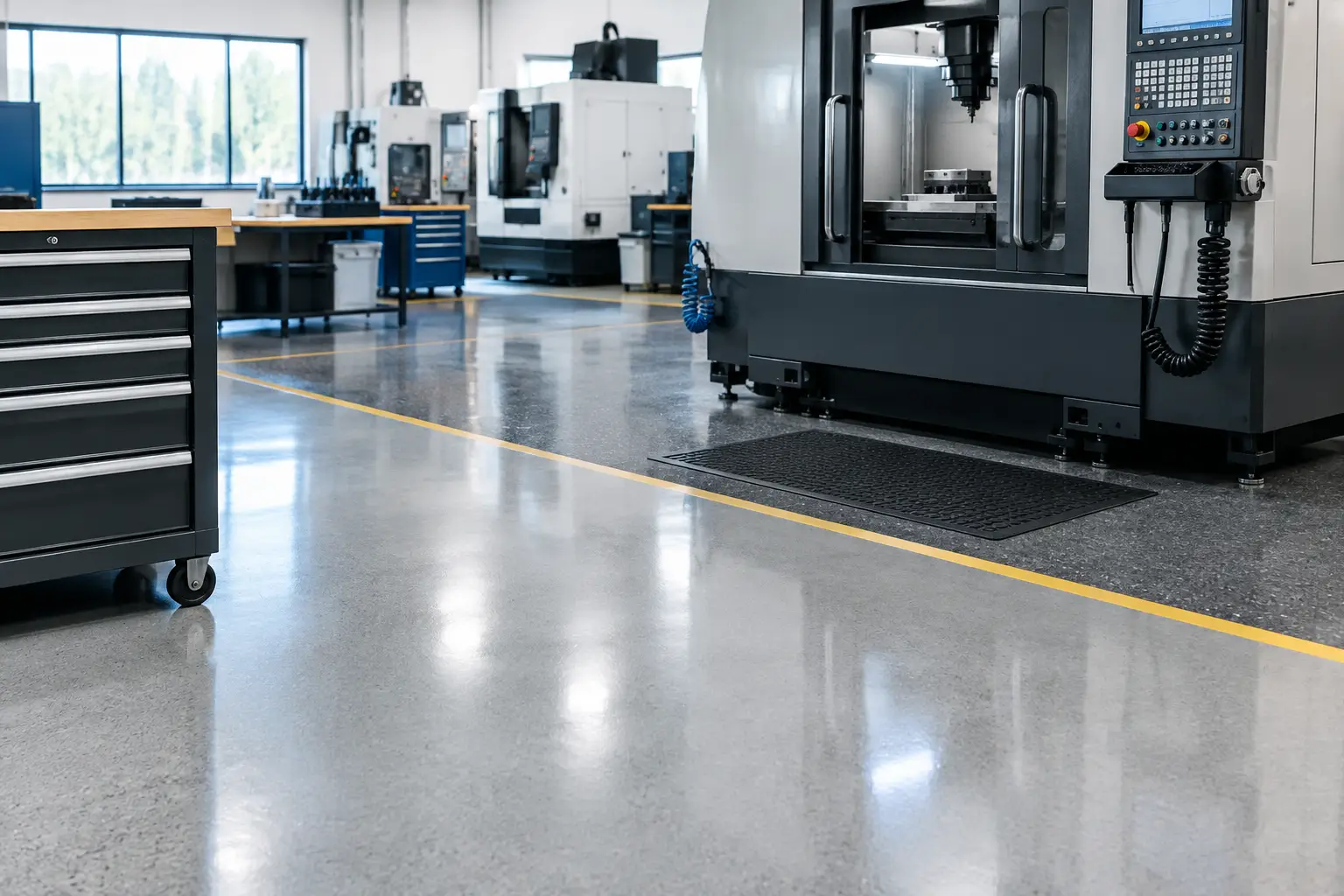
Epoxy mortar also offers substantial design flexibility. Contractors can build texture for slip resistance, install cove bases for easier cleaning, and select topcoats that improve stain resistance, UV stability, or cleanability. In many dry industrial applications, this makes it a practical performance-driven system.
Its limitation is movement. Epoxy is rigid compared with urethane cement. When the slab moves through sharp temperature changes, or when hot water contacts a cold floor, stresses can transfer into the bonded system. Over time, that can lead to cracking or loss of bond, particularly at weak concrete, transitions, drains, and joints.
When Urethane Cement Earns Its Cost
Urethane cement is generally the more reliable choice for wet-processing and temperature-intensive operations. Food and beverage plants, commercial kitchens, breweries, dairies, protein processing areas, pharmaceutical production spaces, and chemical processing facilities commonly face the service conditions it was built to manage.
The material's coefficient of thermal expansion is closer to concrete than standard epoxy. That compatibility allows urethane cement to better tolerate thermal cycling and thermal shock. A floor that receives hot water washdowns, steam cleaning, or alternating hot and cold process conditions needs this capacity. It is not a minor specification detail. It can determine whether a floor remains bonded or requires disruptive repair.
Urethane cement can also be more forgiving when concrete moisture is elevated. It does not eliminate the need to evaluate slab conditions, moisture sources, drainage, and vapor transmission. It does, however, perform better than many epoxy systems where residual moisture creates installation risk.
Its cementitious component gives urethane cement a different appearance and finish profile from a smooth, high-gloss epoxy floor. It can be finished with texture for slip resistance, which is valuable in wet areas but must be balanced against cleanability. More texture improves traction, yet overly aggressive profiles can retain soil and complicate sanitation.
The trade-off is cost and complexity. Urethane cement is often a higher initial investment, and installation requires disciplined mixing, placement, detailing, and cure management. The material also has a limited working time. In active facilities, the contractor's planning and crew capability matter as much as the product selection. A system specified for thermal shock resistance will not deliver its intended performance if surface preparation, drain detailing, joint treatment, or cure protection is incomplete.
Heat, Moisture, and Washdowns Should Drive the Decision
If an area is dry, climate-controlled, and exposed mainly to heavy traffic or mechanical wear, epoxy mortar deserves serious consideration. It delivers excellent hardness and wear resistance at a cost that can be appropriate for broad industrial coverage.
If the area experiences hot washdowns, steam, repeated wet cleaning, aggressive sanitation chemicals, or substantial temperature swings, urethane cement is typically the safer long-term choice. This is especially true around process lines, kettles, ovens, freezers, wash bays, trench drains, and loading zones that transition between indoor and outdoor temperatures.
Facilities should also consider the consequences of failure. A floor failure in a low-use storage room is inconvenient. Failure beneath an active production line, in a sanitary processing area, or along a primary forklift route can stop work, create safety exposure, and force unplanned remediation. The cost of a stronger system is easier to justify when downtime carries a high operational penalty.
Surface Preparation Is Not Optional
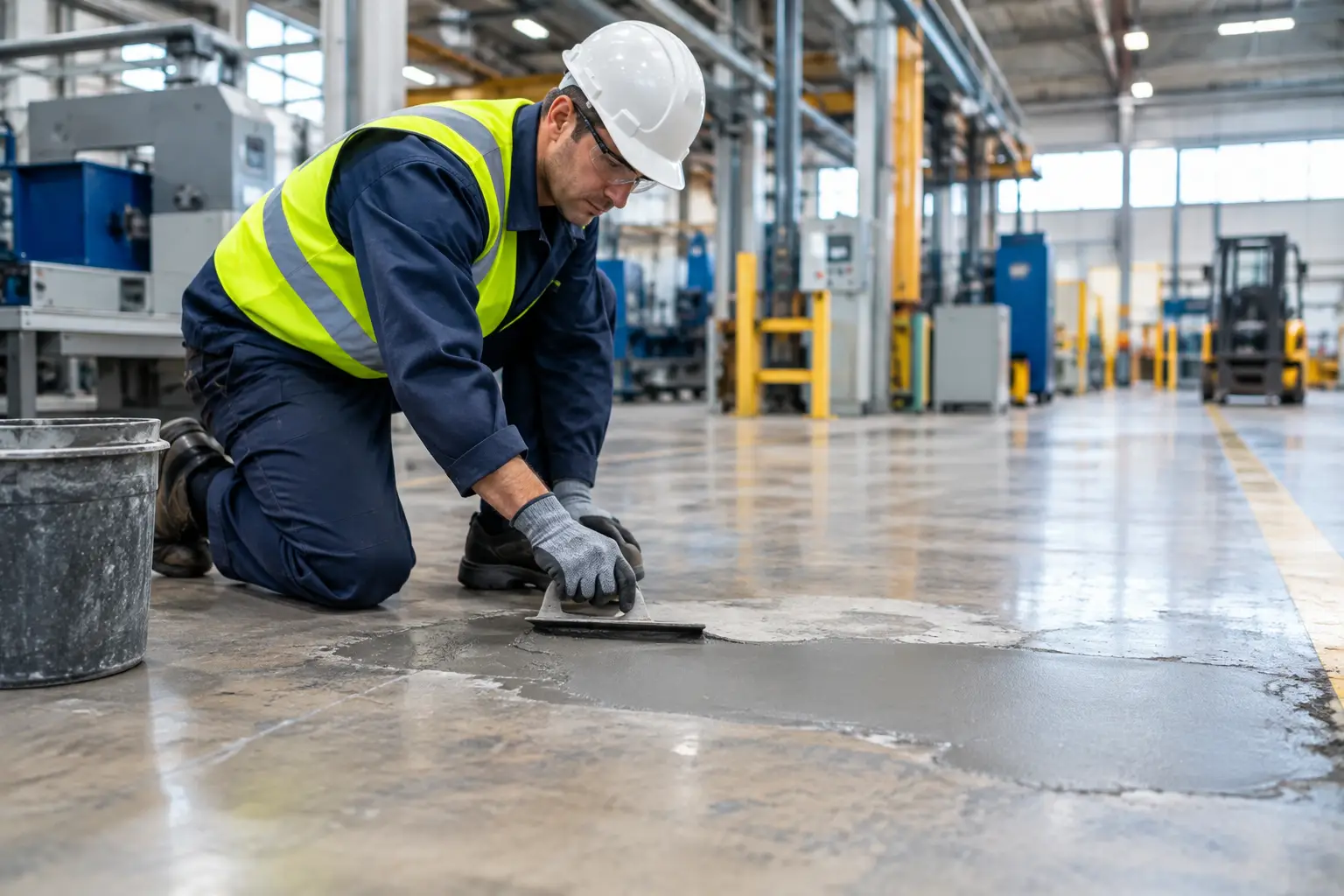
Neither epoxy mortar nor urethane cement can compensate for poor concrete preparation. The substrate must be evaluated for soundness, contamination, moisture, cracks, joint condition, flatness, and drainage. Weak or contaminated concrete must be removed or repaired before the resinous system is installed.
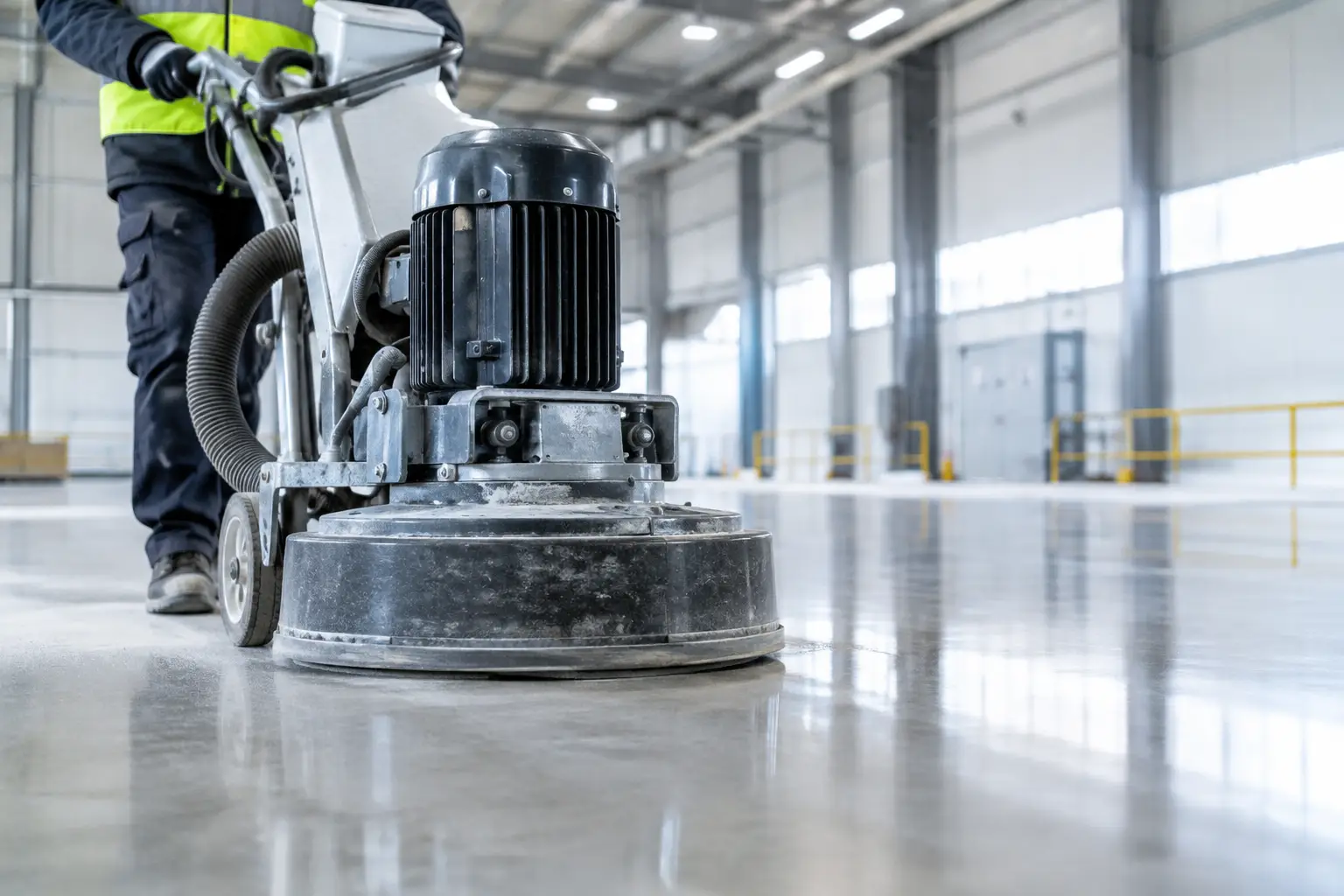
Mechanical preparation is central to bond performance. Grinding, shot blasting, scarification, and repair methods should be selected to achieve the required concrete surface profile without leaving weak surface material behind. Oils, curing compounds, old coatings, laitance, and moisture-related deterioration must be addressed, not covered.
This is where flooring projects often lose value. A lower installed price can reflect shortcuts in preparation, repairs, edge detailing, or protection of the work during cure. Those shortcuts are rarely visible at handover. They become visible when traffic begins, washdowns start, or seasonal movement places stress on the floor.
Joints, Drains, and Transitions Need Their Own Plan
A seamless resinous field does not mean every joint should be covered without judgment. Structural and expansion joints must remain capable of movement. They require compatible joint systems and regular maintenance, not rigid fill that transfers movement into the floor.
Drains deserve the same attention. They are frequent failure points because they combine water, cleaning chemistry, thermal cycling, traffic, and difficult geometry. Proper slope, sound concrete at the drain perimeter, and detailed termination of the flooring system are necessary for sanitary performance and long-term bond.
Transitions to existing slabs, door thresholds, equipment bases, and wall bases should be planned before installation begins. In facilities where sanitation is critical, an integral cove can eliminate difficult-to-clean wall-floor intersections. In heavy traffic areas, terminations must resist wheel impact and prevent edge chipping.
Specify for the Actual Operation
The most useful flooring specification starts with a walk-through of each operational zone. Document temperatures, cleaning methods, chemical exposure, traffic type, load concentration, moisture conditions, drainage, slip requirements, and available shutdown windows. One facility may need both epoxy mortar and urethane cement in different areas. Standardizing on a single material across every room can create unnecessary cost in some zones and unacceptable risk in others.
Thickness should also follow service demands. A thin coating is not interchangeable with a high-build mortar system. Greater thickness can improve impact resistance, extend service life, and help address irregular substrates, but it must be coordinated with door clearances, equipment elevations, drains, and adjacent flooring.
For critical installations, involve the flooring contractor early enough to assess concrete conditions and sequence work around operations. Osis Group approaches industrial flooring as a project delivery requirement, not a finish-selection exercise. Preparation standards, access planning, cure time, and protection from other trades all affect the finished system.
The right floor should make operations less eventful: easier cleaning, safer movement, fewer repairs, and less risk of an avoidable shutdown. Choose epoxy mortar where mechanical durability in stable conditions leads the requirement. Choose urethane cement where heat, moisture, and washdown exposure demand a system built to move with the concrete.