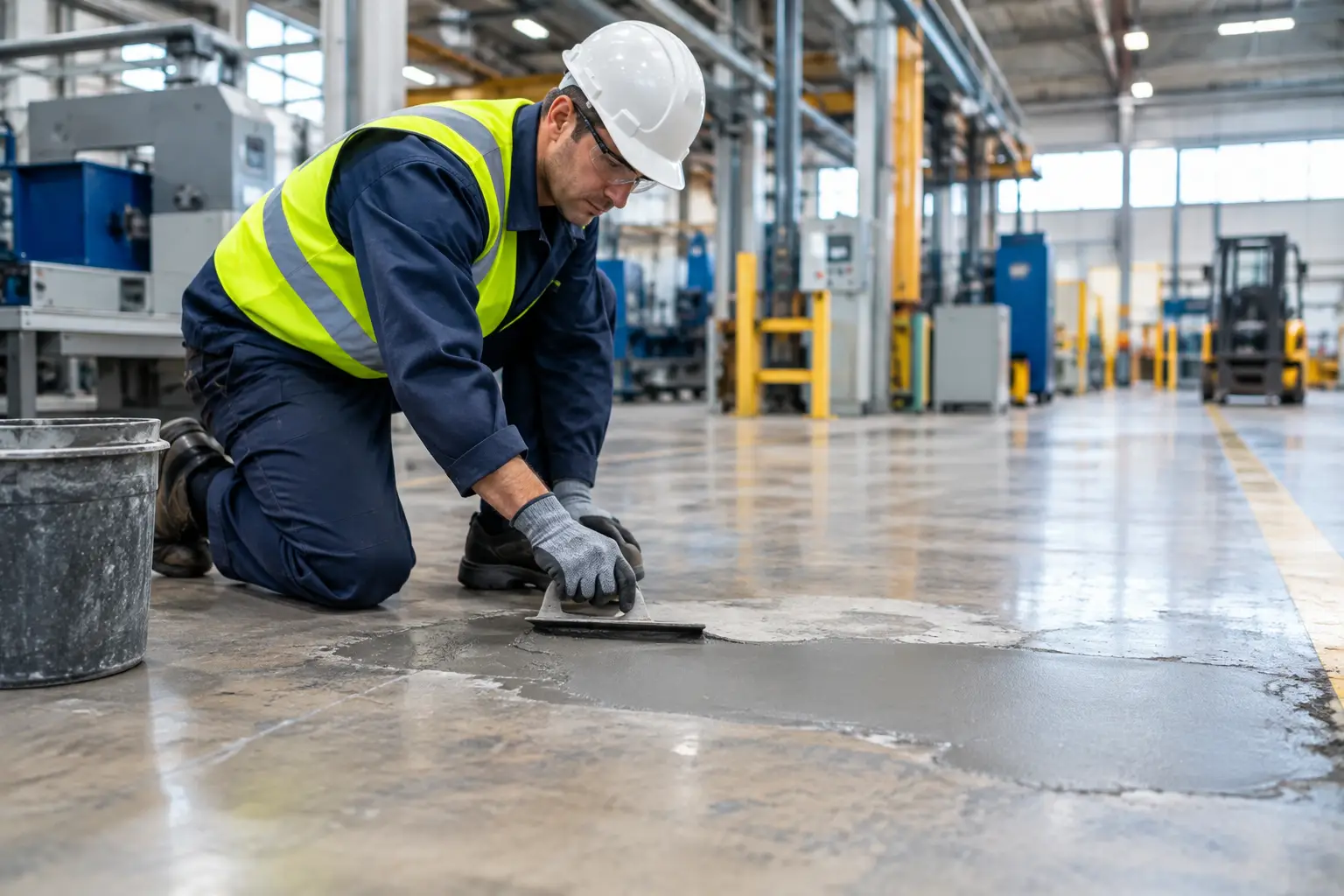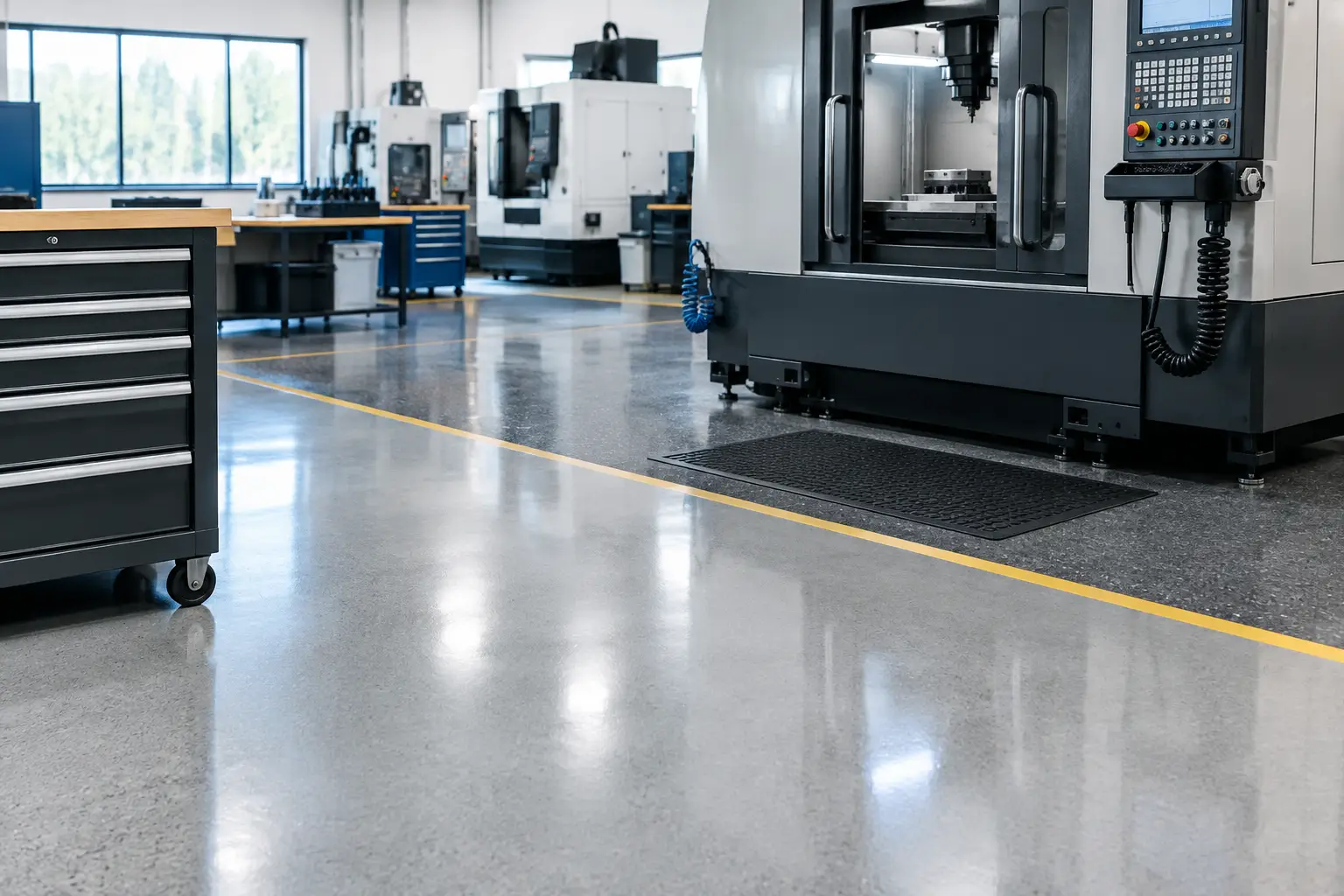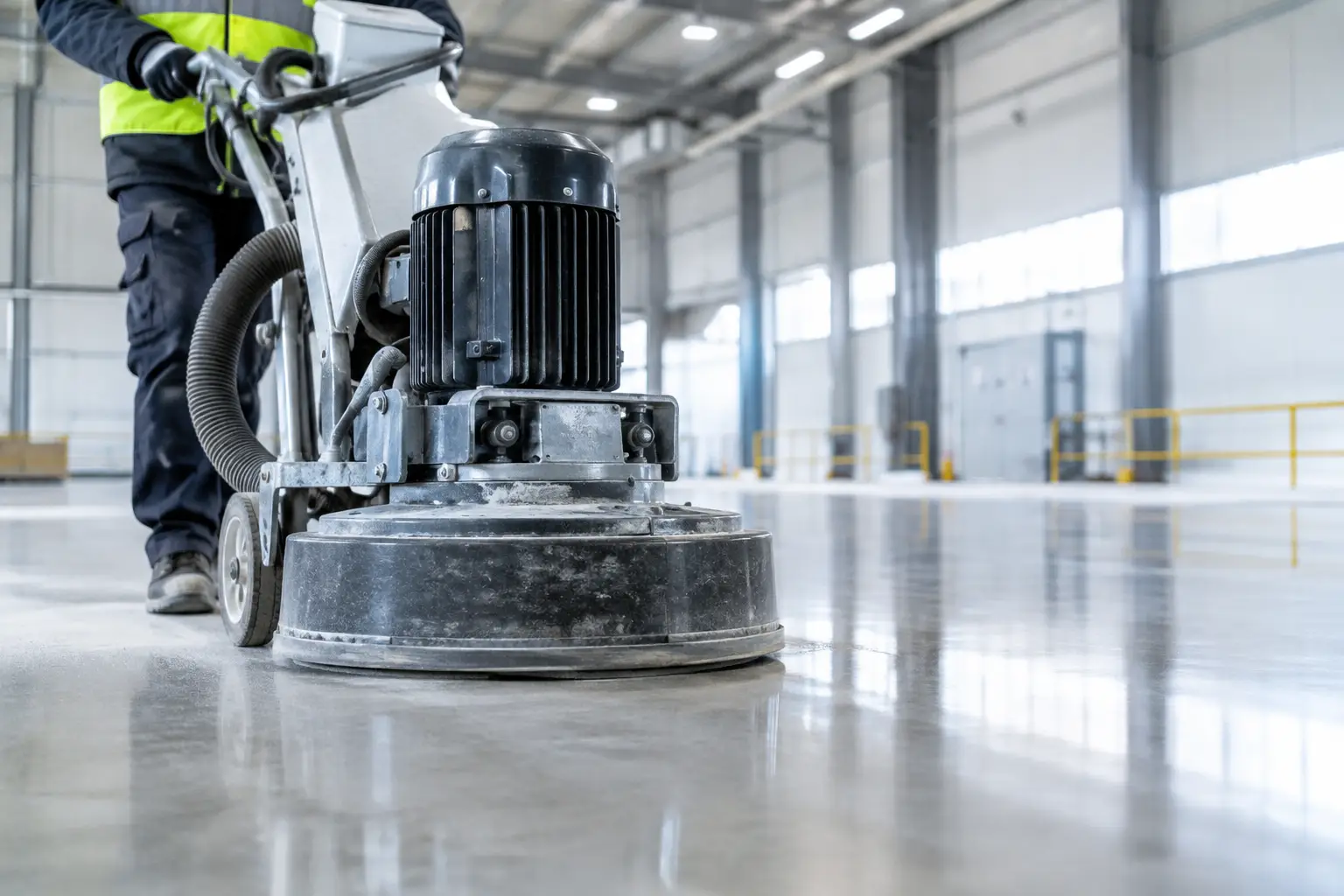
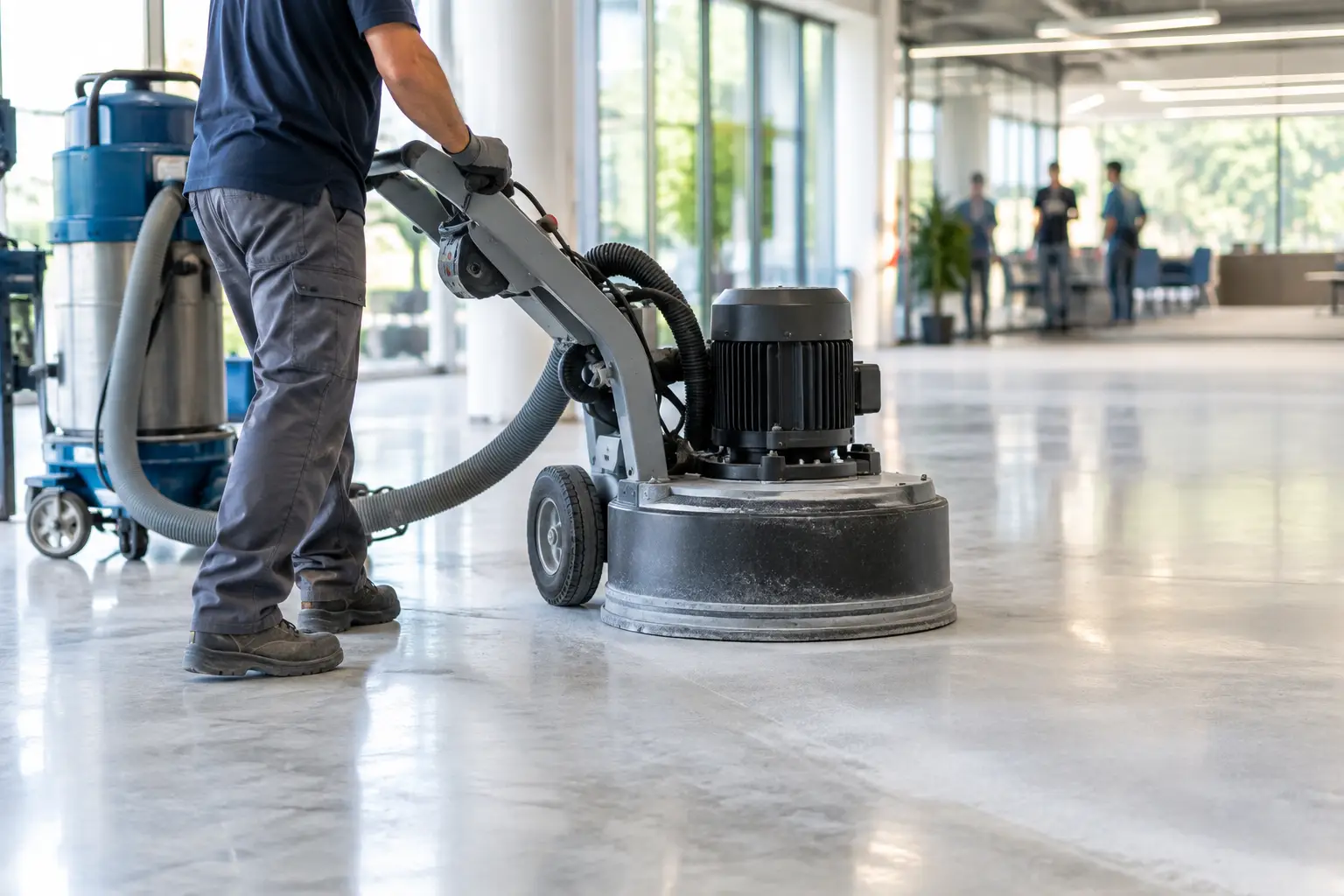
Floor grinding dust control is not a cleanup task added after surface preparation. It is a core project control that protects personnel, adjacent production areas, sensitive equipment, and the schedule. In active industrial facilities, uncontrolled grinding dust can migrate well beyond the work zone, creating safety exposure, contaminating processes, and turning a planned floor upgrade into an operational disruption.
Concrete grinding produces fine particulate at the point of contact between the tooling and slab. When the work involves silica-containing concrete, that dust requires particular attention. The right approach combines appropriate grinding equipment, matched dust extraction, physical containment, disciplined housekeeping, and a work plan built around the facility's operational constraints.
Why Dust Control Matters During Floor Grinding
The quality of a floor system begins with surface preparation. Grinding may be required to remove coatings, flatten high spots, open the concrete profile, prepare joints, correct slab defects, or support a floor upgrade. The work is essential, but it can create a substantial amount of fine dust when equipment and controls are not properly selected.
For a facility manager or operations leader, the risk is broader than the grinding area itself. Fine dust can enter racking, conveyor systems, electrical panels, HVAC pathways, quality-control areas, and finished inventory. It can settle on machinery and create added maintenance work long after the contractor has left the site. In food, pharmaceutical, logistics, and precision manufacturing environments, even a small containment failure can affect cleaning requirements, production readiness, or compliance procedures.
Dust also affects execution quality. A grinding crew working in poor visibility, with blocked extraction hoses or overloaded collection units, cannot maintain the same consistency as a crew operating with a controlled work zone. Effective control supports a cleaner substrate, clearer inspection conditions, and a more predictable handoff to the next phase of flooring work.
Floor Grinding Dust Control Starts at the Source
The most effective strategy is source capture. Dust should be collected where the grinder contacts the slab, not chased after it becomes airborne. This requires a compatible system: the grinder, shroud, hose, vacuum, filters, and collection method must perform as a matched assembly.
A high-capacity industrial vacuum with properly maintained filtration is not an optional accessory. It must provide sufficient airflow and pressure for the size of the grinder, the tooling being used, and the condition of the concrete. A large planetary grinder operating with undersized extraction equipment may appear controlled at first, then release dust as filters load or airflow drops. The same issue can occur when hoses are damaged, fittings are loose, or collection bins are allowed to overfill.
Tooling selection also matters. Aggressive tooling can increase material removal and dust generation. Finer grinding steps may produce smaller particles that are harder to contain if extraction performance is inadequate. The correct approach depends on the objective: coating removal, slab correction, profile preparation, polishing, or repair. Production rates should never be set independently from dust-control capacity.
Wet grinding can reduce airborne dust in some applications, but it introduces slurry management, moisture concerns, and additional cleanup requirements. It is not automatically the better option. Where a dry process can achieve the required profile with effective HEPA-filtered extraction and containment, it may better support a clean, controlled industrial project. The right method depends on the flooring system, slab condition, facility rules, and the availability of time for drying and cleanup.
Containment Protects the Rest of the Facility
Source capture handles the majority of dust. Containment protects the areas around the work.
In an empty shell, basic barriers may be sufficient. In an operating distribution center or manufacturing plant, the plan often requires a more deliberate separation between construction activity and facility operations. Temporary wall systems, sealed access points, controlled entry routes, and negative-air equipment can reduce the chance of particulate moving beyond the work zone.
Containment should reflect the consequences of failure. Grinding near active production, open inventory, clean rooms, finished offices, or critical equipment deserves a higher level of control than grinding in an isolated renovation area. Air movement must also be considered. A nearby loading door, supply diffuser, forklift traffic lane, or fan can carry dust farther than expected.
Before work begins, the project team should establish four practical controls:
- Define the physical limits of the grinding zone and the protected adjacent areas.
- Identify HVAC systems, openings, and traffic routes that could move dust outside containment.
- Set entry, exit, and cleanup procedures for workers, tools, and material handling equipment.
- Confirm who has authority to stop work if containment or extraction performance declines.
These controls are simple, but they prevent many of the most common failures. The goal is not to make the project look clean at the end of the shift. The goal is to keep dust from becoming an uncontrolled facility-wide issue during the shift.
Planning for Active Operations and Limited Downtime
Industrial floor work rarely occurs in a perfectly vacant building. Equipment may need to remain in service, outbound shipments may continue, and production windows may be short. Dust control must be coordinated with these realities before the first grinder is mobilized.
A strong plan separates the work into manageable phases. Rather than opening an entire floor area at once, the contractor may complete preparation and installation in defined sections, releasing each area according to the agreed sequence. This reduces the size of the containment zone and helps operations maintain access to the rest of the facility.
Night work or weekend work can reduce conflict with facility traffic, but it does not eliminate the need for controls. Reduced staffing can make it more difficult to monitor barriers, manage HVAC conditions, and complete detailed cleanup before the next operating shift. Scheduling decisions should be based on the actual turnover requirements, not just the hours when the building is less occupied.
For superflat VNA floors, dust-control discipline is especially relevant. The grinding and correction work used to achieve demanding flatness and levelness requirements must be executed without compromising nearby warehouse operations or contaminating guidewire areas, racking zones, and material-handling equipment. Precision floor work requires precision site control.
Housekeeping Is Part of the Grinding Process
Even the best extraction system does not eliminate all residue. Fine dust accumulates at perimeter edges, beneath equipment, along joint lines, and around access points. It must be removed with controlled methods throughout the work, not left for a final sweep.
Dry sweeping or using compressed air can reintroduce dust into the air and defeat the purpose of source capture. HEPA-filtered vacuuming and appropriate damp-wipe methods are more controlled options for final detail cleaning, subject to the facility's requirements and the floor system being installed. Cleanup equipment must be maintained to the same standard as grinding equipment. A poorly filtered vacuum can become another source of airborne dust.
The work zone should be inspected at regular intervals, especially after filter changes, equipment relocation, and shift changes. Visible dust outside the intended area is a signal to investigate immediately. The cause may be a full collection bin, a failed hose connection, inadequate barrier sealing, or air pressure moving in the wrong direction.
Common Gaps That Increase Project Risk
Many dust-control problems are avoidable. They usually result from treating extraction and containment as secondary details rather than production-critical systems.
One common gap is using equipment that is technically present but not properly matched. Another is assuming that a temporary plastic barrier alone provides containment, without accounting for gaps, access doors, air movement, and traffic. A third is underestimating the cleanup required before adjacent operations can safely resume.
There is also a trade-off between speed and control. Faster grinding is not always better if it overloads extraction capacity, increases cleanup time, or creates a stoppage later in the shift. The most efficient project is the one that maintains removal rates, containment performance, and turnover readiness at the same time.
A Higher Standard for Surface Preparation
Floor grinding is often the first visible stage of a flooring project, but its impact extends through installation, commissioning, and facility turnover. Well-controlled preparation protects the substrate, supports adhesion and finish quality, and reduces disruption to the people and equipment around the work.
For mission-critical facilities, the standard should be straightforward: grinding work must be planned and executed with the same care applied to the finished floor. When dust stays controlled, the project team can focus on what the floor is meant to deliver - safety, durability, cleanability, and dependable performance under daily operations.