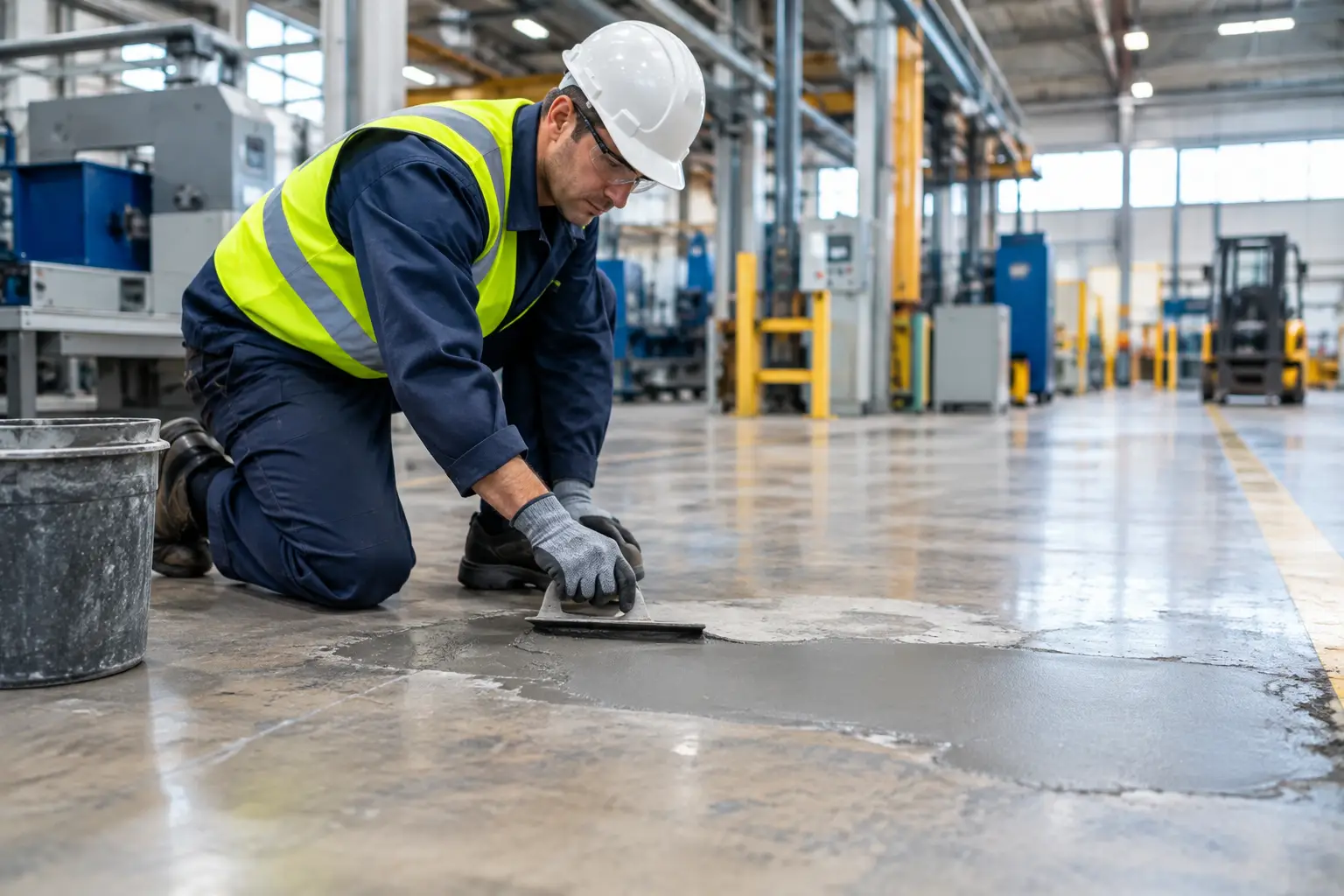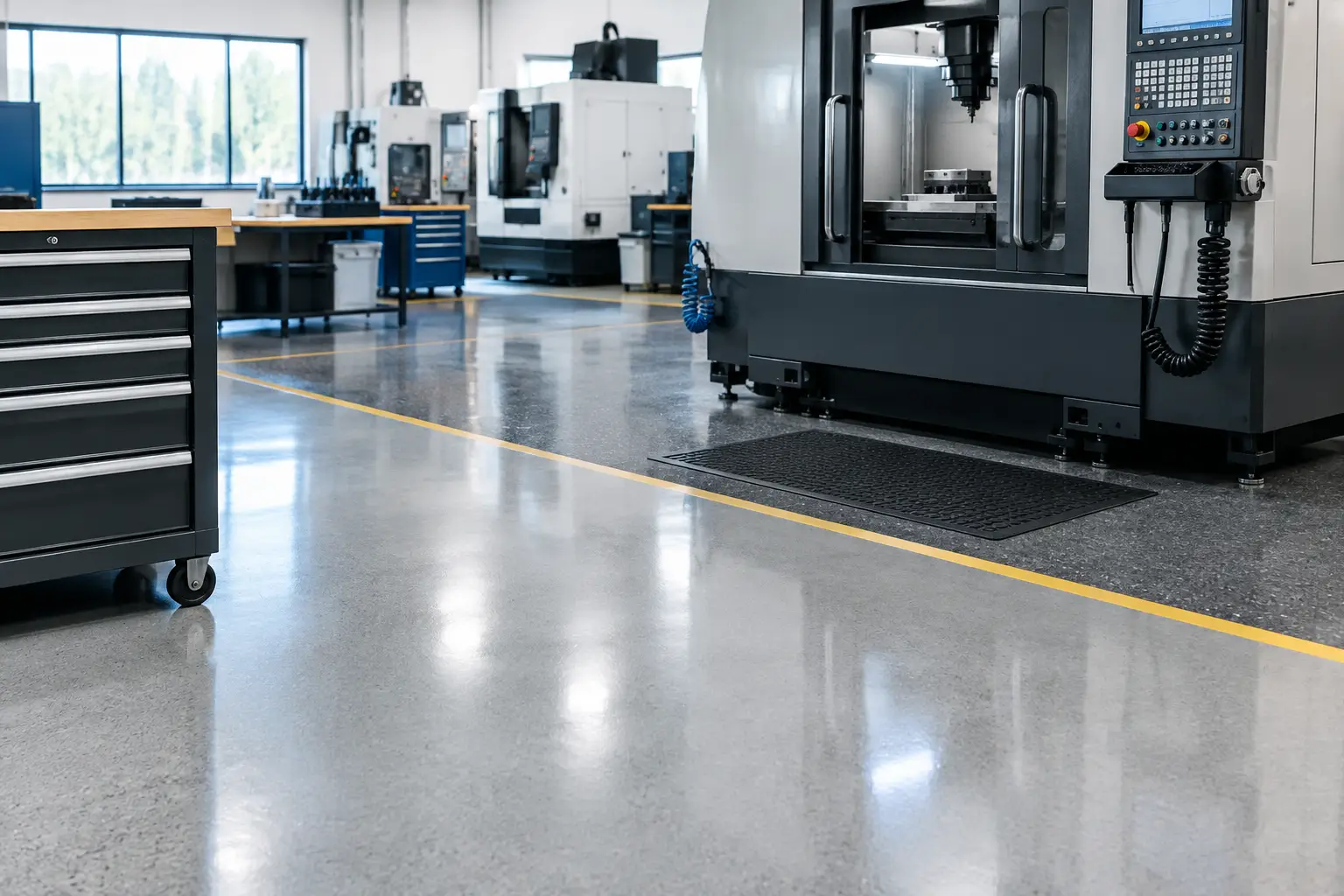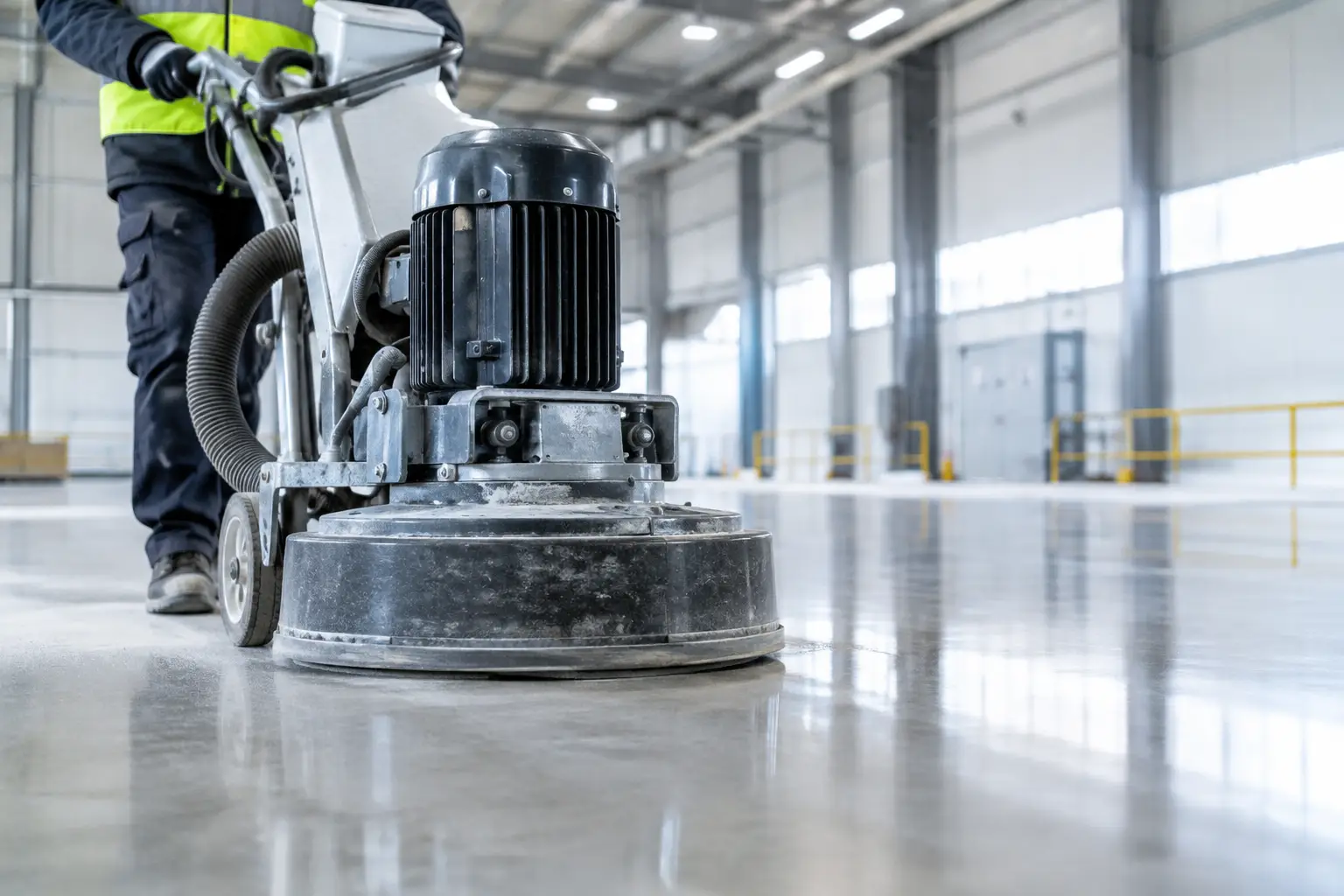
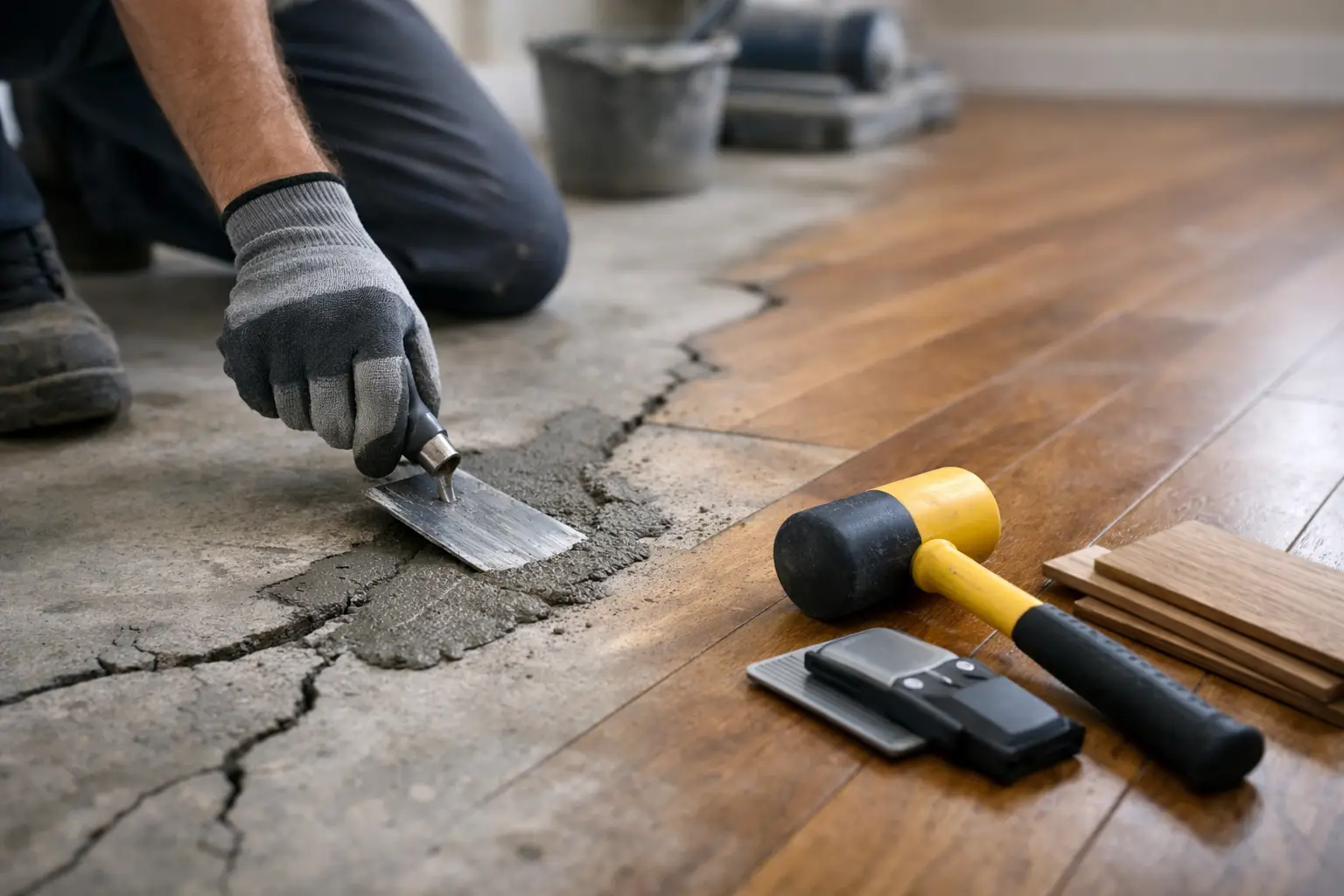
A failed floor rarely starts as a major failure. It starts with a broken joint that jolts lift trucks, a small spall at a rack aisle, a polished traffic lane, or a low area that holds washdown water. Left unresolved, those conditions become safety risks, equipment damage, lost productivity, and larger repair scopes.
Knowing how to choose floor repair methods means looking beyond the visible defect. The right repair must address the cause of damage, the service demands of the area, and the operational window available for the work. A fast patch that cannot withstand hard-wheel traffic is not a cost-saving measure. It is deferred disruption.
Start With the Failure, Not the Product
Industrial floor repair is not a single category of work. Concrete cracks for different reasons. Joints fail under impact and traffic. Surface wear may result from abrasion, chemical exposure, poor finishing, moisture movement, or an unsuitable original system. Selecting a repair material before identifying the failure mechanism creates unnecessary risk.
Begin by documenting the location, pattern, and extent of damage. Determine whether the defect is isolated or repeated across traffic lanes, bay lines, dock approaches, production areas, or washdown zones. A recurring defect usually points to a system issue rather than a one-time impact.
A crack may be dormant and suitable for rigid repair, or it may be active because the slab continues to move. A joint may be worn only at the edges, or it may have lost support beneath the slab. Surface scaling may be shallow, while delamination can indicate weak concrete that must be removed before any coating or topping is installed.
The visible condition matters, but the substrate condition decides whether the repair will hold.
Separate Cosmetic Damage From Operational Damage
Cosmetic repairs are appropriate when damage does not affect safety, sanitation, equipment travel, or floor performance. Industrial facilities should be cautious about applying that label too broadly. Small defects at a VNA aisle, conveyor crossing, or wire-guided truck path can become operational damage quickly.
Prioritize defects that create impact for material handling equipment, trip hazards for personnel, contamination concerns, water intrusion, or exposed edges that will continue to break down under traffic. In heavy-duty environments, repair priority should follow operational consequence, not appearance alone.
Match the Method to Traffic and Exposure
The same repair that performs well in a light-duty storage room may fail quickly in a high-cycle distribution center. Floor selection must account for what travels across the surface, how often it travels, and what the floor is exposed to during normal operations.
Forklifts with hard wheels concentrate force at joints and damaged edges. Reach trucks and very narrow aisle equipment impose demanding flatness and travel requirements. Steel-wheeled carts, loaded pallet jacks, drop impact, and high point loads each require a different level of repair strength and edge protection.
Chemical exposure changes the equation. Food and beverage, pharmaceutical, manufacturing, and maintenance areas may require resistance to oils, acids, alkalis, solvents, thermal shock, or repeated washdowns. A repair that restores concrete strength but degrades under cleaning chemicals will not meet the facility's lifecycle requirements.
Consider these operating conditions together:
- Traffic type, wheel hardness, load weight, and travel frequency
- Impact exposure at docks, intersections, and material transfer points
- Chemical contact, washdown cycles, moisture, and temperature change
- Slip resistance, cleanability, and regulatory requirements
- Required return-to-service time and access limitations
These conditions determine whether a localized repair, joint rebuild, grinding program, resinous system, concrete overlay, or broader floor upgrade is justified.
Choose Floor Repair Methods by Area Function
A floor should be evaluated by operational zone. One facility can require several repair methods because dock lanes, production rooms, battery charging areas, rack aisles, and pedestrian routes do not serve the same purpose.
High-Traffic Joints and Slab Edges
Joint failure is one of the most common causes of industrial floor deterioration. Forklift impact breaks unsupported concrete at joint edges, producing spalls that spread with every wheel pass. The repair must remove unsound concrete, restore the edge with a high-strength material, and account for the joint's intended movement.
For heavily traveled joints, the detail is as important as the repair compound. Poorly prepared edges, incorrect joint geometry, or reopening traffic before full cure can shorten service life significantly. Where repeated hard-wheel impact is expected, a durable joint repair strategy should be designed around traffic direction, slab movement, and edge protection.
VNA and Wire-Guided Aisles
Very narrow aisle operations demand more than a smooth-looking repair. Floor flatness, levelness, and consistency directly affect truck stability, mast movement, rack clearances, and operating speed. Grinding can correct localized high spots and improve travel quality, but it cannot solve every slab profile or structural issue.
Superflat floor work requires precise measurement before and after correction. In wire-guided aisles, wire channel condition and alignment also matter. Repairs that alter floor geometry or interfere with guidance components must be planned as part of the operating system, not treated as isolated concrete work.
Worn or Uneven Concrete Surfaces
Surface wear, curling, roughness, and localized elevation changes can often be addressed through floor grinding and targeted repairs. This is a practical solution when the slab is fundamentally sound but no longer supports safe, efficient traffic.
Grinding improves ride quality and removes irregularities, but it also exposes the actual condition of the concrete. Weak areas, cracks, and delaminated sections must be repaired before the finished surface can perform. The goal is not simply to make the floor look cleaner. It is to produce a dependable surface profile for the facility's equipment and operating conditions.
Chemical, Sanitary, or Wet-Service Areas
Where the floor must resist chemicals, moisture, frequent cleaning, or contamination, concrete repair alone may not be enough. A jointless resinous floor system can provide a continuous, cleanable surface with the appropriate resistance profile for the environment.
System selection depends on the chemicals involved, exposure duration, temperature, drainage, substrate moisture, and cleaning process. A thin coating may be suitable for light exposure and moderate traffic. A thicker industrial system may be necessary where abrasion, thermal cycling, or aggressive washdown is routine. The wrong specification can fail even when installation quality is high.
Evaluate Downtime as a Design Requirement
Every repair decision has a schedule consequence. Facilities often focus on material cure time, but total downtime includes access restrictions, surface preparation, demolition, moisture mitigation where needed, installation, cure, cleanup, and return-to-service verification.
A rapid-cure repair can be valuable in a 24/7 operation, especially at critical travel lanes or shipping areas. However, rapid return should not override substrate preparation or repair depth requirements. A repair installed into contaminated, weak, or poorly prepared concrete may reopen quickly regardless of cure speed.
Define the available work window early. Confirm whether the area can be isolated, whether traffic can be rerouted, and whether repairs need to be phased by aisle, bay, or shift. For active facilities, execution planning is part of the repair method. A technically correct repair that blocks a critical operation at the wrong time is not a successful project.
Compare First Cost Against Lifecycle Cost
The lowest initial price often reflects a limited scope: patch the visible damage, restore access, and move on. That approach can be reasonable for low-consequence areas or short-term occupancy. It is rarely the best choice for high-traffic industrial environments.
Lifecycle value comes from fewer repeat repairs, reduced equipment impact, safer travel paths, less cleanup, and fewer unplanned shutdowns. A properly executed repair may cost more at installation because it includes thorough surface preparation, removal of failed material, accurate profiling, and a system matched to the environment. Those steps are where durability is created.
Ask for a repair recommendation that states the assumed traffic, exposure, expected service conditions, preparation standard, cure requirements, and limitations. Clear assumptions make it easier to compare proposals on performance rather than price alone.
A Practical Decision Process for Industrial Floors
Before approving work, establish a clear sequence: inspect the slab and identify the failure mechanism; classify the area by traffic, exposure, and operational criticality; determine whether the condition is localized or systemic; select a repair system that meets service and downtime demands; then verify the completed work before reopening the area.
For large facilities, maintain a floor condition map and track repeat repair locations. This turns floor maintenance from reactive patching into planned asset management. It also identifies when recurring repairs should be replaced by a more durable floor upgrade, jointless system, grinding program, or targeted VNA correction.
Osis Group approaches industrial repair with the same standard required for new high-performance flooring: the method must support the operation after the crew leaves. When a floor carries production, inventory, and equipment every day, the right repair is the one that removes the failure from the operating plan.