A failed floor joint rarely stays a joint problem. Once hard-wheel traffic begins striking an unsupported slab edge, spalling can spread down travel lanes, create vibration for operators, and turn routine maintenance into disruptive concrete repair. Knowing how to choose joint filler starts with understanding what the joint must do under actual operating conditions, not simply selecting a product by hardness or price.
For industrial facilities, the correct material protects slab edges, supports wheeled traffic, accommodates expected movement, and fits the installation schedule. The wrong material may tear, debond, crack at the bond line, or become too rigid for the joint's movement. A sound specification considers the floor, the equipment, the environment, and the operating plan together.
Start With the Joint Type and Its Purpose
Not every joint should receive the same material. Contraction joints, isolation joints, construction joints, and expansion joints serve different functions. Their filler or sealant requirements are fundamentally different.
Saw-cut contraction joints are placed to control concrete shrinkage cracking. After the slab has completed most of its shrinkage, these joints often require a semi-rigid filler to provide edge support under forklifts, reach trucks, and other wheeled equipment. In this application, the filler is not intended to act as a flexible expansion seal. Its primary job is to transfer support across the joint and reduce impact damage at the arris.
Isolation and expansion joints are designed to allow movement between the slab and walls, columns, equipment foundations, pits, or adjacent structures. These joints normally require an elastomeric sealant or a purpose-designed joint system that can compress and extend. Filling an active expansion joint with a semi-rigid material can restrict movement and contribute to cracking or failure at the surrounding concrete.
Construction joints require closer review. Their performance depends on slab geometry, dowel design, expected traffic, and whether the joint is expected to move. The joint should be assessed in the context of the complete floor system rather than treated as a standard saw-cut detail.
Match Joint Filler to Traffic and Loading
Traffic is usually the deciding factor in industrial joint filler selection. The heavier the load, the harder the wheel, and the more concentrated the traffic pattern, the greater the need for reliable edge support.
Warehouses with electric reach trucks, order pickers, and VNA equipment are especially demanding. Small, hard wheels apply significant force at a narrow contact point. When those wheels cross an open or poorly filled joint repeatedly, the concrete edges can fracture. The result is joint spalling, equipment vibration, reduced travel quality, and escalating repair costs.
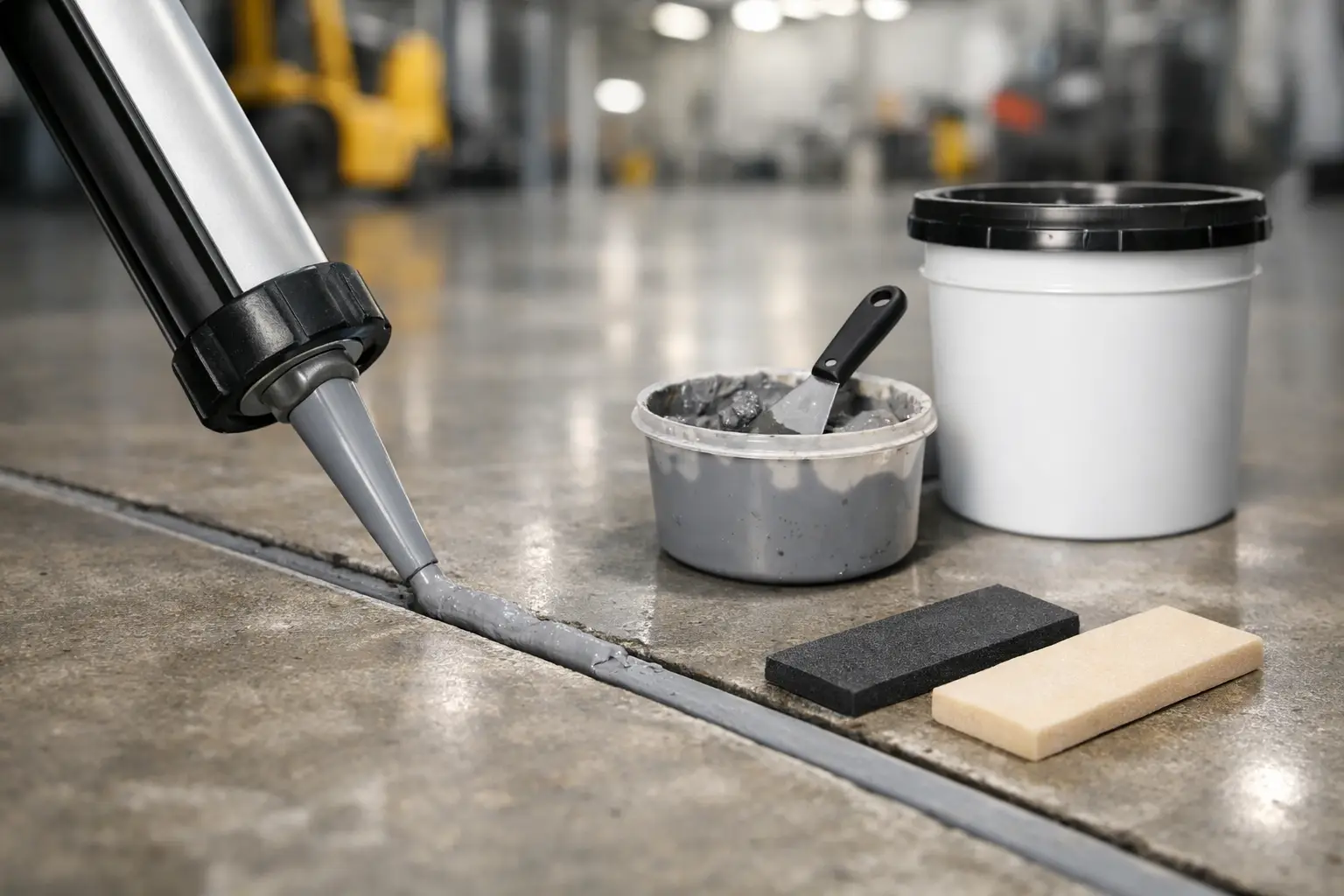
For cured contraction joints in hard-wheel traffic areas, semi-rigid epoxy and polyurea fillers are common options. Both can support slab edges, but they do not perform identically. Epoxy fillers generally provide high hardness and strong compressive support. They can be an effective choice where movement is low and the floor is sufficiently mature. Polyurea fillers typically cure faster and may retain greater flexibility, which can help where a project requires rapid return to service or where modest joint movement remains a consideration.
Material selection should not be reduced to epoxy versus polyurea. Product hardness, elongation, tensile characteristics, cure profile, adhesion, and service temperature all matter. A filler that is too hard for the expected movement can crack or pull away. A filler that is too soft may not provide enough edge support for severe traffic.
Evaluate Slab Age and Expected Movement
Concrete shrinks as it cures. Most drying shrinkage occurs in the early life of the slab, but movement can continue over time based on moisture conditions, temperature, mix design, slab thickness, and restraint. This is why timing matters.
Installing a very rigid joint filler too early can create problems if the joint continues to open beyond the filler's movement capacity. Conversely, delaying joint filling too long in a facility with active hard-wheel traffic leaves slab edges exposed when they are most vulnerable.
The practical decision is based on the floor's age, moisture condition, joint width, and operational urgency. A newly placed slab may need a material selected for early installation and anticipated movement. A mature slab with stable contraction joints and high forklift activity may benefit from a harder semi-rigid filler focused on long-term edge protection.
Existing floors need a different evaluation. Wide joints, broken edges, old sealant residue, and repeated repairs can indicate that the issue is not only the filler. Joint movement, poor load transfer, unsuitable traffic patterns, or underlying slab distress may need to be addressed before new filler is installed.
Consider Chemicals, Washdowns, and Temperature
A joint filler that performs well in a dry warehouse may not be suitable for food processing, manufacturing, cold storage, or washdown areas. Facility conditions can change the material decision quickly.
Chemical exposure may soften, stain, swell, or degrade certain formulations. Frequent washdowns place additional demands on adhesion and moisture tolerance. Cold environments can affect cure speed and flexibility, while high-temperature processes can increase joint movement. In these settings, compatibility with cleaners, oils, acids, alkalis, and process chemicals should be confirmed against actual site conditions.
Sanitary requirements also matter. In food and beverage facilities, open, damaged, or poorly bonded joints can retain contaminants and make cleaning more difficult. The joint detail must support both floor durability and the cleaning protocol. A filler alone cannot correct improper slope, poor drainage, or failed surrounding coatings, but it is an essential part of a maintainable floor assembly.
How to Choose Joint Filler Based on Downtime
Return-to-service requirements can narrow the available choices. In an active distribution center or production facility, a technically suitable filler is not enough if it requires a shutdown the operation cannot support.
Fast-curing polyurea systems are often considered where repairs must be completed during a short maintenance window. However, fast cure does not eliminate the need for correct preparation. Joints must be clean, dry as required by the product, properly routed or repaired, and filled to the right depth. The material must also be allowed to reach the specified service condition before traffic resumes.
For large-scale joint filling or repair, phase the work around travel routes, dock activity, production schedules, and safety controls. A contractor should be able to define the sequence, isolation requirements, cure time, and return-to-traffic plan before work begins. This protects both the installation quality and the facility's uptime.
Preparation Determines Whether the Filler Performs
Joint filler failure is often attributed to the product when the real cause is preparation. Concrete dust, old sealant, oils, moisture, weak joint edges, and improper joint geometry can all compromise adhesion and performance.
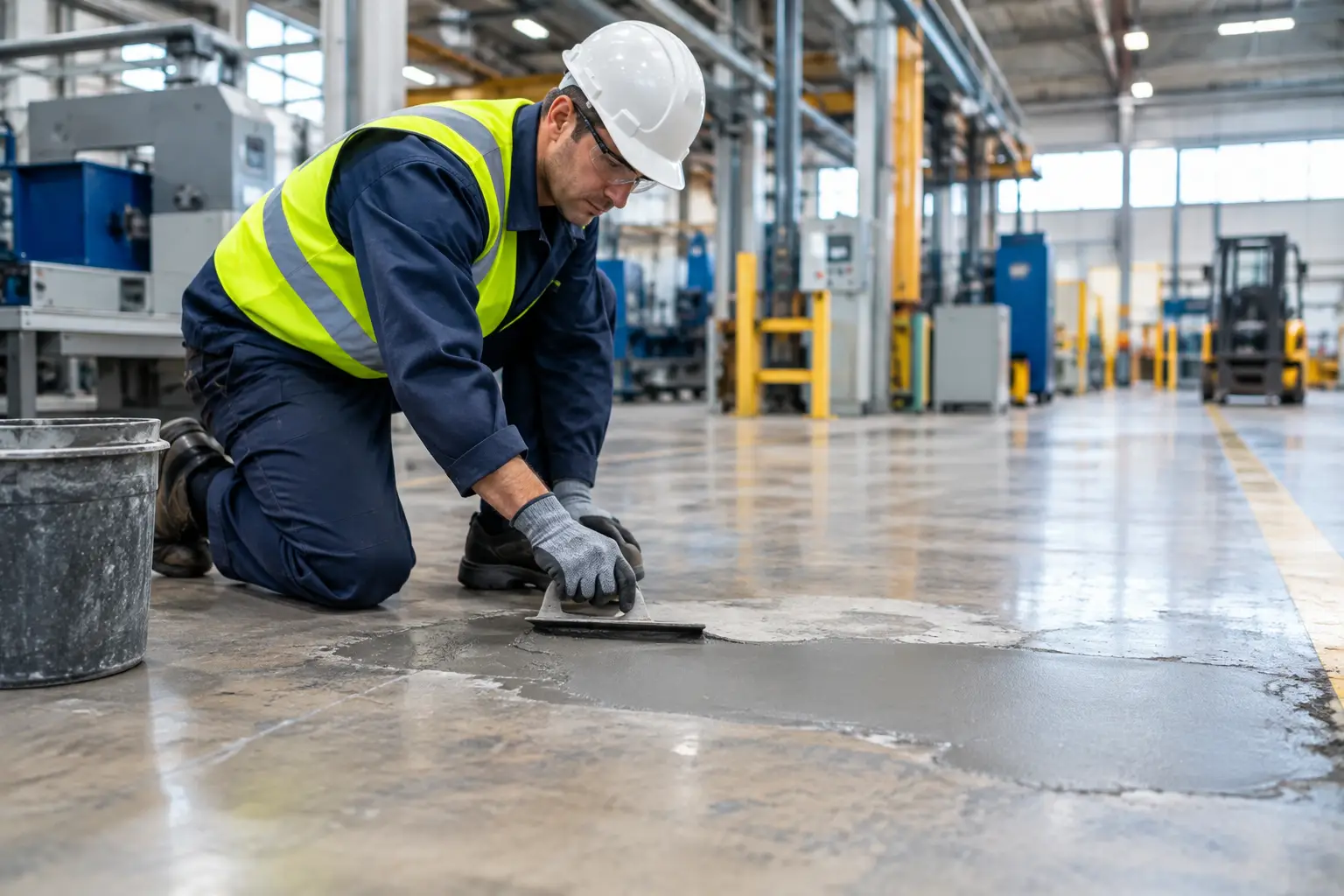
A quality installation begins with evaluation and cleaning. Failed material must be removed completely, joint faces prepared to sound concrete, and damaged arrises repaired where needed. The joint should be filled to the required depth and finished in a way that supports traffic without leaving a low spot that collects debris or a raised edge that catches wheels.
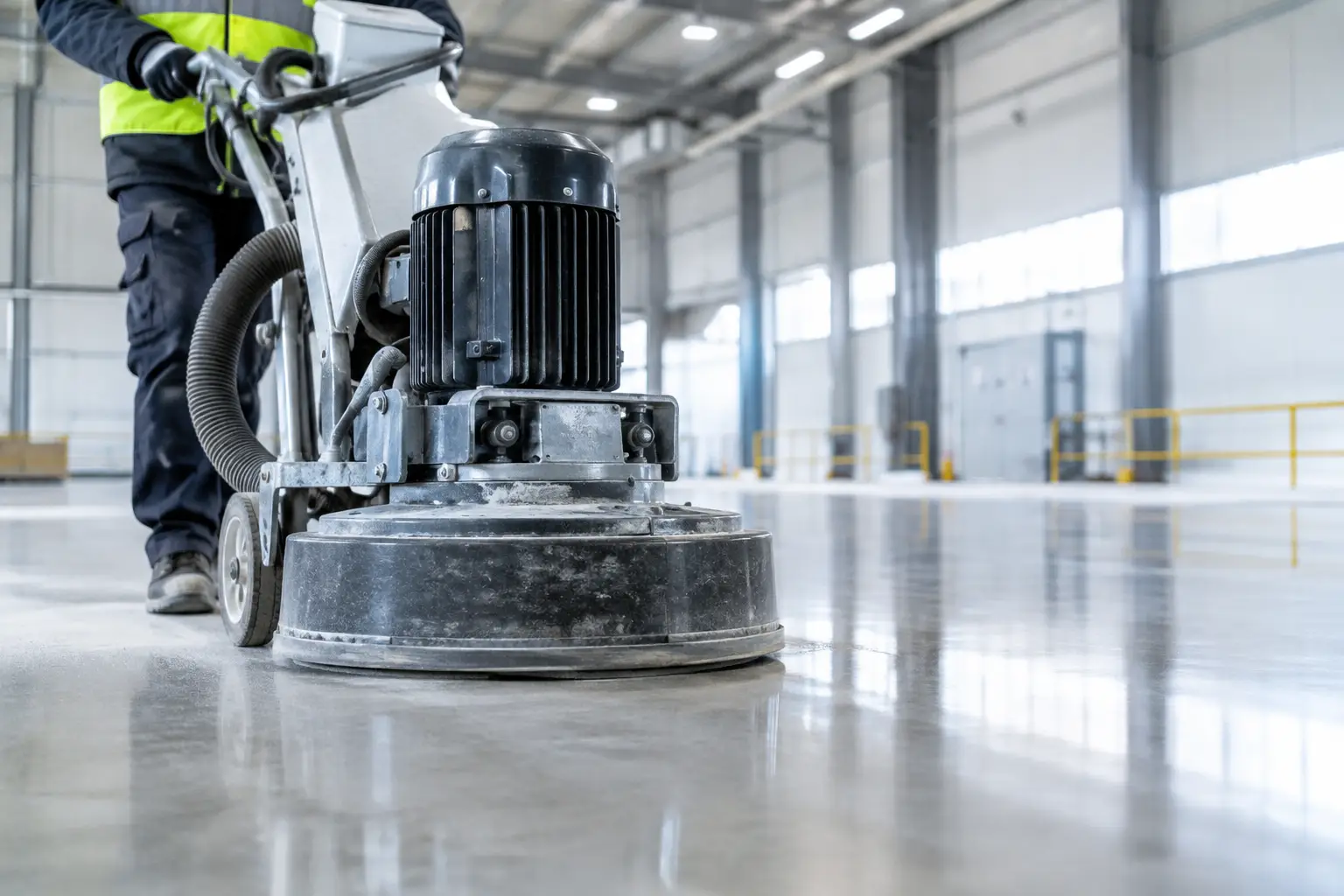
The right preparation method depends on the condition of the floor. Some joints need straightforward cleaning and filling. Others require routing, crack repair, edge rebuilding, or grinding to restore a smooth travel surface. In high-traffic aisles, joint repair should be viewed as part of overall floor performance, particularly where flatness and equipment travel quality are critical.
Avoid Common Specification Mistakes
The most common error is specifying one joint material for every location. A facility may have saw-cut contraction joints in forklift aisles, isolation joints around columns, exterior joints at loading areas, and refrigerated zones with different temperature demands. These conditions should not automatically receive the same product.
Another mistake is selecting by Shore hardness alone. Hardness is relevant, but it does not answer whether the material can tolerate anticipated movement, chemical exposure, installation temperature, or the required return-to-service window. Product data must be interpreted against the job, not copied from a generic detail.
Finally, do not fill over unresolved damage. If slab edges are already fractured, simply adding filler over loose concrete does not restore support. The damaged area needs to be repaired to sound material before a new joint filler can protect it.
Specify Performance, Then Verify Execution
A strong joint filler specification identifies joint type, service environment, traffic, material performance requirements, preparation standards, installation depth, finishing expectations, and cure time before traffic. It should also account for the floor's age and anticipated movement.
For high-demand facilities, field verification is equally important. Review joint condition before work begins, confirm materials are appropriate for the environment, and inspect completed joints before reopening traffic. This level of control is particularly valuable for Superflat and VNA floors, where joint defects can directly affect equipment travel and operating efficiency.
Osis Group approaches floor and joint repair as an operational performance issue, not a cosmetic touch-up. The objective is a durable joint detail that supports the slab, protects equipment movement, and reduces avoidable maintenance.
The best choice is the filler that matches the movement, traffic, environment, and schedule of the specific floor. When those conditions are defined clearly before installation, joints become a controlled part of the floor system rather than the starting point for the next repair cycle.