
A floor failure rarely begins with the installation crew. It often begins months earlier, when a facility accepts a vague scope, selects on initial price, or treats flooring as a finish instead of an operating surface. In industrial flooring procurement, that mistake can lead to premature wear, unsafe joints, forklift disruption, contamination concerns, and avoidable shutdowns.
The right procurement process places performance, operating conditions, and execution accountability ahead of a simple bid comparison. A lower installed cost has little value if the floor cannot carry the traffic, tolerate the environment, or meet the required opening date.
Industrial Flooring Procurement Starts With the Operation
The floor system should be procured for the work it must support, not merely for the square footage it covers. A warehouse aisle carrying very narrow aisle equipment has different flatness requirements than a manufacturing area exposed to abrasion and point loads. A food or pharmaceutical facility may prioritize cleanability and jointless detailing. A loading area may need concrete repair and hardening before any coating or upgrade can perform as intended.
Procurement teams need a clear picture of how the facility operates. That includes traffic type, wheel loads, travel paths, storage layout, chemical exposure, washdown frequency, temperature conditions, drainage, sanitation requirements, and the consequences of downtime. These factors determine whether the project requires a Superflat floor, a jointless system, targeted grinding, wire guidance, joint repair, or a combination of services.
A specification that simply calls for an "industrial floor" leaves too much open to interpretation. It can produce bids that appear comparable but are based on different assumptions about preparation, materials, tolerances, repairs, and access. The result is change orders, schedule pressure, or a floor that meets the written scope while failing the operation.
Define Performance Before Requesting Bids
A strong scope describes the required outcome in measurable terms. For a Superflat floor, that means setting the appropriate flatness and levelness criteria for the lift-truck design, aisle configuration, rack height, and operating speed. For wire-guided systems, procurement should account for the guidance path, precision requirements, installation coordination, and verification process.
For jointless floors, the specification should establish joint strategy, slab movement considerations, expected traffic, and the need for a smooth, cleanable surface. Jointless does not mean movement disappears. It means the floor is designed and installed to reduce the operational problems associated with conventional joints where conditions allow.
Surface preparation deserves the same attention as the finished system. Grinding, removal, shot blasting, crack treatment, joint repair, moisture evaluation, and substrate correction are not optional details. They are the work that determines whether the new system bonds properly and performs over time.
Before issuing a request for pricing, facility leaders should establish four core requirements:
- The operating loads, traffic patterns, and environmental exposures the floor must withstand.
- The measurable tolerances, finish requirements, and repair standards the completed floor must meet.
- The access conditions, phasing plan, and downtime windows available for the work.
- The acceptance process, including who will inspect the floor and how performance will be verified.
This level of definition protects both the owner and the contractor. It gives qualified bidders a common basis for pricing and makes execution risk visible before the project starts.
Evaluate Scope Gaps, Not Just Bid Totals
Industrial flooring bids can vary widely, even when they appear to address the same area. The difference may be legitimate. One contractor may include substantial concrete repair, detailed edge work, moisture mitigation, testing, protection, and after-hours installation. Another may exclude those items or assume the substrate is ready for treatment.
The procurement question is not simply, "Which bid is lowest?" It is, "What is each bidder actually committing to deliver?"
Review inclusions and exclusions line by line. Pay close attention to substrate conditions, removal of existing materials, crack and joint treatment, grinding passes, flatness testing, curing time, mobilization, protection of adjacent operations, and project closeout. If a bid carries broad allowances or phrases such as "as required," request clarification before award.
The same discipline applies to product selection. A specified material may be appropriate on paper but unsuitable for the actual schedule, humidity conditions, slab moisture, or service environment. A floor designed for forklift traffic may not be adequate for steel-wheeled carts, impact loading, thermal shock, or aggressive chemical exposure. Performance claims should be connected to site conditions, not copied from a generic data sheet.
Procurement Must Account for Uptime
In an active plant or distribution center, flooring work is a logistics project as much as a construction project. Access, isolation, dust control, material staging, cure time, and equipment movement can determine whether the project succeeds without interrupting production.
A procurement package should require a project-specific execution plan. The plan should show how work will be phased, which areas will be unavailable, how traffic will be rerouted, and when each section can return to service. It should also identify risks that could affect the opening date, including hidden slab deterioration, moisture issues, weather exposure, and coordination with other trades.
There is a trade-off to manage. Compressed schedules may require additional crews, premium materials, night work, or phased installation. Those costs can be justified when a shutdown carries a high production penalty. In other facilities, a longer sequence with planned access restrictions may produce better value and lower installation risk. The correct approach depends on the cost of disruption, not on a preference for the fastest apparent schedule.
Contractors should be evaluated on their ability to work within these constraints. Ask how they control dust, protect completed areas, manage transitions, maintain safe access, and communicate daily progress. A technically sound floor installation still creates operational risk if the contractor cannot manage the site.
Choose Capability That Matches the Floor Type
Specialized flooring work requires specialized experience. Superflat VNA floors demand control of placement, finishing, measurement, and correction. Small deviations can affect lift-truck performance, rack clearance, travel speed, and maintenance costs. General concrete experience alone is not proof that a contractor can deliver these tolerances.
Joint repair also requires careful judgment. Filling a damaged or failed joint without addressing the cause can create a short-lived repair. The contractor must assess load transfer, edge deterioration, traffic impact, movement, and the condition of the surrounding slab. The objective is a durable transition that protects equipment and reduces recurring damage.
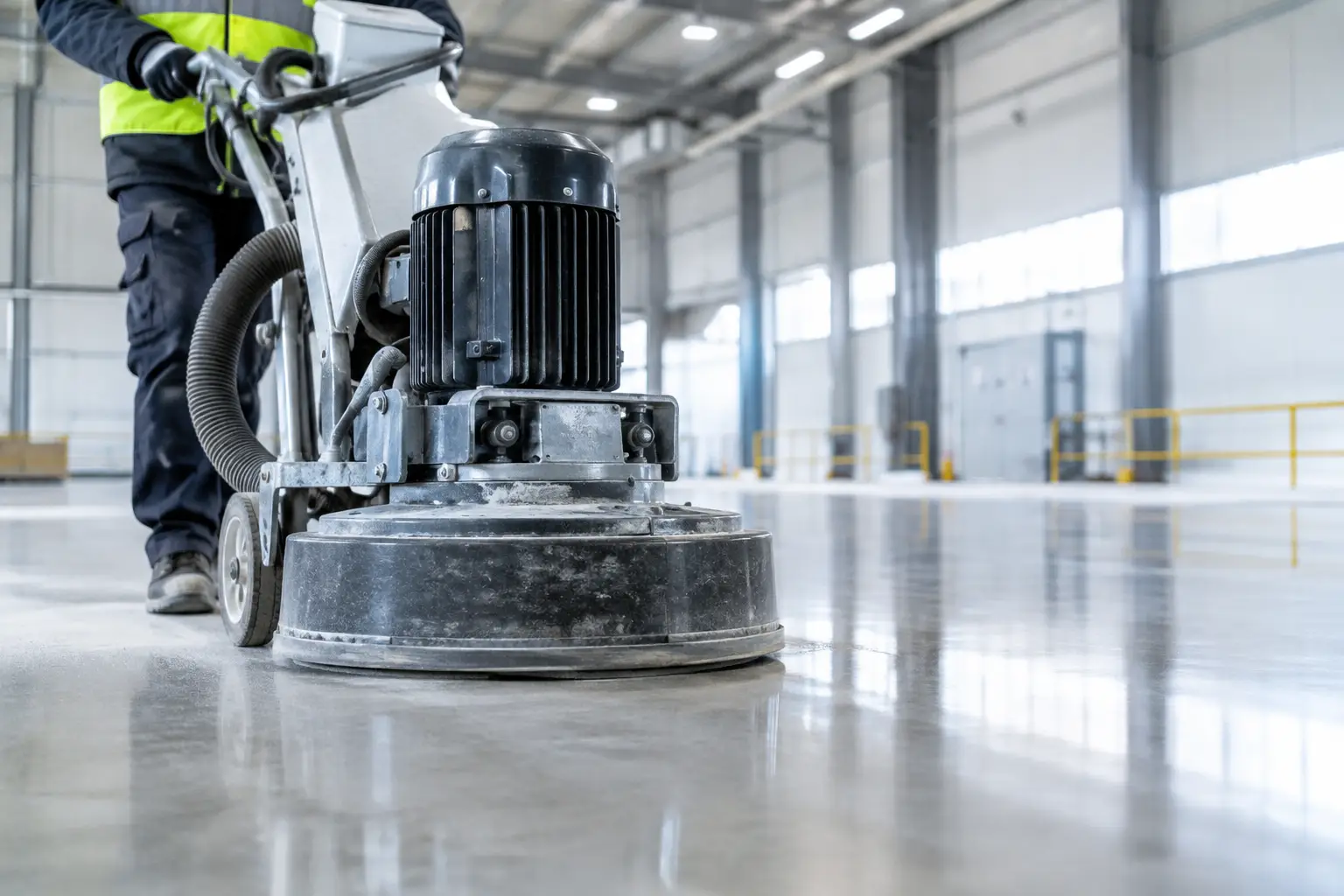
Floor upgrade and grinding work should be evaluated with the same standard. The work may involve correcting surface irregularities, improving ride quality, removing failed material, preparing for a new system, or restoring a floor that has become a source of operational friction. The required outcome should be defined before the method is selected.
Osis Group approaches these projects as performance-critical construction work. The standard is not simply to install a floor. It is to deliver a floor system that supports safe, productive operations and holds up under the conditions it was procured to serve.
Make Acceptance Measurable
A project is not complete when the crew leaves the site. It is complete when the floor has been inspected, tested where required, and accepted against the agreed performance standard.
For Superflat work, that may include documented floor-profile measurements. For coatings or jointless systems, acceptance may address surface preparation, thickness, adhesion, appearance, cure status, continuity, and detailing at edges and penetrations. For repairs, the review should confirm that repaired locations are sound, level where required, and suitable for the traffic they will receive.
Documentation matters because it establishes accountability. It also gives facility teams a useful baseline for future maintenance, expansion, or repair planning. If the project includes warranties, confirm what conditions apply, how issues are reported, and what remedies are available.
The lowest bid can be the right decision when the scope, capability, schedule, and quality controls are truly equal. In many industrial projects, they are not. Procurement creates value when it exposes those differences early and selects the contractor prepared to own the outcome.
A high-performing floor should disappear into the operation: equipment moves reliably, cleaning is manageable, joints do not become hazards, and maintenance teams are not repeatedly responding to the same failures. That is the practical standard worth procuring.