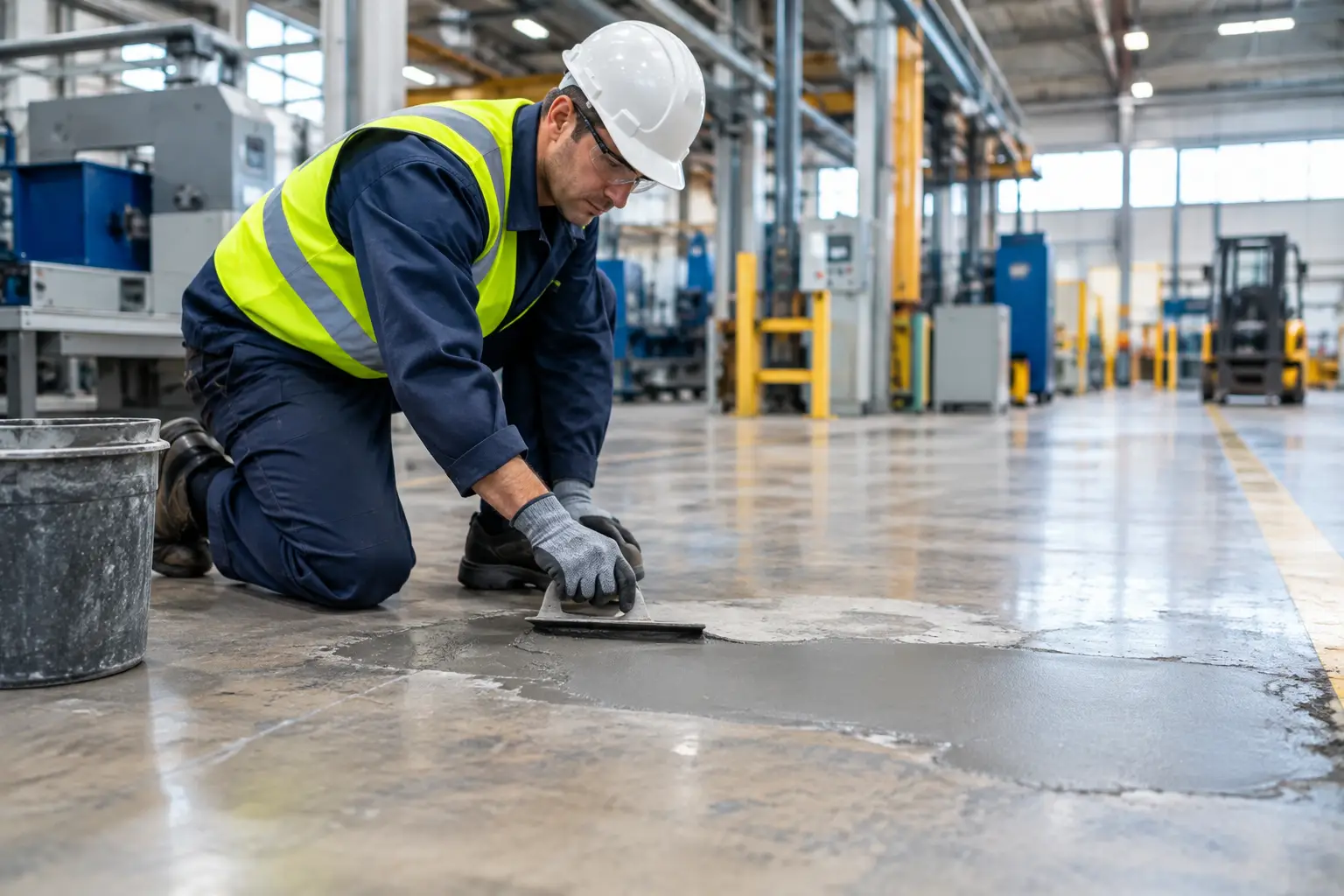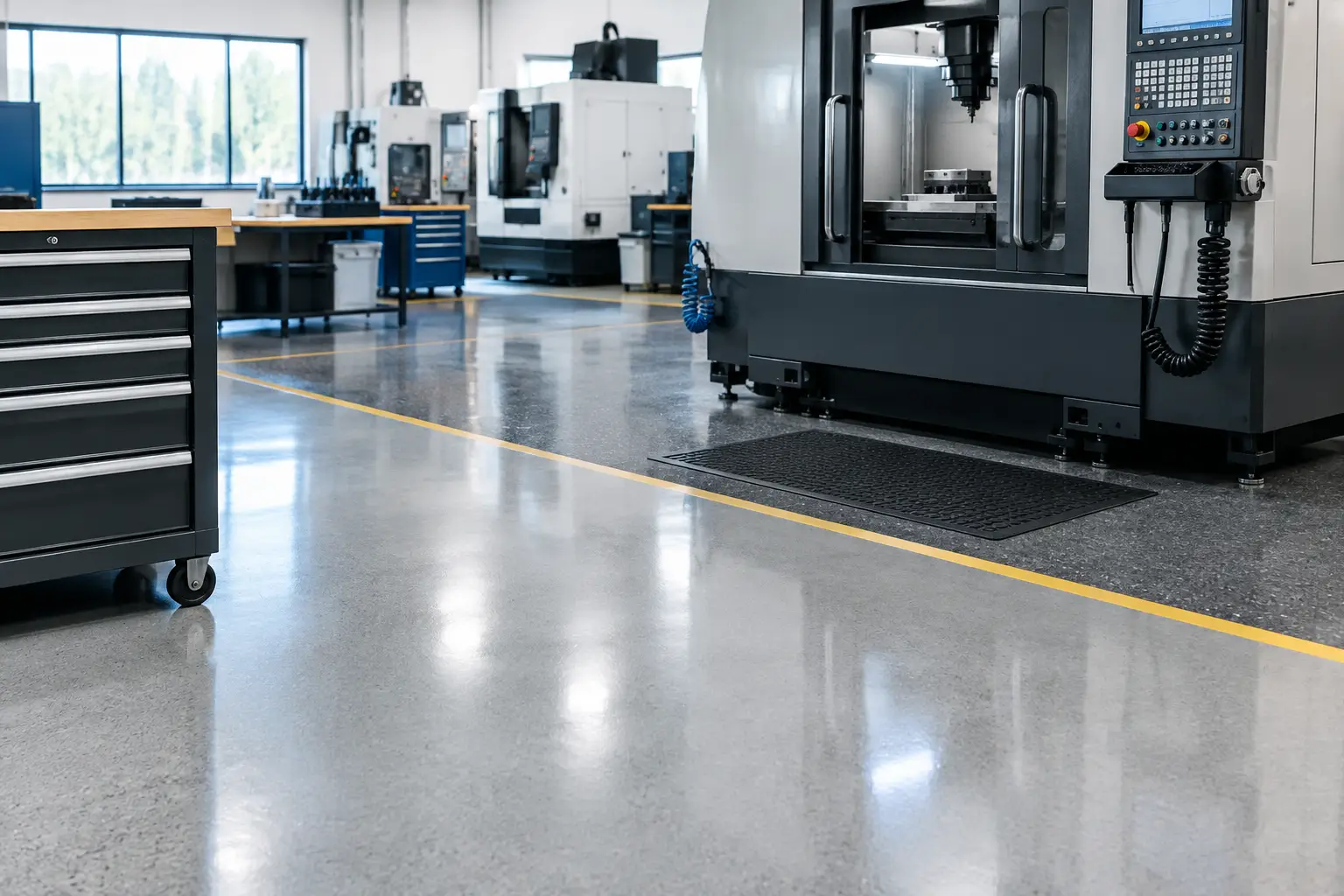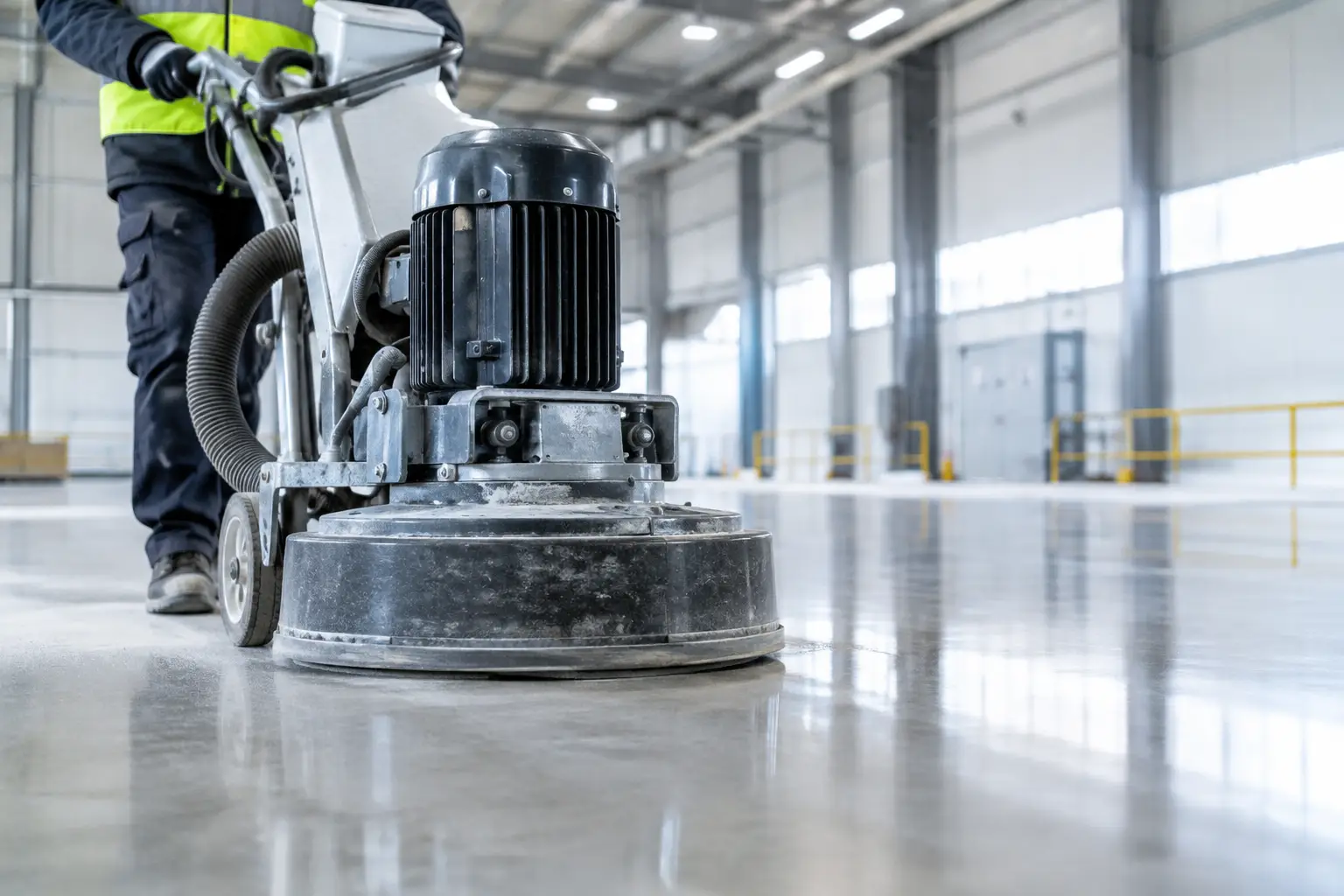
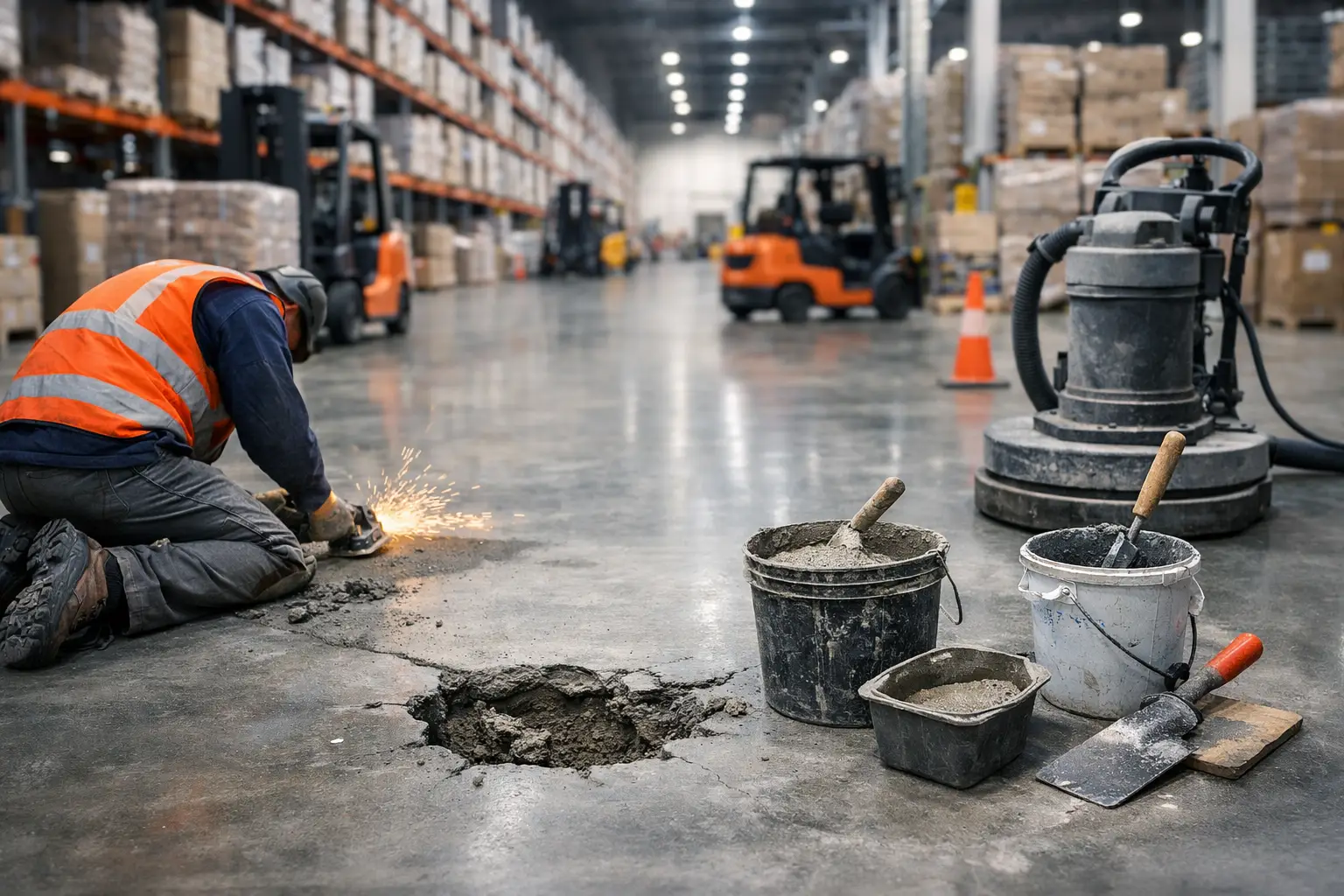
A failed floor is rarely an isolated maintenance issue in a distribution center. A broken joint can damage lift trucks, create a trip hazard, disrupt wire-guided travel, and accelerate wear across an entire traffic lane. The right top floor repair options for distribution centers address the actual failure mechanism while protecting operational uptime, safety, and long-term floor performance.
Repair selection should begin with the way the facility operates. Forklift wheel loads, rack layout, VNA traffic, slab movement, washdown exposure, and the required floor flatness all affect the correct solution. A repair that looks acceptable at handover but cannot withstand repetitive hard-wheel traffic is not a successful repair.
Start With the Cause, Not the Surface Defect
Spalling, cracking, joint failure, slab curling, dusting, and unevenness can look similar from a distance. Their causes are not the same. Installing a patch without identifying the source of movement, impact, moisture, or slab distress can lead to repeated failure in the same area.
A practical assessment considers the type and location of traffic, the condition of joints and arrises, the width and behavior of cracks, substrate strength, moisture conditions, and the flatness requirements of the operation. Facilities with very narrow aisle trucks need more than a visually smooth repair. They need predictable wheel paths and tolerances that support safe, efficient material handling.
The most effective scope also separates cosmetic issues from operational risks. Minor surface wear in a low-traffic storage zone may require limited treatment. Joint damage in a primary pick aisle, however, can quickly become a safety, maintenance, and productivity problem.
Top Floor Repair Options for Distribution Centers
There is no single best repair system for every distribution center. The appropriate option depends on whether the floor must restore joint integrity, correct elevation changes, improve flatness, rebuild failed concrete, or protect a sound slab from future wear.
Joint and Arris Repair
Joint failure is among the most common issues in heavy-duty warehouse floors. Repetitive forklift crossings can break down the concrete edges along saw-cut and construction joints. Once the arris is damaged, wheels strike the defect harder, increasing vibration and causing the repair area to deteriorate further.
A properly executed joint repair removes weak concrete, creates sound repair geometry, and uses a high-strength material suited to the expected traffic. Semi-rigid joint fillers may also be installed or replaced to support joint edges under hard-wheel loads. The objective is not simply to fill an opening. It is to restore a durable transition that reduces impact on vehicles, operators, and the slab.
Joint repair is especially valuable in high-frequency travel lanes, dock approaches, staging areas, and VNA aisles. Timing matters. Repairs should be sequenced around traffic patterns so primary routes remain available whenever possible.
Crack Repair and Stabilization
Not all cracks require the same treatment. Dormant cracks can often be cleaned, routed, and filled with a compatible repair material. Active cracks or cracks associated with movement require a different approach, because a rigid fill alone may crack again as the slab moves.
Crack repair may involve resin injection, routing and filling, stitching, or localized slab replacement, depending on the condition of the concrete and the cause of the movement. In operational environments, the repair material must be selected for traffic exposure and cure time as well as bond strength.
Cracks in forklift routes deserve priority. Even a narrow crack can lead to edge deterioration, wheel damage, and unacceptable vibration when it sits directly in a travel path. Repairs should be finished flush and evaluated for the equipment that will cross them, not just for appearance.
Floor Grinding and Surface Upgrades
Grinding is a precise option when the slab is structurally sound but has localized high spots, uneven transitions, rough patches, curled joints, or surface irregularities. It can improve ride quality, reduce wheel impact, and prepare the surface for a coating or resinous flooring system.
For facilities using VNA equipment, floor grinding can be part of a broader superflat floor correction strategy. The required result must be defined before work begins. General forklift traffic may tolerate conditions that are unacceptable for turret trucks operating at height in narrow aisles.
Grinding is not a substitute for structural repair. If concrete is unsound, delaminated, or failing at joints, the defective material must be addressed first. Used correctly, grinding provides controlled correction with less disruption than large-scale slab replacement.
Partial-Depth and Full-Depth Concrete Repair
When damage extends below the surface, a thin patch will not hold. Partial-depth repair is appropriate where the upper portion of the slab has failed but the lower concrete remains sound. Full-depth repair is required when deterioration, settlement, deep cracking, or structural distress affects the slab through its depth.
These repairs demand disciplined surface preparation. Weak concrete must be removed, repair boundaries must be properly cut, reinforcement conditions must be addressed where applicable, and the substrate must be prepared to receive the repair material. The repair must also be compatible with the surrounding slab and the operational loads it will carry.
Full-depth replacement has greater schedule and access implications, but it can be the right long-term decision for severely damaged areas. Trying to avoid a necessary replacement with repeated temporary patching often increases downtime and lifecycle cost.
Resinous Coatings and Protective Overlays
A coating or overlay is appropriate when the slab needs chemical resistance, abrasion resistance, improved cleanability, dust control, or a more consistent surface. Epoxy, urethane cement, and other industrial-grade systems can protect sound concrete in areas exposed to washdowns, battery charging activity, maintenance operations, or frequent wheeled traffic.
Coatings do not correct every concrete problem. They should be installed only after cracks, joints, moisture concerns, and substrate defects have been properly evaluated. A high-performance coating placed over an unstable or poorly prepared substrate can fail prematurely.
For distribution centers, the strongest case for a protective system is usually tied to a clear operational need: controlling concrete dust, resisting chemicals, improving sanitation, or extending service life in demanding zones. The system should be specified for the actual exposure, not selected solely by thickness or color.
Match the Repair to Traffic and Uptime Requirements
The highest-performing repair is one that fits the facility's operating conditions and can be installed with controlled disruption. That requires planning beyond material selection.
Consider the traffic route first. A repair in a low-use storage bay can often be isolated for a longer cure period. A repair at a dock door, cross aisle, or automated picking route may need rapid-return materials and phased execution. Faster cure times can reduce closure windows, but they do not remove the need for proper preparation and installation discipline.
Equipment type is equally important. Hard poly wheels, reach trucks, order pickers, and VNA trucks transfer loads differently than pneumatic-tire equipment. The floor must be repaired and finished for the conditions it will experience after reopening. This is particularly critical at joints, transitions, and repaired slab edges.
If wire guidance is present, repair work must protect the guidance system and preserve the required alignment. Floor correction in wire-guided aisles should be coordinated with the operating tolerances of the material handling equipment rather than treated as general concrete work.
What Quality Execution Looks Like
Industrial floor repair is defined by preparation, material compatibility, and control of the finished profile. Good workmanship starts with a clear repair scope and access plan. It continues with sound substrate preparation, clean boundaries, correct material placement, and a finish that supports safe equipment movement.
Quality control should include verification of repair depth where required, substrate condition, joint geometry, cure requirements, and finished elevation. In sensitive areas, floor flatness and levelness should be measured against the performance requirement of the operation. Visual acceptance alone is not enough for a mission-critical traffic floor.
Osis Group approaches repair work as part of the facility's operating infrastructure. The goal is not to create a short-term patch. It is to deliver a repair that performs under traffic, supports safety standards, and protects the floor's service life.
A condition assessment before damage spreads is usually the most cost-effective next step. Address the joints, cracks, and traffic lanes that are beginning to fail before they become an interruption your operation has to work around.