A floor failure in a processing room, loading area, or production corridor is rarely limited to the floor. It can interrupt operations, create sanitation concerns, damage equipment access, and force unplanned repairs. The decision between urethane cement vs epoxy floors should therefore begin with operating conditions, not appearance or installed cost alone.
Both systems can deliver high-performing, jointless industrial surfaces when properly specified and installed. They do not solve the same problems, however. Urethane cement is generally selected for severe thermal cycling, wet service, and demanding washdown conditions. Epoxy is often the stronger fit where chemical exposure, abrasion resistance, color stability, and a finished architectural appearance are primary requirements.
Urethane Cement vs Epoxy Floors: The Core Difference
Urethane cement, also called polyurethane cement, is a heavy-duty resinous flooring system that combines urethane resin with cement, aggregates, and other components. Its formulation gives it exceptional tolerance for moisture and temperature change. It is commonly installed at greater thicknesses than standard epoxy systems and is built for aggressive industrial environments.
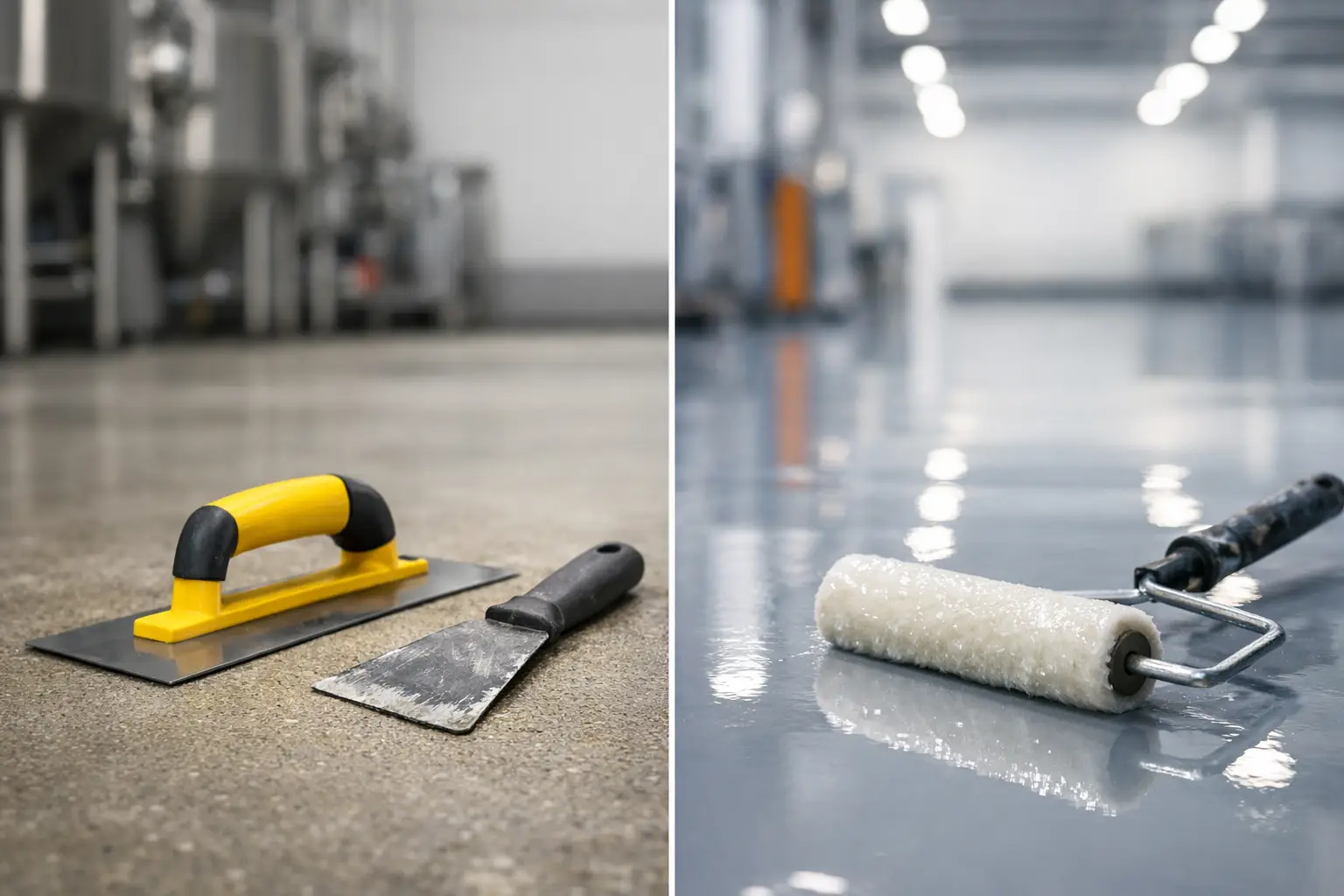
Epoxy flooring is a thermoset resin system that cures into a hard, dense surface. It can be installed as a thin coating, a broadcast system, a mortar system, or a self-leveling floor. Its versatility makes it a frequent choice for manufacturing, warehouses, laboratories, commercial back-of-house spaces, and areas where a clean, uniform finish matters.
The practical distinction is this: urethane cement is usually the better answer to harsh service conditions that can stress a floor from below and above. Epoxy provides broad design flexibility and strong protection in facilities where the environmental demands are controlled or predictable.
When Urethane Cement Is the Better Specification
Thermal shock and thermal cycling
Urethane cement performs exceptionally well where floors move rapidly between hot and cold conditions. Food and beverage plants, commercial kitchens, breweries, dairies, protein processing areas, and washdown rooms are common examples. Hot-water washdowns, steam cleaning, kettles, ovens, freezers, and cold storage transitions can cause conventional coatings to crack, delaminate, or lose bond over time.
The cementitious component of urethane cement helps the system respond more similarly to concrete during temperature changes. That reduces stress at the bond line. It does not eliminate the need for sound concrete, proper detailing, and correct installation, but it provides a meaningful performance advantage in thermal service.
Wet processing and moisture-prone slabs
Moisture vapor transmission is a major risk in resinous flooring. If moisture pressure rises beneath an impermeable system, it can contribute to blistering or bond failure. Urethane cement has higher moisture tolerance than many epoxy systems and can often be installed in conditions that would require more extensive moisture mitigation for epoxy.
That makes it well suited to facilities with wet operations, below-grade areas, older slabs, or production spaces where a fully dry substrate is difficult to achieve within the project schedule. The slab must still be evaluated. Moisture tolerance is not a substitute for surface preparation, vapor testing, drainage planning, or repair of active water intrusion.
Severe washdown and process exposure
Urethane cement is built for demanding hygiene environments. It can withstand repeated cleaning cycles, standing water, sanitizers, organic acids, and physical abuse better than many decorative coating systems. Where washdown is routine rather than occasional, a thicker urethane cement system can provide the service margin a facility needs.
Texture can be incorporated to improve slip resistance, particularly around drains, production lines, and transitions. The specification must balance traction against cleanability. An overly aggressive profile may capture soil and complicate sanitation, while a surface that is too smooth may be unsafe when wet.
Where Epoxy Floors Perform Best
Chemical resistance and controlled environments
Epoxy floors offer excellent resistance to many chemicals, oils, fuels, and industrial fluids. The exact performance depends on the epoxy formulation, topcoat, exposure duration, concentration, temperature, and cleaning method. A chemical spill that is harmless to one system may damage another, so resistance charts should never replace a project-specific review.
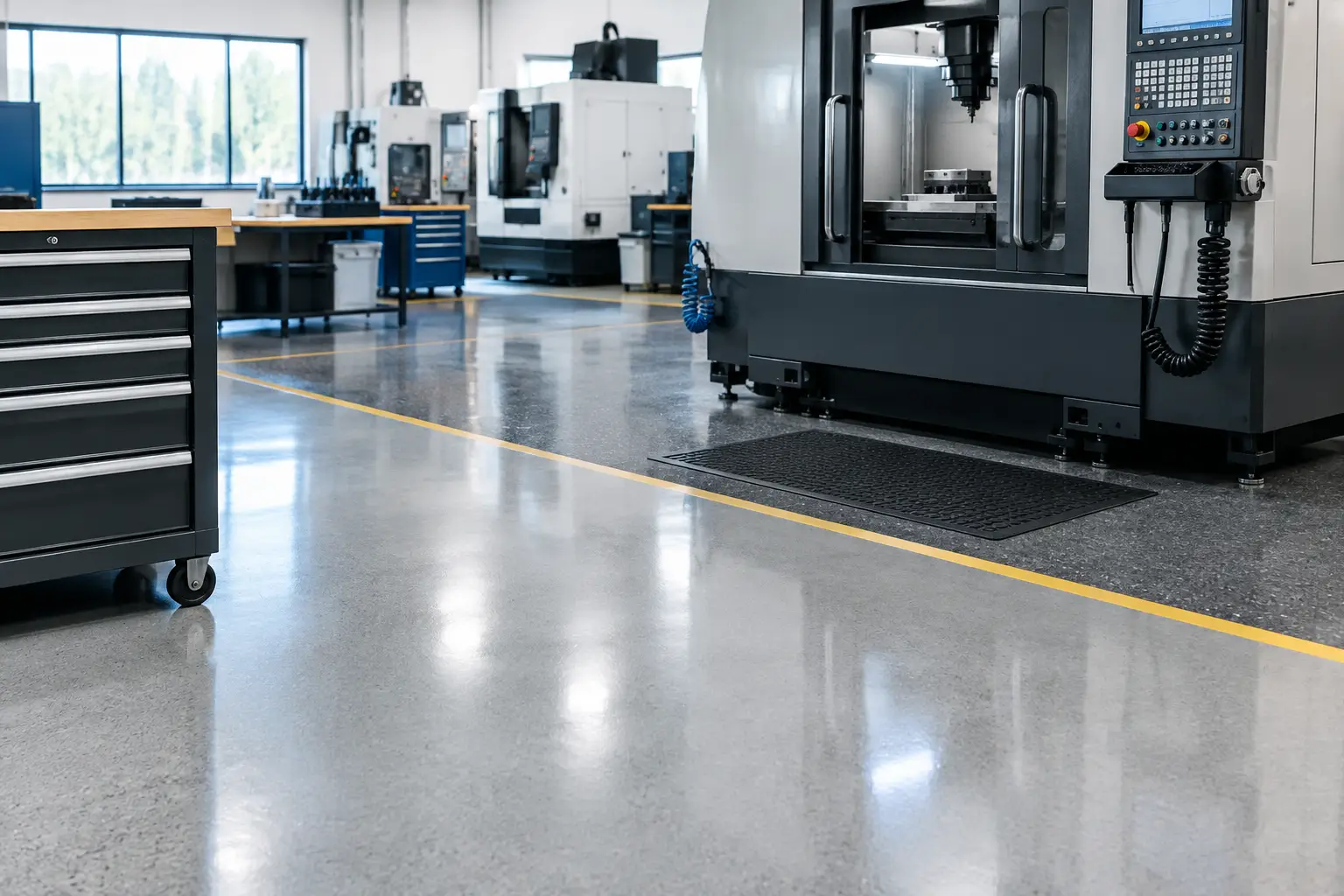
In dry manufacturing, assembly, warehousing, maintenance areas, laboratories, and equipment rooms, epoxy can provide a highly durable surface with a clean, professional appearance. It is also frequently used where line striping, safety zones, color coding, and visual organization support safer operations.
Abrasion resistance and appearance
Epoxy systems can be engineered for substantial abrasion resistance, especially with broadcast aggregate or mortar construction. For facilities with rolling carts, pallet jacks, foot traffic, and moderate forklift movement, epoxy often provides effective long-term protection for concrete.
It also offers more options for color, decorative flake, gloss level, and visual finish than urethane cement. That matters in commercial-industrial environments where the floor must support both operational performance and client-facing presentation. However, aesthetics should not drive selection in areas exposed to high heat, constant water, or aggressive thermal cycling.
Fast return to service, with the right system
Some epoxy systems can be installed and returned to service quickly, making them valuable when shutdown windows are tight. Fast cure does not mean fast work without discipline. Surface preparation, crack and joint repair, ambient conditions, cure schedules, and traffic restrictions still determine whether a rapid installation performs as intended.
For a facility operating around the clock, project sequencing is often more important than the nominal cure time. A qualified contractor can divide work into phases, protect adjacent operations, and coordinate access so the flooring project does not become a production bottleneck.
Installation Quality Decides the Outcome
The material is only one part of the floor system. Many premature failures trace back to insufficient concrete preparation, poor moisture assessment, weak edge detailing, incorrect thickness, or inadequate curing conditions.
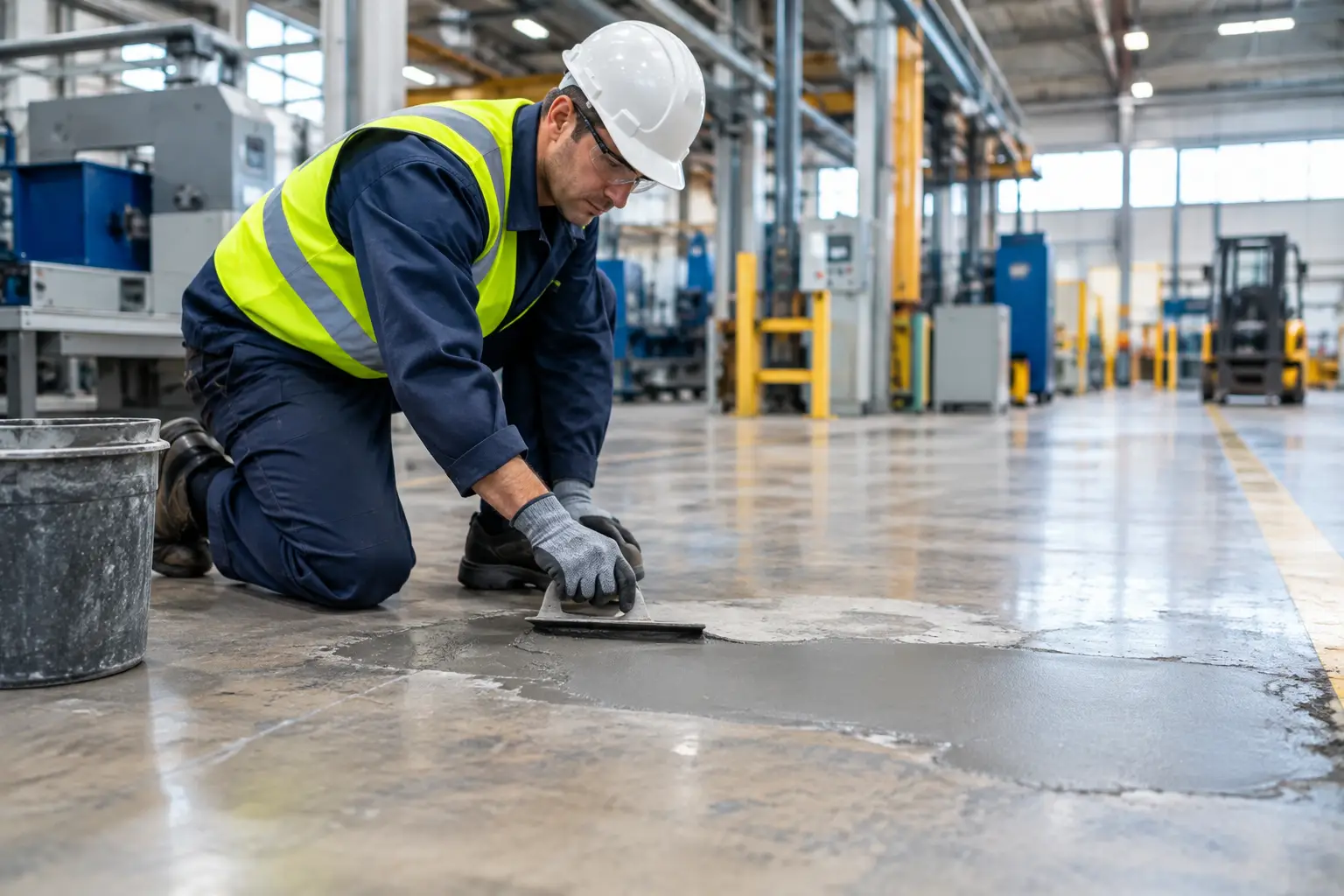
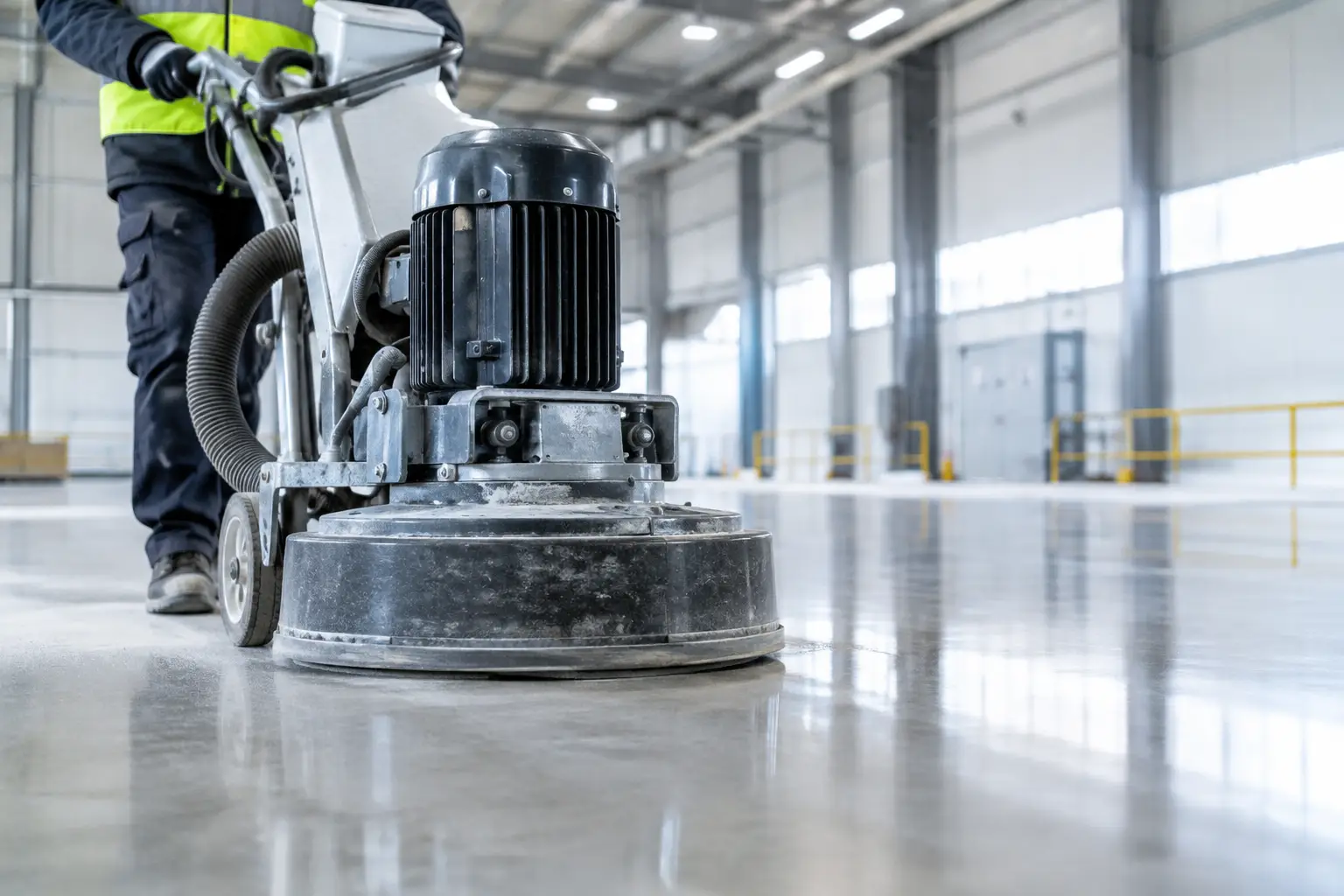
Mechanical surface preparation is critical. The concrete must be opened to a profile appropriate for the system, contaminants must be removed, and unsound concrete must be repaired before resin is placed. Cracks, control joints, drains, curbs, and equipment bases require deliberate detailing. A jointless floor is not a reason to ignore moving joints in the structure.
Heavy traffic also requires an honest evaluation of the slab. Forklift routes, hard-wheel traffic, point loads, rack legs, and impact zones may need concrete repair, joint restoration, or a thicker system before a coating is considered. A resinous floor can protect a capable substrate. It cannot correct structural deficiencies in the slab beneath it.
Cost Should Be Measured Across the Service Life
Urethane cement usually carries a higher initial installed cost than a basic epoxy coating, particularly when thickness, cove bases, drainage details, and textured finishes are required. In harsh washdown or thermal environments, that premium can be justified by longer service life and fewer disruptive repairs.
Epoxy may deliver the better lifecycle value in dry, controlled areas where its strengths align with the exposure profile. Installing urethane cement everywhere can be unnecessary. Installing standard epoxy in a hot washdown room can be an expensive false economy.
The right comparison includes more than material price. Consider shutdown cost, sanitation requirements, repair frequency, worker safety, equipment traffic, substrate condition, and the consequences of a failure during peak production. Those factors determine the true cost of the floor.
A Practical Selection Framework
Start by mapping the operating environment. Identify wet and dry zones, floor temperatures, washdown methods, chemical exposure, traffic patterns, drain locations, slip-resistance needs, and required return-to-service dates. Then assess the concrete itself, including moisture conditions, cracks, joints, contamination, flatness, and areas of deterioration.
Specify urethane cement where the facility faces hot washdowns, thermal shock, persistent moisture, food processing exposure, or severe wet service. Specify epoxy where chemical protection, abrasion performance, visual organization, and a clean finished surface are needed in more controlled conditions. In some facilities, the strongest solution is a combination: urethane cement in process and washdown zones, with epoxy systems in dry production, corridors, and support spaces.
That approach avoids forcing one material to perform outside its ideal range. It also directs capital toward the areas where failure creates the greatest operational risk.
A flooring specification should make the work easier to operate, clean, inspect, and maintain after the installation crew leaves. Choose the system that matches the exposure, prepare the concrete to the required standard, and protect the details that take the hardest daily abuse.