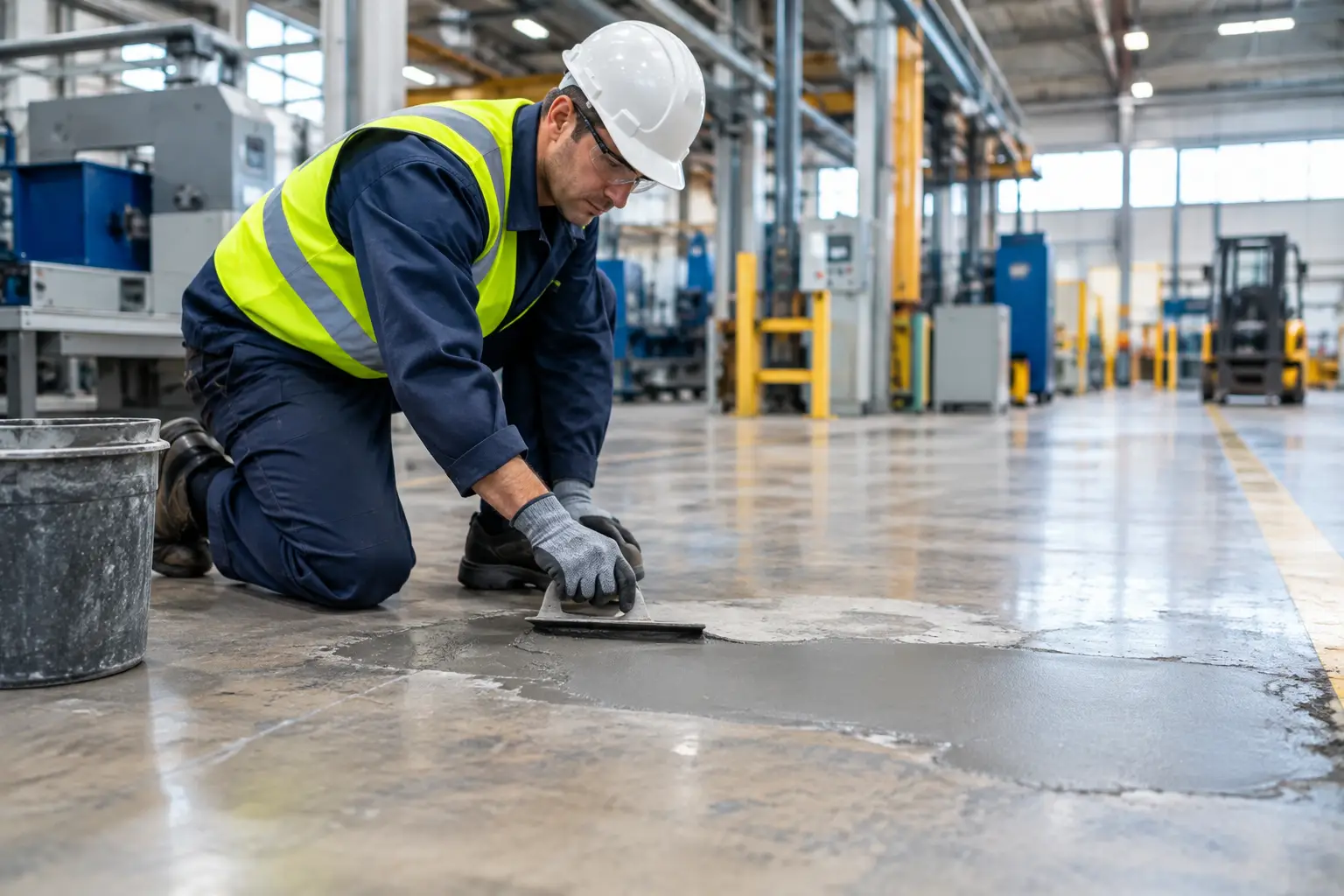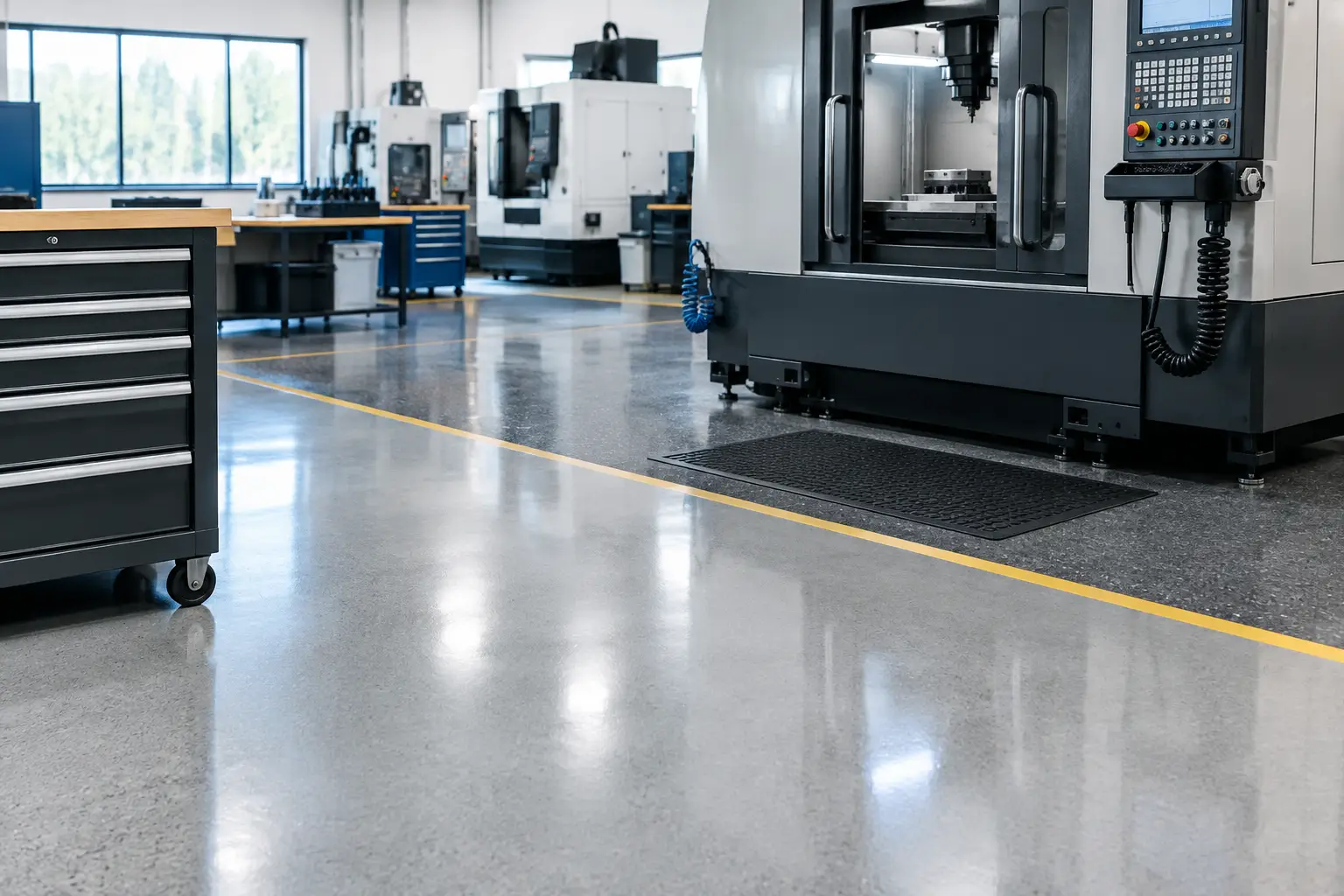

A warehouse floor repair contractor review should begin where the failure begins: on the slab, at the joint, or beneath the coating. A broken joint edge, spalled traffic lane, rocking floor panel, or failing coating is not simply a cosmetic issue. It can damage lift trucks, interrupt picking routes, create trip hazards, increase maintenance costs, and limit the safe use of the facility.
The right contractor does more than fill defects. They identify why the floor failed, specify a repair system that matches operating conditions, and execute the work with control over preparation, cure time, traffic access, and final performance. For active industrial facilities, those details determine whether a repair lasts or becomes another shutdown item six months later.
What a Warehouse Floor Repair Contractor Must Diagnose
Concrete failure has a cause. Heavy traffic may be the visible stressor, but the underlying condition can involve inadequate joint construction, poor concrete consolidation, moisture movement, subgrade issues, impact loading, thermal cycling, chemical exposure, or a repair material that was never appropriate for the service environment.
A credible contractor starts with an on-site evaluation rather than a generic repair price. They should examine traffic patterns, wheel types, load weights, turning locations, joint condition, slab elevation changes, coating adhesion, and the history of prior repairs. In a high-bay warehouse, for example, a floor defect in a narrow-aisle travel path has different consequences than the same defect in a low-traffic storage area.
The diagnosis should also distinguish between surface damage and structural movement. A shallow spall may be resolved with a properly prepared resinous mortar repair. A joint that continues to move, however, requires a joint repair and filler approach designed for the movement, wheel loads, and traffic timing involved. Treating both conditions the same is a common reason repairs fail prematurely.
Ask for the Repair Logic, Not Just the Product Name
Material selection matters, but a product name is not a repair plan. A contractor should be able to explain why a specific material is being used, what preparation profile it requires, how deep the repair will extend, and when the repaired area can return to traffic.
Fast cure materials can reduce downtime, but they are not automatically the best answer. Some conditions require longer preparation windows, moisture mitigation, staged repairs, or a broader floor upgrade to stop recurring damage. The best approach depends on the facility's operating demands and the actual condition of the substrate.
How to Conduct a Warehouse Floor Repair Contractor Review
A productive warehouse floor repair contractor review compares execution capability, not only bid totals. The lowest initial number can become the highest lifecycle cost when repairs break down under forklifts, require repeated closures, or create uneven transitions that affect material handling equipment.
Begin by reviewing whether each contractor has direct experience in facilities similar to yours. Distribution centers, manufacturing plants, cold storage operations, food and beverage facilities, and high-traffic logistics buildings place different demands on a floor. Ask for examples that reflect your traffic, load, cleaning, and uptime requirements.
Then evaluate the scope. A clear proposal identifies the repair locations, dimensions, preparation method, materials, edge treatment, joint details, cure schedule, and return-to-service conditions. It should state what is included for dust control, debris removal, traffic management, and protection of nearby operations. Vague language such as “repair damaged areas as needed” leaves too much room for scope disputes and inconsistent results.
Review the Preparation Plan Closely
Surface preparation is where repair quality is established. Concrete must be sound, clean, and properly profiled before new materials can bond. Weak concrete, contaminants, old failed patch material, and unsound joint edges need to be removed rather than covered.
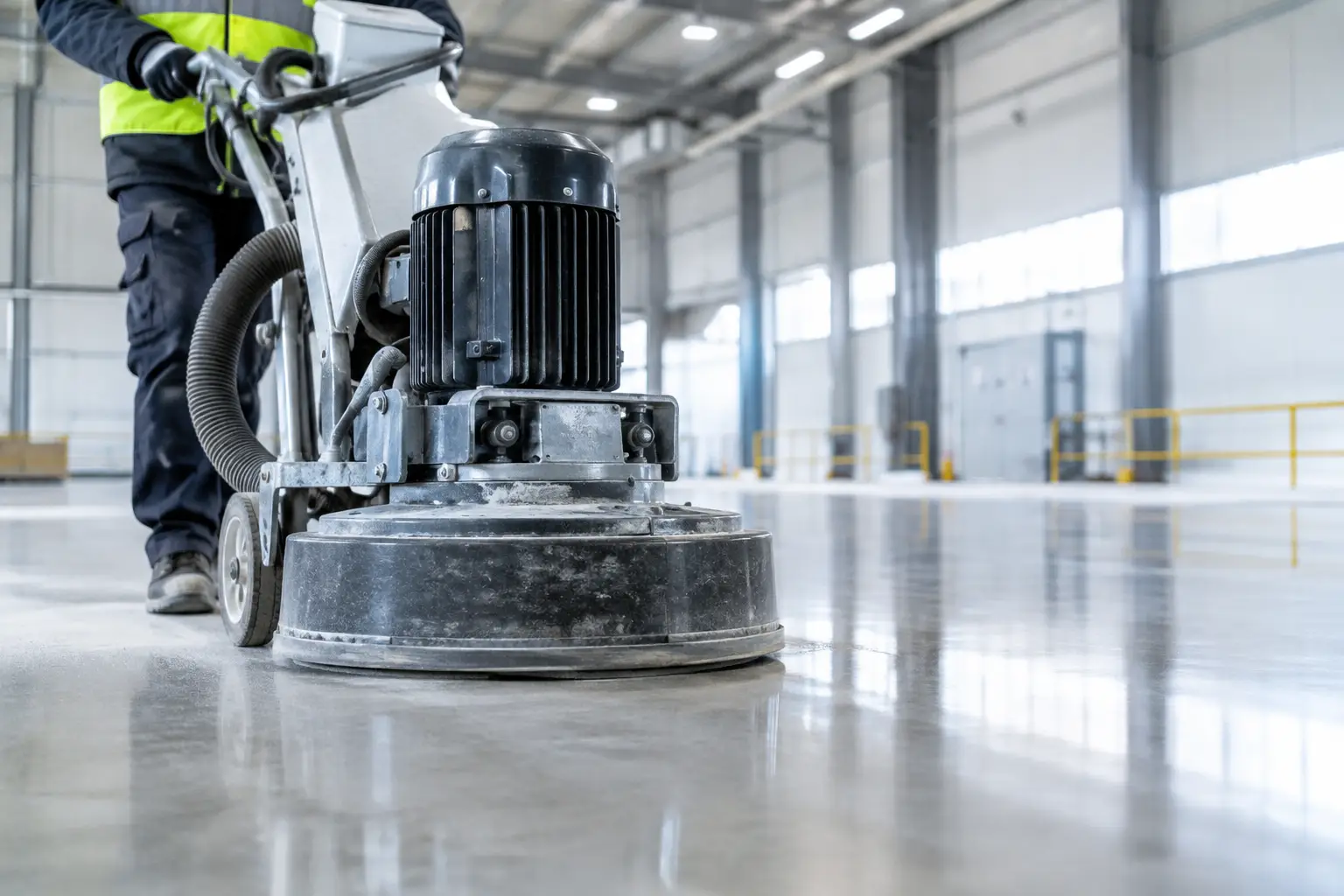
Ask how the contractor will prepare the floor. Depending on the condition, the answer may include saw cutting, chipping, scarifying, shot blasting, grinding, or controlled demolition. The method should protect adjacent slab areas and create clean, durable repair boundaries. Preparation that is rushed or poorly contained can create more damage than the original defect.
Dust management also deserves attention. Grinding and concrete removal inside an operating warehouse can affect inventory, equipment, employees, and production. A professional plan defines isolation measures, vacuum systems, cleanup procedures, and work sequencing. If the facility handles food, pharmaceuticals, electronics, or sensitive finished goods, those controls become even more critical.
Evaluate Uptime Planning as Part of the Scope
Industrial flooring work must align with operations. A contractor should ask when lift trucks travel, when shipping docks are busiest, which aisles cannot close, and what access is required for emergency routes. That information drives the work plan.
For some projects, repairs can be completed in phases during off-shifts or weekends. For others, the contractor may establish temporary travel routes, complete repairs in short lane closures, or use rapid-return materials where conditions allow. The point is not to demand the fastest cure possible. It is to define a schedule that balances production needs with proper installation requirements.
Be cautious of promises that a floor can return to full traffic immediately without an explanation of the material, ambient conditions, repair depth, and load type. Forklift traffic, particularly hard-wheeled equipment carrying heavy loads, is a demanding test. A repair needs adequate cure and proper edge protection before it is put back into service.
Workmanship Standards That Protect the Floor
Warehouse floor repair is precision work. Straight saw cuts, full removal of failed concrete, proper material mixing, tight compaction, and finished transitions all affect how repairs perform under traffic. Poorly feathered edges, low spots, proud patches, and exposed aggregate quickly turn into impact points and additional maintenance concerns.
Joint repair requires the same discipline. Joints are designed locations of movement, but they are also among the most vulnerable areas in a warehouse. Repeated lift truck crossings can break joint shoulders and create a rough ride that transfers shock into wheels, loads, racking, and the slab itself.
A qualified contractor evaluates joint geometry and selects a filler or repair system suited to the condition. Semi-rigid joint fillers are commonly used in warehouse environments to support joint edges under wheeled traffic, but the correct material and installation method depend on slab movement, joint opening, temperature conditions, and traffic loading. An overly rigid treatment in a moving joint can fail. A weak or poorly bonded filler will not protect the edge.
For facilities with very narrow aisle operations, floor flatness and levelness should also be part of the discussion. Floor and joint repairs in VNA travel paths can affect truck guidance, mast movement, and operating clearance. Superflat floor requirements demand measurement, planning, and correction methods that go beyond ordinary patching.
Signs of a Contractor Built for Industrial Work
The proposal and site visit usually reveal whether a contractor understands operational flooring. Look for a team that asks specific questions, documents existing conditions, and identifies project risks before work begins. They should be prepared to coordinate with facility leadership, general contractors, safety personnel, and equipment operators.
Strong project management is equally important. You need clear communication on work zones, schedule changes, curing restrictions, site access, daily cleanup, and final inspection. This is especially true when floor repairs are performed in occupied spaces with ongoing shipping, production, or warehouse activity.
A capable contractor will also set realistic expectations. Not every deteriorated floor can be stabilized through isolated repairs. If recurring slab movement, widespread delamination, failed coatings, or extensive joint damage is present, a broader floor upgrade, grinding program, or phased restoration may offer better value. Honest recommendations protect both the project budget and the operation.
Osis Group approaches floor and joint repair as part of the facility's performance system, with attention to surface preparation, traffic demands, repair durability, and controlled project delivery.
Questions Worth Asking Before Awarding the Work
Before selecting a contractor, confirm who will perform the work, how repairs will be sequenced, and what inspection process will verify completion. Ask how the team will handle unforeseen conditions such as deeper-than-expected deterioration, moisture, concealed reinforcement, or active cracks. A professional response will define a process for documenting the condition, presenting options, and obtaining approval before expanding the work.
Also ask what the contractor considers a successful repair. The answer should include bond integrity, flush transitions, protected joint edges, clean turnover, and a defined return-to-service plan. If coatings are involved, confirm expected chemical exposure, abrasion demands, cleaning methods, and substrate moisture conditions before a system is selected.
Finally, review the warranty in context. A warranty has value when the scope, preparation, installation conditions, and service limits are clearly defined. It does not replace proper diagnosis. The strongest protection is a repair plan built around how your warehouse actually operates.
A warehouse floor is an operating asset, not a background surface. Select a repair contractor that can make sound technical decisions, work safely around production, and deliver repairs that keep traffic moving with fewer interruptions and less avoidable rework.