A warehouse floor is not a background surface. It carries lift trucks, rack loads, pallet jacks, impact, abrasion, turning traffic, and the daily pressure of keeping product moving. The right warehouse flooring options support safe operations and predictable maintenance. The wrong choice creates dusting, joint failure, uneven travel paths, damaged equipment, and unplanned downtime.
For facility owners and operations leaders, the decision should begin with the operating environment, not a product preference. Traffic patterns, wheel loads, slab condition, flatness requirements, chemical exposure, temperature, cleaning methods, and shutdown windows all influence the right system. A durable floor is one that performs under the actual demands of the building.
Warehouse Flooring Options for Operating Conditions
Concrete remains the structural base for most warehouses, but its performance depends on how it is specified, finished, protected, and maintained. A conventional concrete slab may be appropriate for moderate-duty storage and pedestrian traffic. In a high-traffic distribution center, however, untreated concrete can wear quickly at joints and travel lanes. Surface dusting, spalling, and joint deterioration often follow when the floor is asked to handle more than it was designed to support.
The most practical flooring approach may be a new slab, a surface upgrade, a protective resin system, or targeted repair. Each has a different purpose.
Superflat floors for VNA operations
Very narrow aisle operations demand a floor with precise flatness and levelness. In these facilities, a few millimeters of variation can affect truck stability, mast movement, lift height, rack clearance, and equipment speed. A floor that appears acceptable to the eye may still be unsuitable for VNA equipment.
Superflat floors are constructed or upgraded to meet defined flatness criteria in critical wheel paths. The work requires accurate survey data, disciplined placement or grinding methods, and verification against the operating profile of the material-handling equipment. It is not simply a smoother concrete finish.
For new construction, superflat requirements need to be addressed early, before slab placement and racking decisions are finalized. In an existing facility, corrective grinding can improve defined travel lanes where slab geometry allows. The right solution depends on the current floor survey, the truck type, the guidance method, and the tolerances required by the operation.
Jointless floors for heavy traffic zones
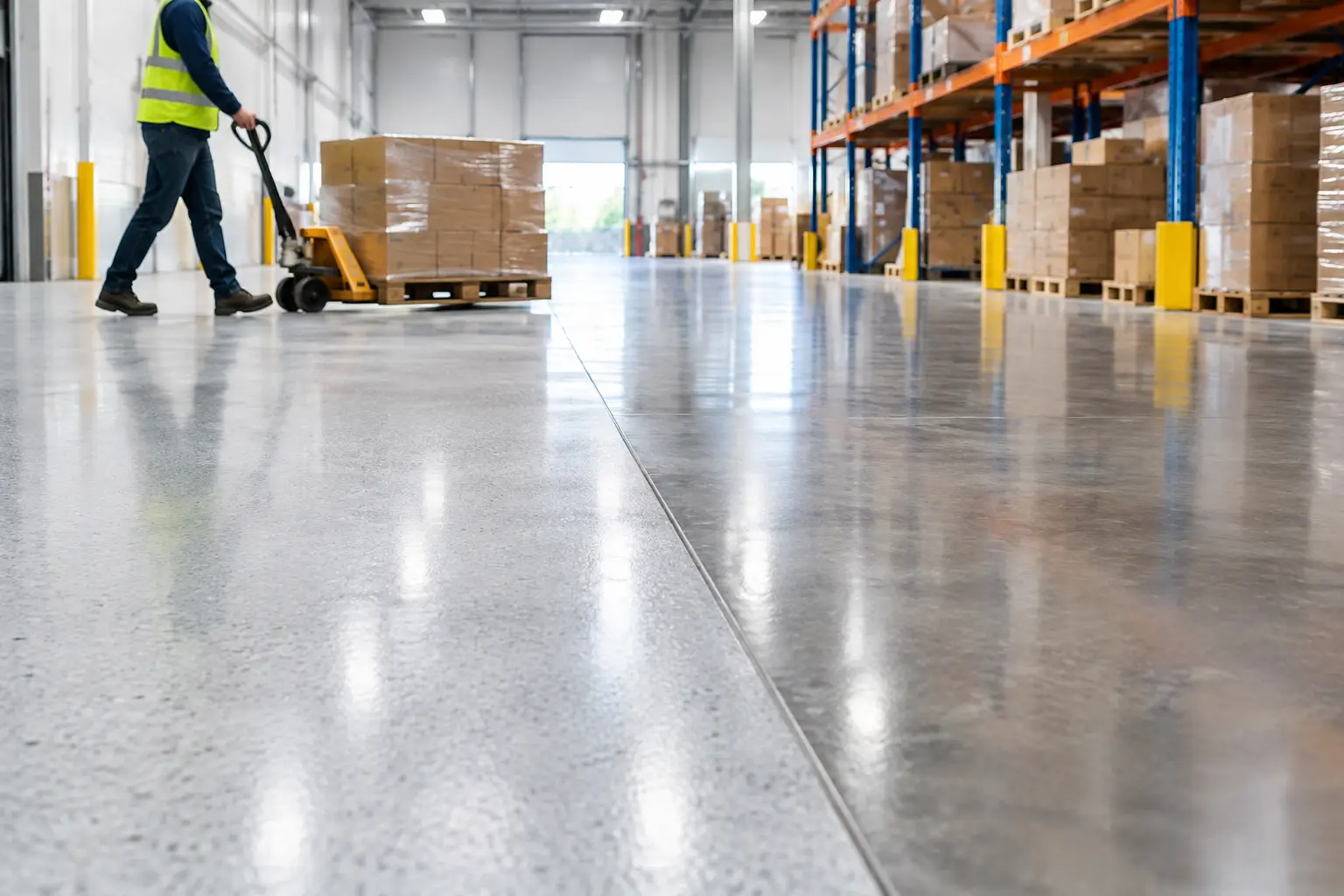
Joints are a common source of warehouse floor failure. Repeated hard-wheel traffic can break joint edges, create impact at crossings, and transfer vibration into forklifts and loads. Once a joint begins to fail, damage typically expands under continued traffic.
Jointless floor systems reduce the number of joints within large slab areas. They are particularly effective in facilities with high forklift volume, automated movement, hard wheels, and demanding cleanliness requirements. Fewer joints mean fewer impact points and fewer locations where debris, moisture, and contamination can collect.
A jointless design is not appropriate for every building or every project scope. It requires consideration of slab dimensions, reinforcement strategy, curing, subbase conditions, and construction sequencing. Where it fits, it can materially reduce long-term maintenance exposure in high-use areas.
Polished, densified, and mechanically upgraded concrete
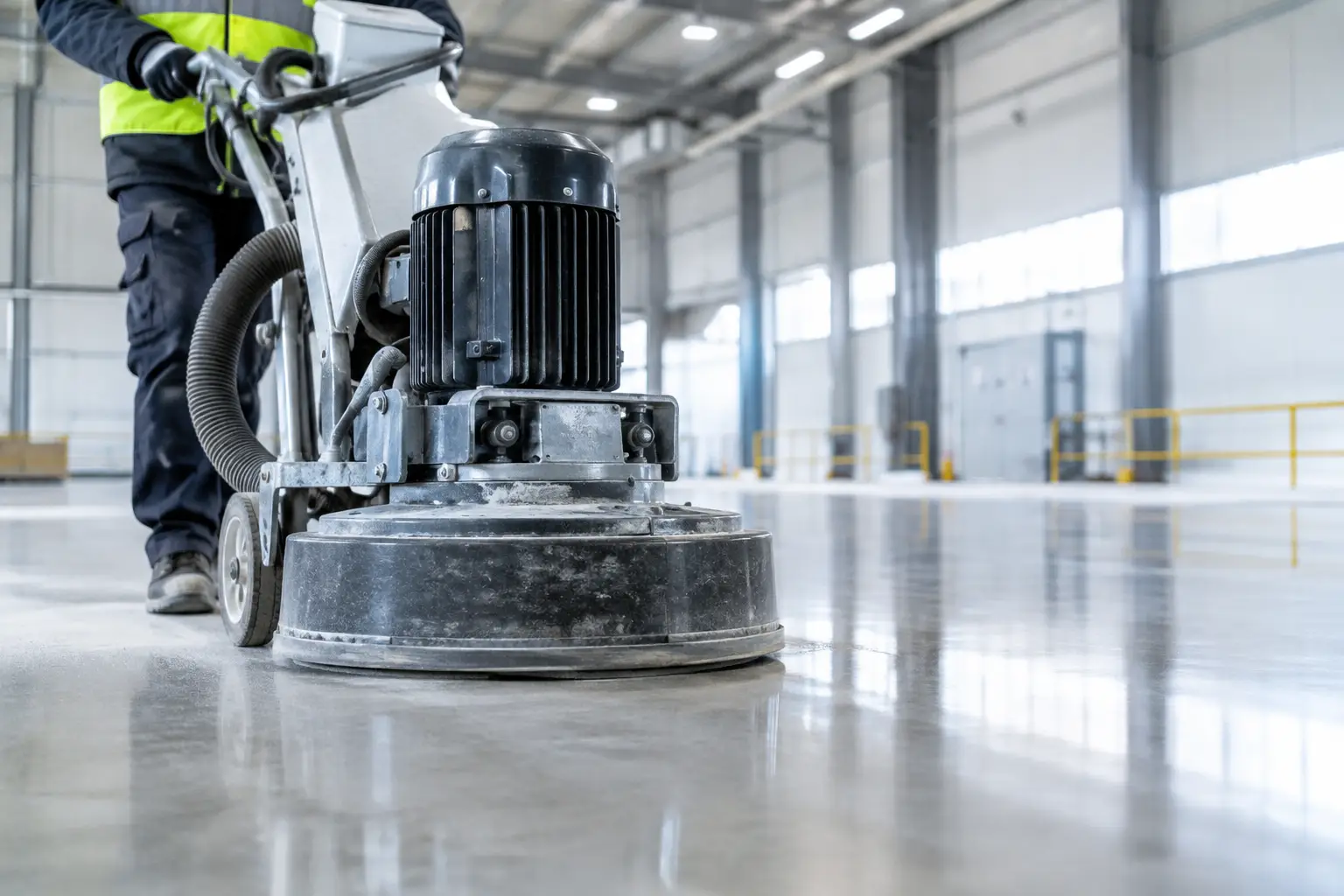
Floor grinding and densification can improve the performance of existing concrete without removing and replacing the slab. Mechanical grinding removes weak surface material, corrects localized irregularities, and prepares the surface for a specified finish. Densifiers harden the concrete surface and can reduce dusting and abrasion in suitable slabs.
This approach can be a sound choice for dry warehouses with moderate chemical exposure and a need for improved cleanability. It also supports phased work in active facilities when access and scheduling are managed carefully.
The limitation is that densification does not repair structural cracks, failed joints, moisture issues, or deep slab defects. It also does not create the chemical resistance of a dedicated resin system. A proper assessment should identify whether the slab is a candidate for mechanical upgrade or whether repair and protection are required first.
Epoxy systems for cleanability and protection
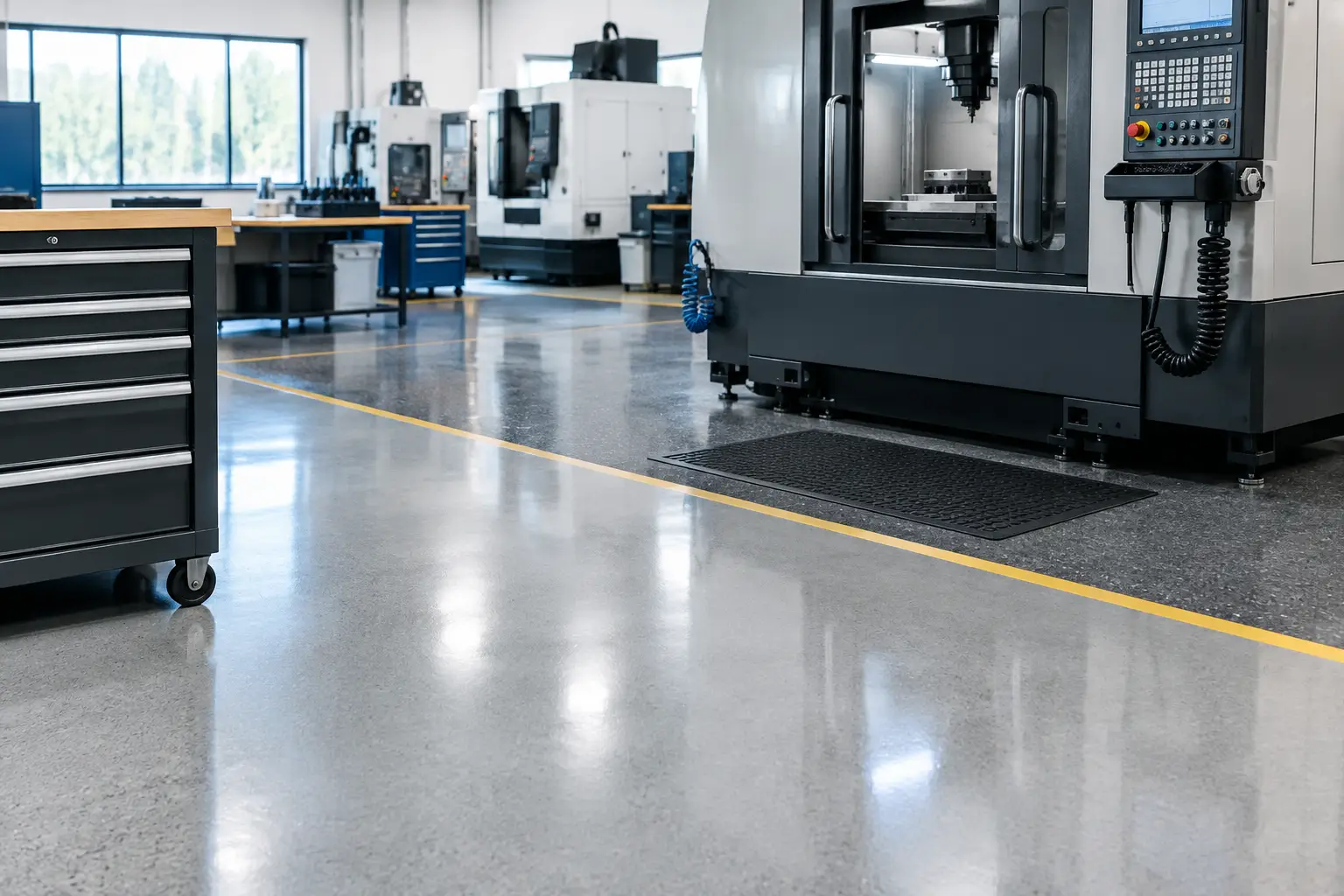
Epoxy flooring creates a hard, protective surface that can improve resistance to abrasion, oils, chemicals, and routine cleaning. It is often considered in warehouse areas that include packaging, light manufacturing, maintenance, battery charging, or controlled storage. Color coding and line marking can also improve traffic management and visual safety.
Epoxy performance depends heavily on preparation. Coatings installed over contaminated, weak, damp, or improperly profiled concrete may delaminate regardless of product quality. Surface preparation, moisture testing, crack treatment, and edge detailing determine whether the system performs as intended.
Epoxy is not a universal answer for every industrial environment. Some formulations can be sensitive to thermal cycling, elevated moisture vapor transmission, or aggressive impact. Resin selection should match the exposure, not just the desired appearance.
Urethane cement for wet or thermally demanding areas
Urethane cement systems are often selected where wet processing, washdowns, thermal shock, or aggressive chemical conditions are present. They are common in food and beverage facilities, cold areas, processing spaces, and wash zones that require a tougher protective system than standard coatings may provide.
These systems can tolerate conditions that quickly compromise conventional resin finishes. They also allow for texture where slip resistance is required. That benefit comes with a trade-off: more texture can make cleaning more demanding. The correct profile should balance traction, sanitation, and the facility's cleaning process.
Floor and joint repair before the problem spreads
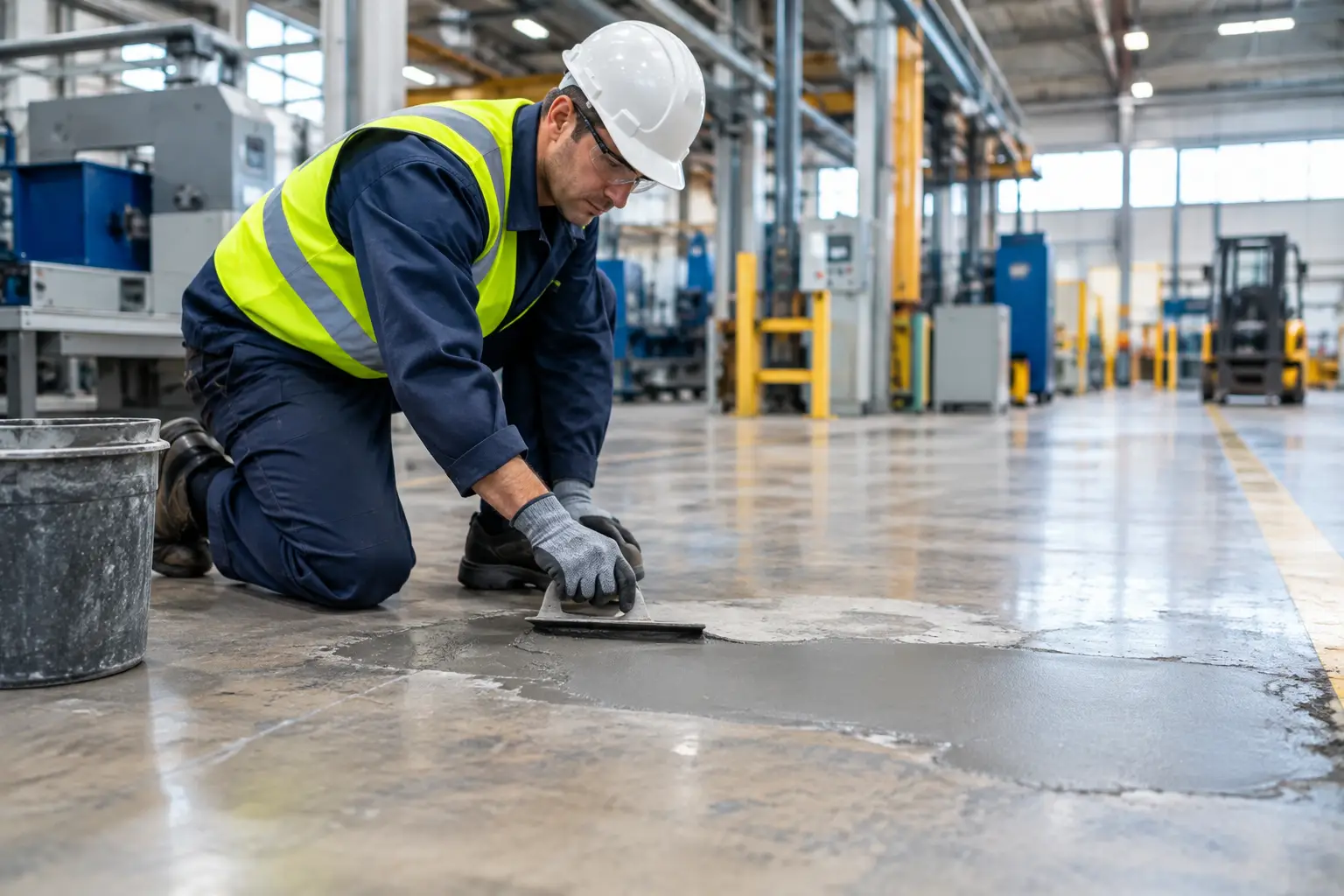
Many warehouse flooring decisions begin with repair, not replacement. Damaged joints, spalls, cracks, and worn wheel paths can create hazards long before the entire slab requires attention. Forklift impacts at failed joints can damage wheels and loads, while broken edges create debris and accelerate further deterioration.
Industrial floor and joint repair restores continuity in high-use areas. The repair method must account for traffic type, wheel hardness, movement at the joint, depth of damage, and required return-to-service time. A cosmetic patch may look acceptable on day one but fail quickly under loaded forklift traffic if the repair material or installation method is wrong.
Targeted repair is especially valuable when a facility cannot tolerate a broad shutdown. Work can often be sequenced by aisle, dock lane, or operating zone, keeping the building productive while the highest-risk defects are addressed.
Selecting Among Warehouse Flooring Options
The best specification starts with the operational consequences of failure. A distribution center with VNA trucks needs floor geometry control. A high-volume forklift operation may need jointless construction and durable joint protection. A washdown area may require urethane cement. A dry storage facility with a sound slab may benefit from grinding and densification.
Before selecting a system, evaluate the condition of the existing slab and the planned use of the space. Document wheel loads, vehicle types, turning areas, racking layout, chemical exposure, drainage, temperature changes, cleaning practices, and required installation windows. These details prevent a generic flooring solution from becoming an expensive operational problem.
Wire guidance should also be coordinated with floor design in narrow-aisle facilities. Wire installation, channel cutting, repair, and calibration affect both equipment reliability and floor integrity. Treating guidance as an afterthought can create avoidable rework and disruption.
Lifecycle value matters more than first cost. A lower-cost finish that fails at joints, peels under cleaning chemicals, or requires repeated shutdowns is not economical. The right floor system protects equipment, supports safer travel, reduces maintenance demand, and gives operations a more dependable surface over time.
Osis Group approaches industrial flooring as an operational asset, with attention to specification, surface preparation, installation quality, and the conditions that determine service life. The goal is not simply to cover concrete. It is to deliver a floor that performs when the facility is under load.
Start with the areas where the floor is already affecting uptime: failed joints, rough travel lanes, dusting surfaces, rack aisles, and wet process zones. Those conditions usually provide the clearest direction toward a flooring solution that protects the operation rather than interrupting it.