A crack beside a rack leg, a failing joint in a forklift aisle, or a widening line across a loading area is not simply a cosmetic issue. Why are warehouse floors cracking? Usually because the slab is moving, shrinking, unsupported, overloaded, or being asked to perform beyond its original design. The right response starts with identifying which of those conditions is present before selecting a repair.
Concrete naturally develops some cracking as it cures. In an industrial facility, however, the question is whether the crack is stable and serviceable or whether it is signaling a problem that will affect traffic, racking, safety, sanitation, or uptime. High-volume forklift routes, VNA systems, hard-wheeled equipment, heavy point loads, and constant joint impact turn small defects into operational risks quickly.
Why Are Warehouse Floors Cracking Under Daily Use?
Warehouse slabs carry more than static weight. They absorb repeated wheel loads, rack loads, vibration, temperature changes, and impact at joints. A floor can look acceptable when a building opens and still fail prematurely if the slab, base, joints, or traffic plan do not work together.
Cracking is often a symptom rather than the root cause. Filling the visible line without addressing slab movement, loss of support, moisture, or joint damage may restore appearance temporarily, but it rarely delivers a durable result.
Concrete shrinkage and restraint
Concrete shrinks as it cures. Control joints are intentionally placed to direct that shrinkage into planned lines rather than random cracks. When joint spacing is too wide, joints are cut too late or too shallow, reinforcement restrains movement, or the mix and curing process are poorly controlled, shrinkage stress can create uncontrolled cracking.
Some shrinkage cracks remain narrow and stable. Others open as the slab continues to dry and move. In an active warehouse, those openings can trap debris, break down under wheels, and create a rough ride that transfers more impact into trucks, equipment, and rack loads.
Subgrade movement and loss of support
A slab-on-grade depends on consistent support beneath it. If the subgrade was poorly compacted, contains variable fill, becomes saturated, erodes, or settles around utilities and penetrations, the slab can lose bearing support. The result may be cracking, rocking panels, differential elevation, or slab edges that break down under traffic.
This is one of the most consequential causes because surface repairs alone will not correct an unsupported slab. Areas with hollow sounds, recurring cracks, persistent water entry, or movement under loaded equipment require investigation below the surface. The repair approach may need stabilization, targeted slab lifting, or removal and replacement of failed sections before the finished floor is restored.
Heavy traffic and concentrated loads
Forklifts do not load a floor evenly. Their hard wheels repeatedly concentrate force in narrow travel paths, especially at doorways, intersections, rack aisles, battery charging areas, and dock approaches. Loaded forklifts crossing an unprotected joint can cause joint edges to spall, leaving a small gap that worsens with every pass.
Static loads matter as well. High-bay racking, automated storage systems, palletized materials, machinery, and dense storage can impose concentrated loads that exceed the original slab design. Rack legs positioned near joints or cracks deserve particular attention. A damaged or uneven slab can affect rack alignment and may require review by the appropriate structural professionals.
Moisture, curling, and environmental exposure
Moisture below and within concrete influences slab behavior. Excess moisture vapor transmission can contribute to failures in coatings or toppings, while wet subgrades can reduce support and accelerate deterioration. Water entering through damaged joints, exterior openings, washdown areas, or plumbing leaks creates a pathway for ongoing damage.
Slab curling is another common issue. The top and bottom of a concrete slab can shrink and dry at different rates, causing corners and joint edges to lift slightly. Under forklift loading, those raised edges flex and fracture. What begins as a hairline crack or minor edge damage can become a significant joint repair issue.
Temperature changes also matter in facilities with cold storage, exterior-adjacent bays, or thermal cycling from process operations. Concrete expands and contracts. Where movement is restrained or joints are not functioning as intended, cracking follows.
The Crack Pattern Provides Useful Evidence
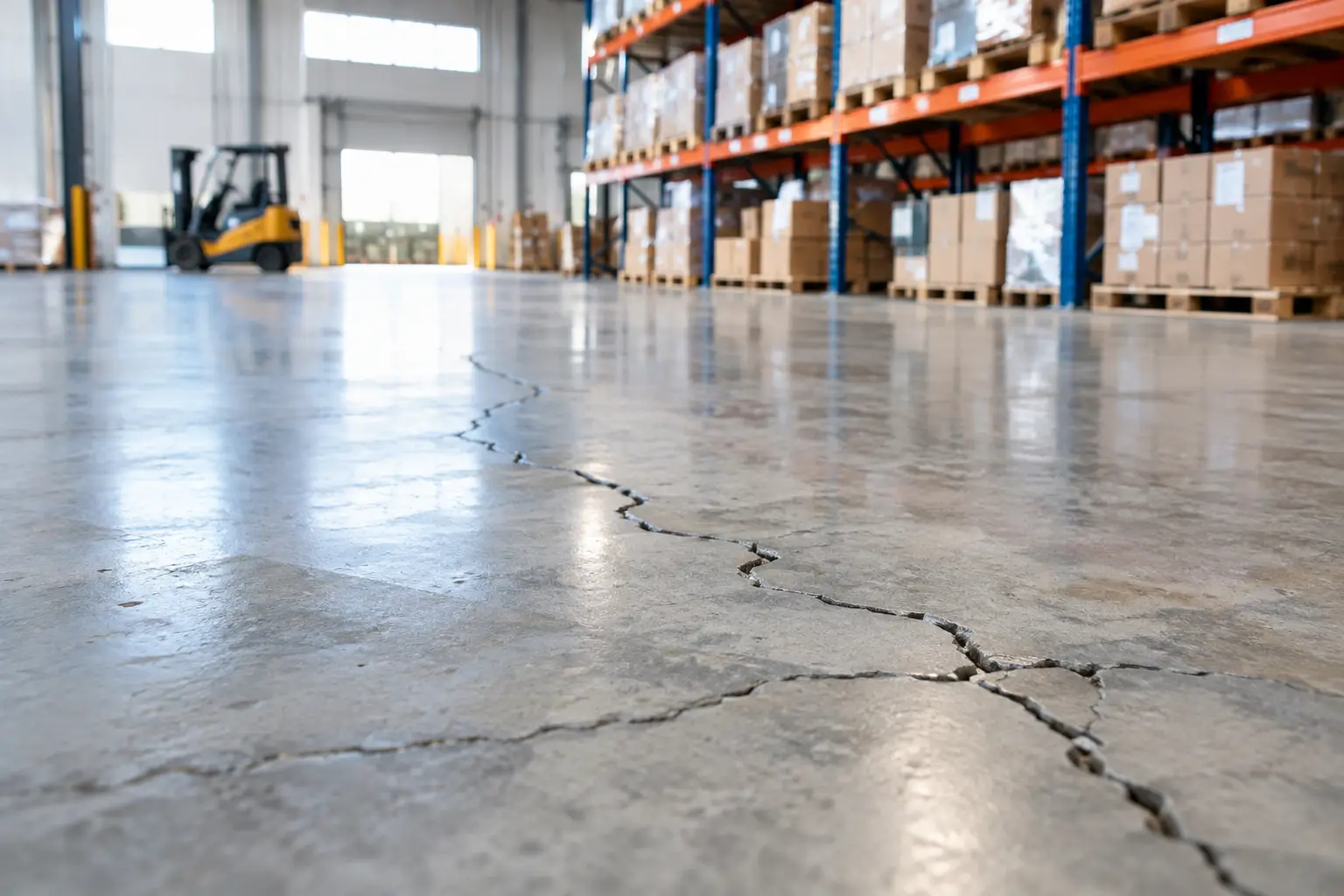
The location, width, direction, and condition of a crack help determine what is happening. A single straight crack may follow a weakened plane or restraint line. Random diagonal cracking can point to shrinkage, settlement, or concentrated loading. Cracks that cross multiple joints or appear alongside elevation changes deserve more urgent evaluation.
A practical assessment should document whether the crack is active, whether its edges are level, and whether it opens or closes over time. It should also consider traffic routes, rack locations, moisture sources, slab thickness, joint layout, and the original floor specification where available.
Stable cracks versus active cracks
A stable crack has stopped moving or moves within a predictable, manageable range. It may be a candidate for routing and filling, depending on the intended traffic and floor system. An active crack continues to move because the underlying condition remains. Rigid repair materials placed into active cracks can fail quickly if they cannot accommodate movement.
That distinction affects material selection. Semi-rigid fillers are commonly used to support joint edges in industrial traffic areas, while flexible sealants may be needed where movement must be accommodated. The correct choice depends on the location, expected wheel traffic, exposure conditions, and required floor performance.
Joint damage is often mistaken for cracking
Many warehouse floor failures begin at joints, not in the center of the slab. When a joint opens or its edges break away, forklifts create repeated impact with every crossing. The damage expands, the ride quality declines, and maintenance costs increase.
Joint repair should restore edge support and produce a profile appropriate for the traffic. In high-traffic aisles, poorly executed repairs can become a repeated maintenance item. For VNA operations, floor flatness, joint condition, and wheel paths must be managed to tighter tolerances because small deviations can affect truck performance and operating safety.
Repair the Cause, Not Just the Surface
The right repair scope depends on the failure mechanism and the facility's operating requirements. A cosmetic crack in a low-traffic storage area is not managed the same way as a deteriorating joint in a 24-hour distribution aisle.
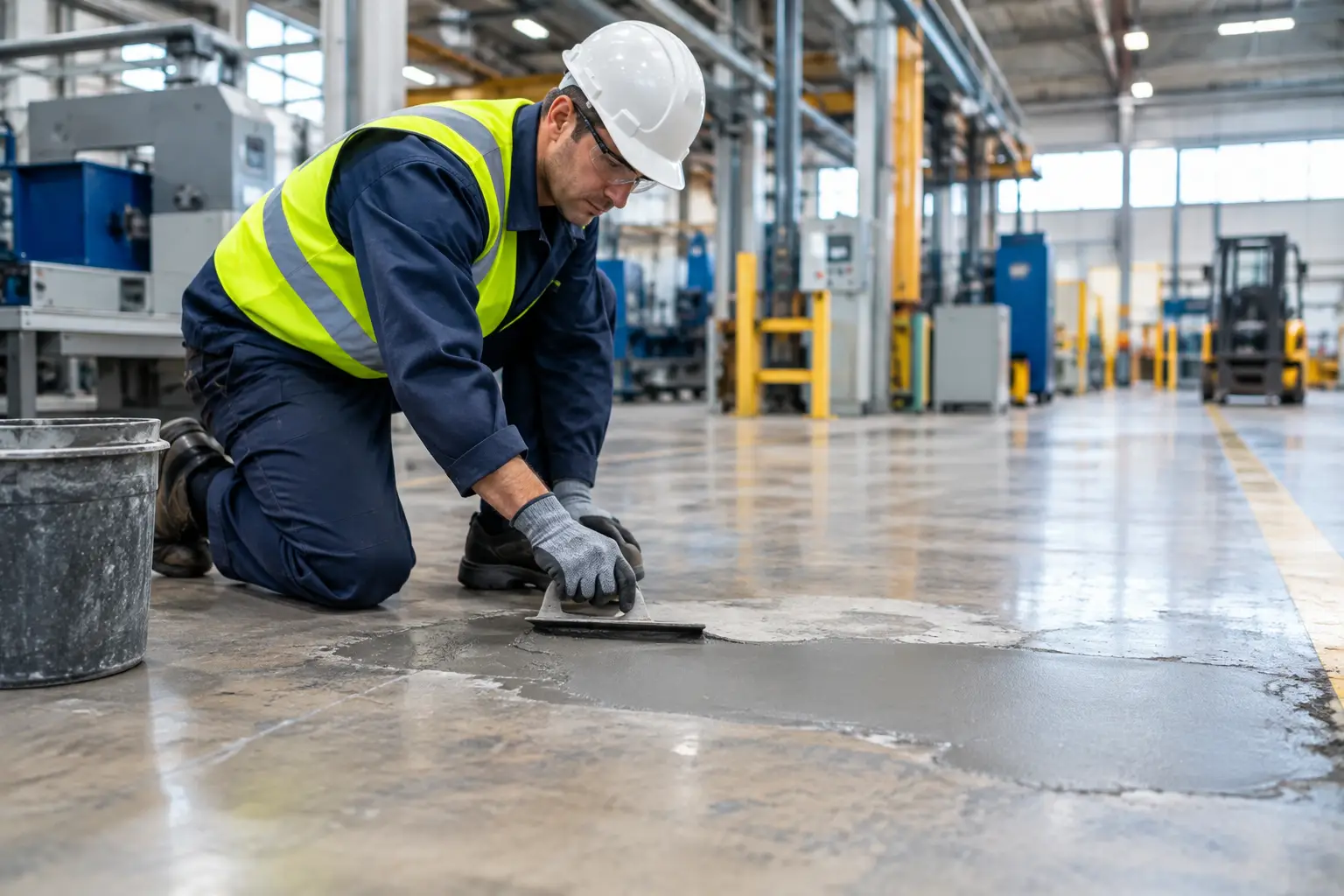
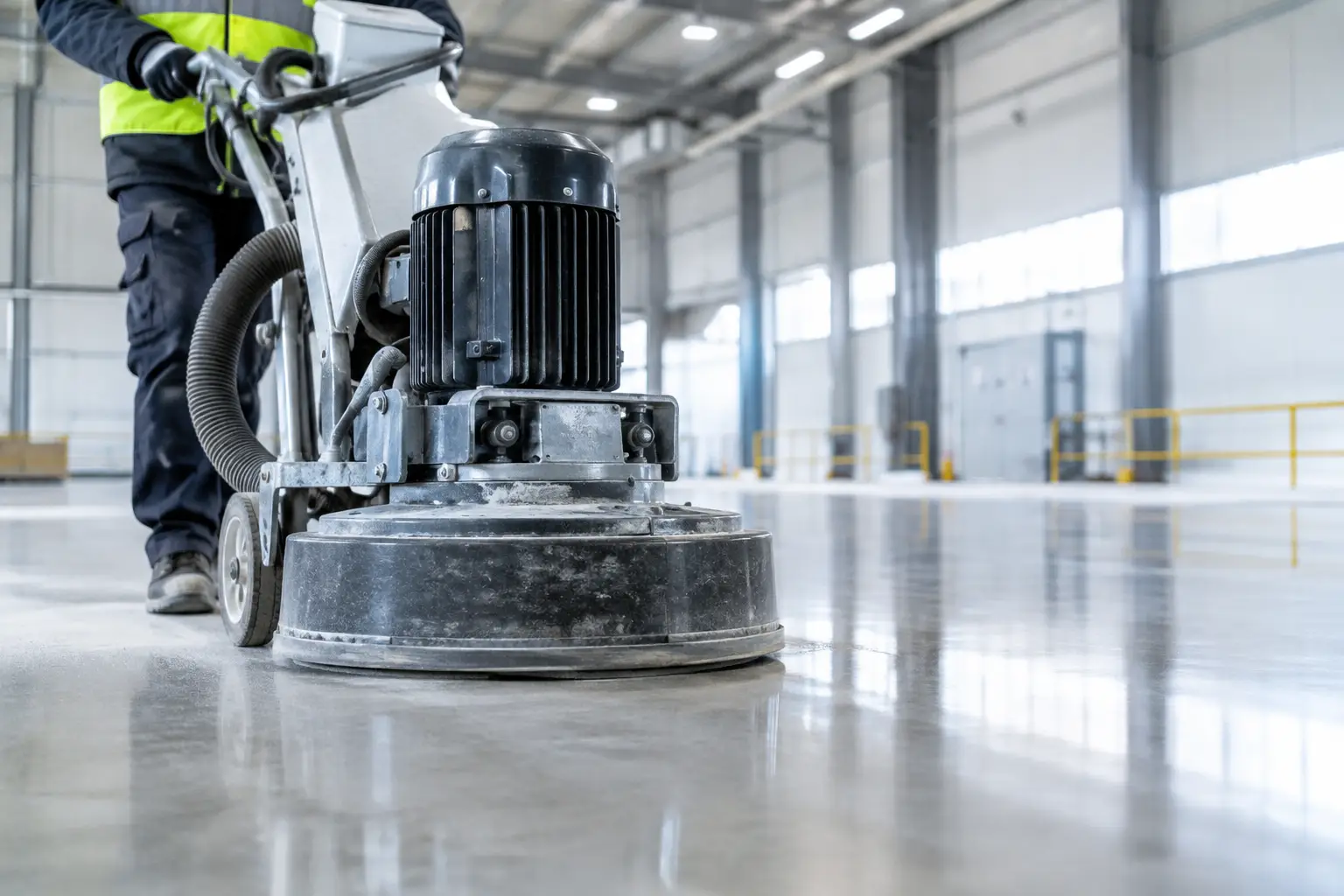
For isolated, stable cracks, cleaning, preparation, and a compatible filler or repair mortar may be sufficient. Where joint arrises have spalled, the repair should remove unsound concrete, rebuild the damaged edges, and protect the joint for expected wheel loads. Grinding can correct localized high spots, rough transitions, and minor elevation differences where the slab remains structurally sound.
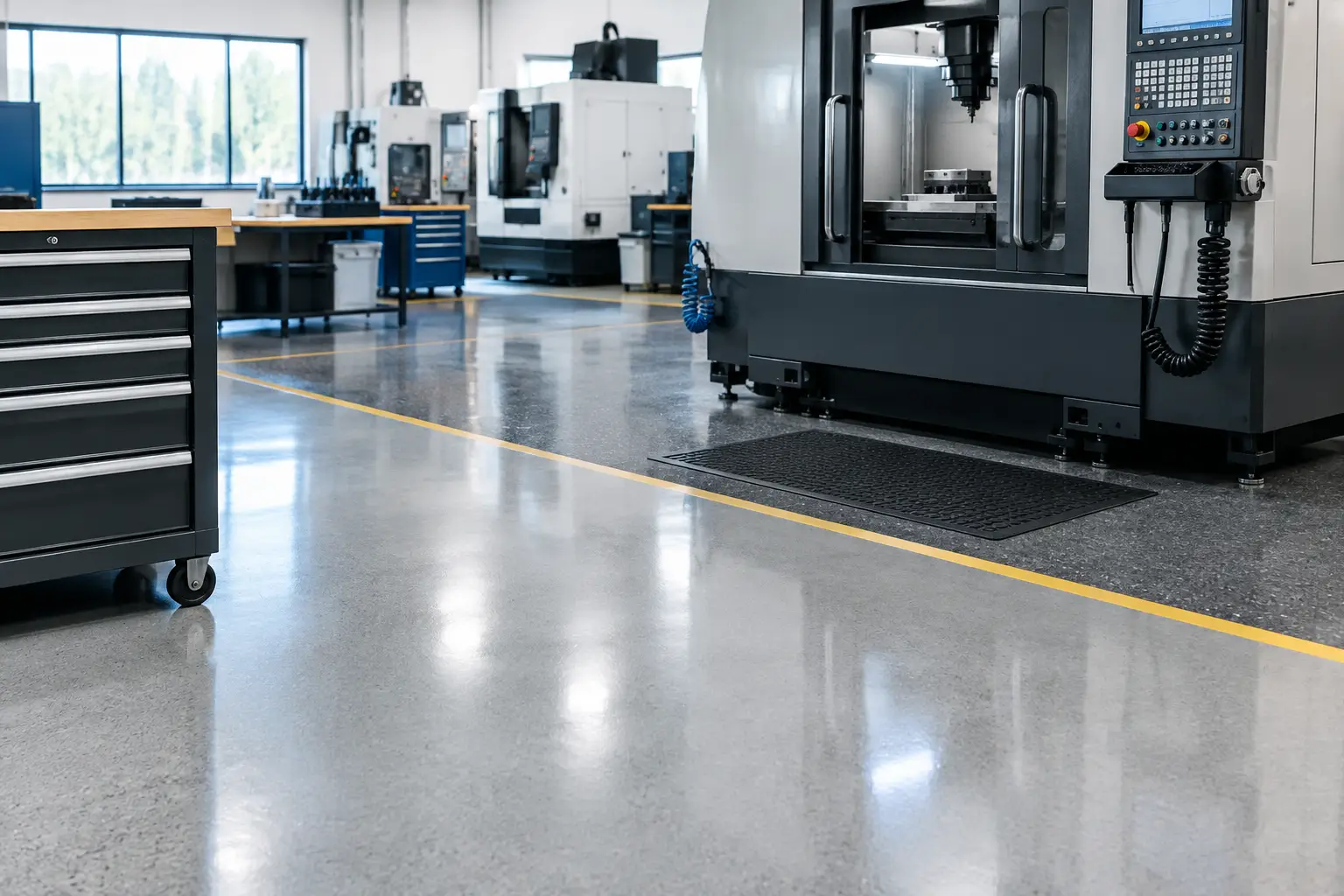
More extensive cracking may require partial-depth or full-depth slab repair. If settlement, voids, or moisture are present, those conditions must be corrected before the surface is repaired. When a facility needs a more continuous, hygienic, or high-performance surface, a jointless floor system or engineered overlay may be appropriate, provided the existing substrate is properly evaluated and prepared.
Surface preparation is not a secondary step. Contaminants, weak concrete, moisture, and inadequate profile can compromise even a high-quality repair system. Industrial floors perform as systems: substrate condition, preparation, material selection, installation quality, cure time, and return-to-service planning all matter.
How to Reduce Future Warehouse Floor Cracking
Prevention begins before installation. The slab design should match loading, wheel types, rack layout, joint plan, flatness requirements, and exposure conditions. A standard slab may not be adequate for narrow-aisle traffic, wire-guided equipment, high point loads, or demanding sanitation and chemical exposure.
During construction, disciplined subgrade preparation, reinforcement placement, concrete placement, joint cutting, curing, and quality control determine whether the floor has a reliable foundation. After handover, facility teams can reduce deterioration by keeping joints clean, repairing damage early, controlling water intrusion, and reviewing traffic patterns when equipment or storage density changes.
A floor inspection should be triggered when cracks widen, joint edges begin to spall, forklift operators report rough travel, racks require repeated adjustment, coatings lose adhesion, or water appears where it should not. Early action generally limits the repair area and protects operating schedules.
Osis Group approaches floor and joint repair with the operational consequence in view. The objective is not to make a defect disappear for a short period. It is to restore a safe, durable surface that supports the way the facility actually works.
The most useful next step is a condition assessment tied to traffic, loading, and downtime constraints. Once the failure mechanism is clear, the repair can be planned with the right materials, preparation standard, and return-to-service sequence - before a manageable crack becomes a larger interruption.